Reynand Wu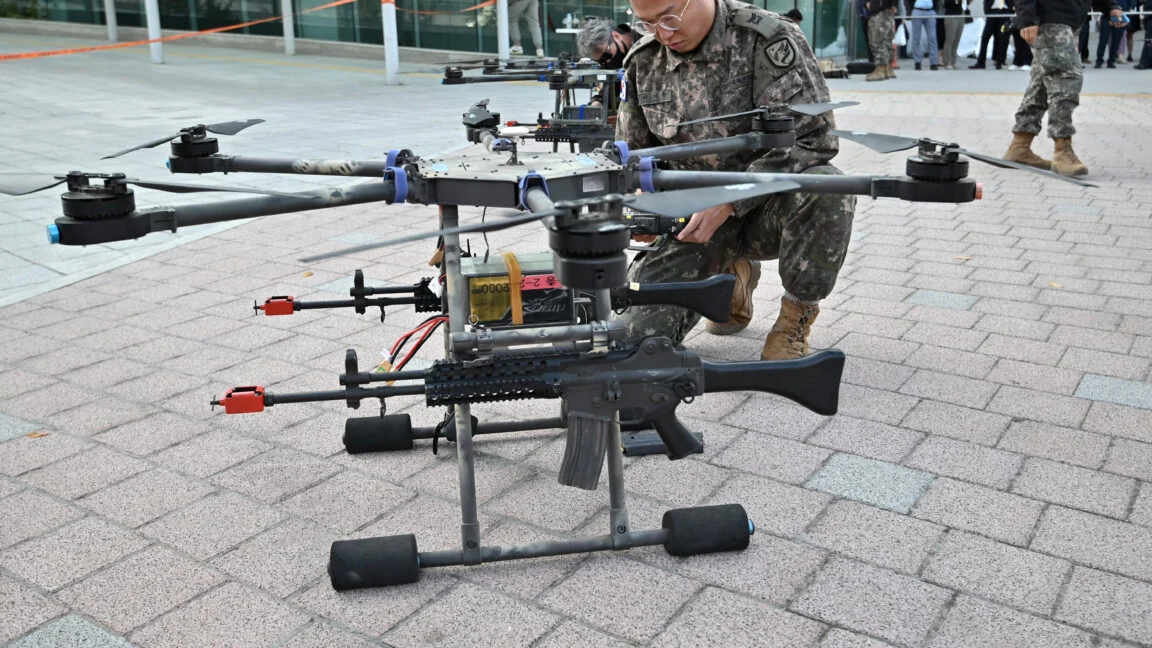
In a sweeping strategic pivot that promises to redefine the landscape of modern warfare, the South Korean government has announced a radical military overhaul: the goal of training its entire 450,000-strong active-duty military to operate unmanned aerial vehicles (UAVs) with the same proficiency as a standard-issue rifle. This initiative, articulated by Minister of National Defense Ahn Gyu-back on June 26, 2026, aims to integrate drone technology as a "universal combat tool," effectively treating the aerial platform as a mandatory secondary weapon for every soldier in the Republic of Korea (ROK) Armed Forces.
As the Korean Peninsula remains locked in a 70-year standoff, the shift reflects a broader global recognition that the battlefield has fundamentally changed. By prioritizing "drone literacy" across the ranks, Seoul hopes to achieve a technological asymmetry that can offset the persistent numerical advantage held by the Democratic People’s Republic of Korea (DPRK), which maintains a standing force of over 1.2 million personnel.
The Strategic Shift: A Chronology of Integration
The move toward universal drone training is not an overnight decision but the culmination of years of tactical observation.
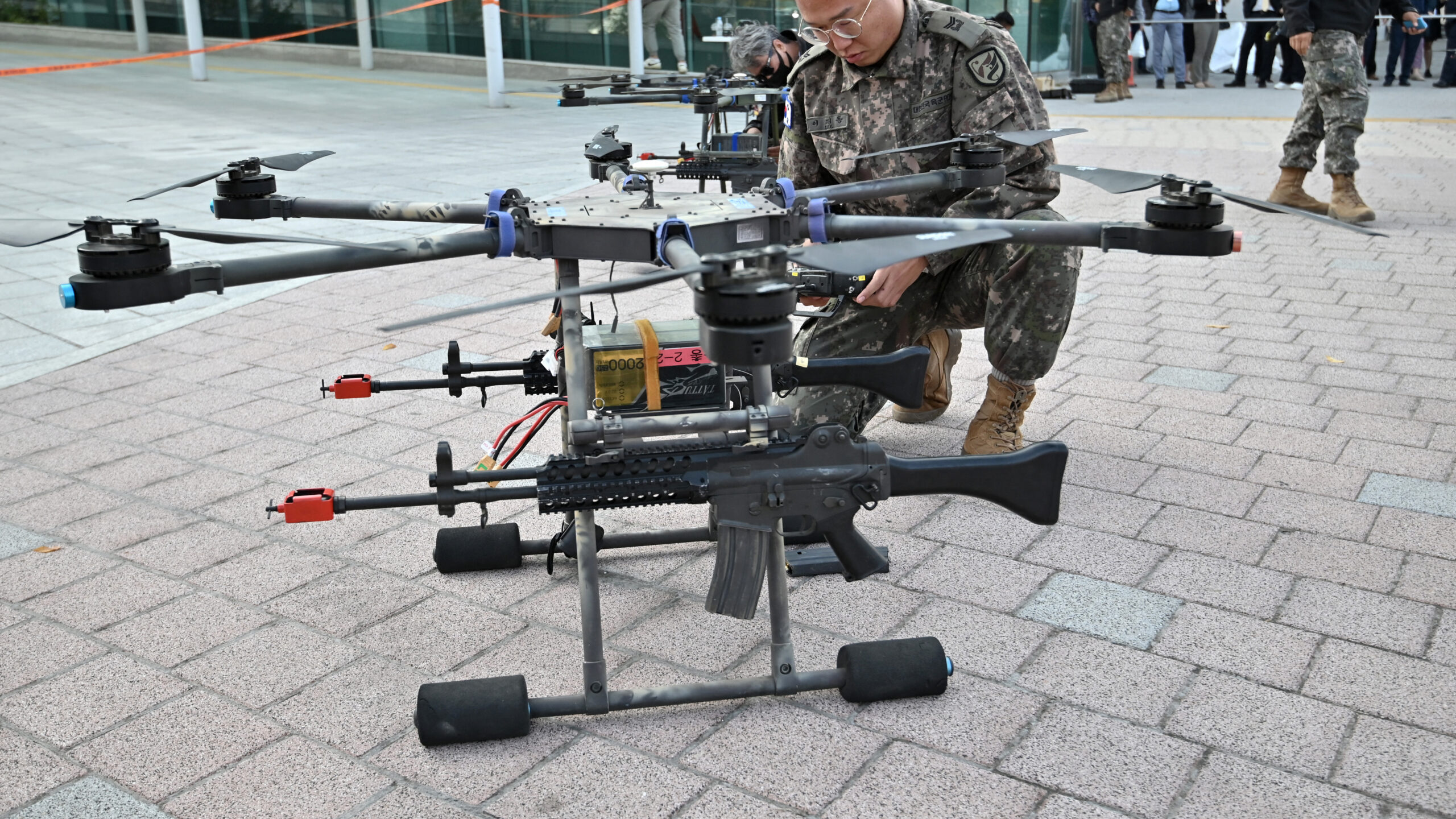
- 2022: The South Korean military begins visible experimentation, conducting high-profile anti-terror drills at the Kintex exhibition center. These early demonstrations showcased drones equipped with rifles, signaling an intent to move beyond simple surveillance.
- 2024–2025: As the war in Ukraine intensifies, the South Korean Ministry of National Defense accelerates its analysis of combat footage. The emergence of cheap, off-the-shelf FPV (first-person view) drones as lethal precision weapons becomes a primary case study for ROK planners.
- August 2025: Official reports confirm that South Korea’s active-duty strength has shrunk by 20 percent over the preceding six years due to a historic demographic collapse. The military begins to look toward "force multipliers"—specifically robotics and AI—to fill the human gap.
- June 2026: Minister Ahn Gyu-back officially unveils the "Drone Warrior" initiative, detailing plans to phase in 60,000 training and combat drones by 2029, with an immediate deployment of 11,000 units within the current year.
Supporting Data: The Asymmetric Calculus
The necessity for this transformation is rooted in harsh statistics. South Korea currently maintains a force of 450,000, a number that is under constant pressure from a declining birthrate. In contrast, the North Korean military maintains a massive, albeit technologically dated, force of over 1.2 million.
To compensate for this 3-to-1 disadvantage in raw manpower, Seoul is betting on the "democratization" of air power. By providing every squad with the ability to launch, pilot, and maintain drones, the ROK military seeks to ensure that no infantry unit is ever "blind" or without long-range strike capabilities.
Furthermore, the fiscal commitment is staggering. The United States, South Korea’s primary security ally, has requested $54 billion in its 2027 budget for drone and counter-drone systems alone. South Korea is mirroring this trajectory, focusing on:
- Surveillance and Reconnaissance: Persistent, low-altitude monitoring of the Demilitarized Zone (DMZ).
- Strike Capabilities: Integrating loitering munitions into the standard infantry kit.
- Counter-Drone Infrastructure: Massive investment in laser-based and microwave-based interceptors to protect against North Korean incursion drones.
Official Responses and Tactical Reorganization
The command structure is undergoing a total rethink. The existing drone operations command, previously tasked with centralizing control, is being reorganized. Its new mandate is to act as a bridge between the military and South Korea’s robust tech sector.
"We are moving from a model where drones are a specialized asset for elite units to a model where they are an extension of the individual soldier’s reach," a defense ministry official noted.
The focus on "indigenous production" has become a point of friction. Under the new doctrine, all military drones must be composed of 100 percent domestically produced parts. This is a deliberate "de-risking" strategy aimed at eliminating reliance on Chinese components—a move that acknowledges China’s status as a primary economic partner to the North and a dominant force in the global commercial drone market.
The Limits of the "Drone Warrior" Plan
Despite the ambition, experts remain skeptical about the feasibility of turning 450,000 conscripts into elite drone operators.
1. The Supply Chain Conundrum
Min-Cheol Jung, cofounder of the Team Retriever counter-drone red team, has warned that the "100 percent domestic" requirement may be a bottleneck. China, through companies like DJI, holds a stranglehold on the global supply chain for small-scale drone components. Building an entirely localized supply chain that can produce tens of thousands of reliable, combat-ready units per year is a feat that even the most advanced manufacturing nations struggle to achieve.
2. The Human Element
There is also the issue of personnel attrition and training load. As the ROK military faces a shrinking pool of recruits, the burden of training soldiers on complex, rapidly evolving drone software while maintaining traditional combat readiness creates a "training saturation" point. Critics argue that forcing every soldier to become a pilot might result in a "jack of all trades, master of none" scenario, where infantry skills are neglected in favor of drone proficiency.

3. The "Ukraine Model" vs. Reality
While Ukraine is frequently cited as the blueprint, the reality is that Ukraine does not train every single soldier to be a pilot. Instead, they rely on specialized, highly skilled drone operator teams that coordinate with front-line units. These teams function as high-value assets rather than general-issue equipment. By attempting a mass-training approach, South Korea risks thinning its pool of specialized experts in favor of general familiarity.
Broader Implications: The Future of the DMZ
The geopolitical implications of this policy are profound. The North Korean military has been closely observing the same conflicts that have spurred Seoul to act. Reports indicate that North Korean soldiers deployed to support Russian forces have been actively studying the use of drones on the front lines and, upon returning to the DPRK, are now disseminating these lessons to their own cadres.
The Korean Peninsula is thus becoming a laboratory for the next evolution of warfare: the "all-domain" infantry. In this environment, the traditional soldier is no longer just a rifleman; they are a sensor node, a kinetic striker, and a target in a 360-degree digital battlespace.
The presence of 28,500 US troops in the region adds another layer of complexity. As the US military also pushes for drone familiarization in basic training, the joint operations between the US and South Korea will likely become the world’s most advanced laboratory for human-machine teaming.
Conclusion
South Korea’s decision to turn its entire military into a force of "drone warriors" is a bold, high-stakes gamble. It is an acknowledgement that the era of mass-infantry reliance is giving way to an era of distributed, automated lethality. Whether this transition will serve as a definitive deterrent against the North or lead to an unsustainable drain on resources remains to be seen. What is clear, however, is that the days of the infantryman carrying only a rifle are coming to a close. In the future of the ROK military, the drone will be as much a part of the soldier’s identity as the uniform they wear.


 Ali Ikhwan
 Sagoh
Sagoh