Muslim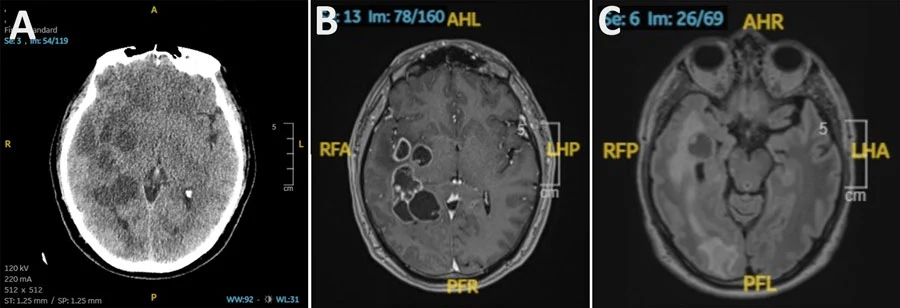
In a recent medical case report originating from Spain, doctors encountered a diagnostic puzzle that highlights the hidden dangers of Taenia solium—the pork tapeworm. A patient presented with what appeared to be metastatic brain lesions, a diagnosis that typically carries a grim prognosis. However, further investigation revealed that the man was not suffering from cancer, but from neurocysticercosis (NCC), a parasitic infection of the central nervous system caused by tapeworm larvae.
This case serves as a stark reminder of how globalized food systems, sanitation lapses, and evolving medical presentations are forcing clinicians to reconsider their diagnostic priorities. As this article explores, the "sneaky" nature of Taenia solium requires a more nuanced approach to neurology, especially when traditional symptoms like seizures are absent or ambiguous.
The Main Facts: Understanding Taenia solium
Taenia solium is a parasitic tapeworm with a complex, two-host life cycle involving humans and pigs. The parasite’s ability to infect the human body follows two distinct, albeit related, pathways, both of which center on the ingestion of the parasite in different stages of its development.
The Path of Infection
- Taeniasis: This occurs when a person consumes undercooked pork containing cysticerci—the larval stage of the parasite encapsulated in tissue. Once ingested, these larvae attach to the human intestinal wall, mature into adult tapeworms, and can live there for years, shedding eggs into the host’s feces.
- Cysticercosis: This is a more dangerous condition. It occurs when a person ingests tapeworm eggs through fecal-oral contamination. This can happen through contaminated water, improperly washed produce, or poor hand hygiene. Once ingested, these eggs hatch in the human gut, migrate through the bloodstream, and form cysticerci in various tissues, including muscles and, most alarmingly, the brain.
When these larvae colonize the central nervous system, the condition is classified as neurocysticercosis (NCC). The severity of the disease is highly variable, ranging from completely asymptomatic cases to life-threatening neurological crises.
A Chronological Breakdown: From Symptoms to Resolution
The case reported in Spain began with the patient experiencing subtle, non-specific neurological symptoms. While the report does not detail every day of the patient’s life, the clinical trajectory followed a recognizable pattern in medical literature:
- Initial Presentation: The patient arrived at the clinic with symptoms that prompted an MRI scan. The images revealed multiple "ring-enhancing" brain lesions. In clinical practice, such findings are frequently associated with metastatic cancer, where tumors from other parts of the body have spread to the brain.
- The Diagnostic Pivot: Given the patient’s lack of travel history to endemic regions, clinicians initially favored an oncologic diagnosis. However, as the patient did not fit the profile for typical metastatic spread, further immunological testing was conducted.
- Confirmation: A blood test confirmed the presence of antibodies against Taenia solium. This was the "smoking gun" that shifted the focus from surgery to parasitology.
- Treatment and Recovery: Once the diagnosis was secured, the patient was treated with a targeted regimen of anti-parasitic medication. Unlike the invasive procedures that would have been required for a cancer diagnosis, this treatment was relatively straightforward. The patient eventually recovered, avoiding the physical and psychological toll of a cancer misdiagnosis.
Supporting Data: The Global Burden of NCC
Neurocysticercosis is not merely a medical curiosity; it is a significant public health issue. According to the World Health Organization (WHO) and the Centers for Disease Control and Prevention (CDC), NCC is a leading cause of acquired epilepsy in developing countries.
The Geography of Infection
While traditionally associated with regions where pigs roam freely and sanitation is inadequate, the modern world is seeing a shift. Increased global travel and international food trade mean that the parasite can manifest anywhere. The Spanish case is a prime example: the patient had no recent travel history to areas where the parasite is hyper-endemic, yet the infection was present.
Clinical Variability
Data suggests that the symptoms of NCC are entirely dependent on the location and number of the cysts:
- Parenchymal NCC: Cysts located in the functional tissue of the brain often cause seizures and headaches due to inflammation as the body attacks the dying larvae.
- Extraparenchymal NCC: Cysts located in the brain ventricles or subarachnoid space can block the flow of cerebrospinal fluid, leading to hydrocephalus and increased intracranial pressure.
The "ring-enhancing" lesions seen on the patient’s MRI were a result of the immune system’s inflammatory response to the larvae. As the body’s white blood cells surround the parasite, they create the distinct pattern that mimics tumor growth on diagnostic imaging.
Official Responses and Clinical Implications
The medical team responsible for the Spanish case concluded their report with a call to action for the global medical community. Their findings underscore a critical gap in current diagnostic protocols.
The "Travel History" Bias
Historically, physicians have been trained to use travel history as a primary filter for parasitic diseases. If a patient hasn’t visited a high-risk area, "exotic" infections are often relegated to the bottom of the differential diagnosis. The authors of the study argue that this heuristic is becoming outdated.
"Our case emphasizes that the absence of travel history should not preclude NCC from the differential diagnosis of multiple ring-enhancing brain lesions, even in regions where metastatic cancer is statistically much more likely," the authors stated.
The Cost of Misdiagnosis
The implications of misdiagnosing NCC are profound. An oncological diagnosis often triggers a cascade of invasive and expensive procedures, including:
- Biopsies: Brain surgery to sample tissue is inherently risky.
- Staging Scans: Whole-body CT or PET scans expose patients to significant radiation.
- Psychological Distress: The weight of a cancer diagnosis can be devastating for patients and their families.
By considering NCC earlier, clinicians can utilize non-invasive blood tests (such as enzyme-linked immunoelectrotransfer blot or EITB) to rule out or confirm the presence of the parasite before escalating to surgery.
Implications: The Future of Parasitology in Modern Medicine
This case serves as a sentinel event for neurologists and infectious disease specialists worldwide. As we move further into the 21st century, several factors are making the management of parasitic infections more complex:
1. Improved Imaging, Increased Ambiguity
High-resolution MRI technology is better than ever at spotting brain abnormalities. However, better imaging does not always lead to better understanding. As this case shows, high-resolution scans can clearly show a lesion, but they cannot always distinguish between a tumor and an inflammatory response to a parasite.
2. The Sanitation Paradox
Even in developed nations, the reliance on global food supply chains creates opportunities for foodborne pathogens to enter populations that have no natural immunity or history of exposure. While the risk of consuming undercooked pork is well-documented, the risk of consuming food contaminated by human waste (the source of the eggs) is often overlooked in public health education.
3. Integrated Diagnostic Approaches
The path forward lies in integrating neurology with immunology. The Spanish patient’s recovery was made possible because the clinicians were willing to step outside the standard oncology workflow to perform specialized serological testing. Moving forward, academic hospitals and clinics may need to adopt a broader "syndromic" approach to brain lesions, where infectious disease consults become a standard part of the process, rather than a last resort.
Conclusion
The story of the "sneaky worm" is a cautionary tale for modern medicine. It reminds us that despite our technological advances, the biological world remains unpredictable. Taenia solium is a master of mimicry, capable of hiding in plain sight and masquerading as one of the most feared diseases of our time.
By prioritizing awareness, refining diagnostic protocols, and ensuring that clinicians do not rely too heavily on the "travel history" crutch, the medical community can save patients from the trauma of unnecessary surgeries and provide targeted, effective care. The parasite may be small, but its lessons for clinical practice are vast, reminding us that in medicine, as in nature, the smallest things often demand the greatest attention.


 Nana
Nana
 Asro
Asro