Ammar Sabilarrohman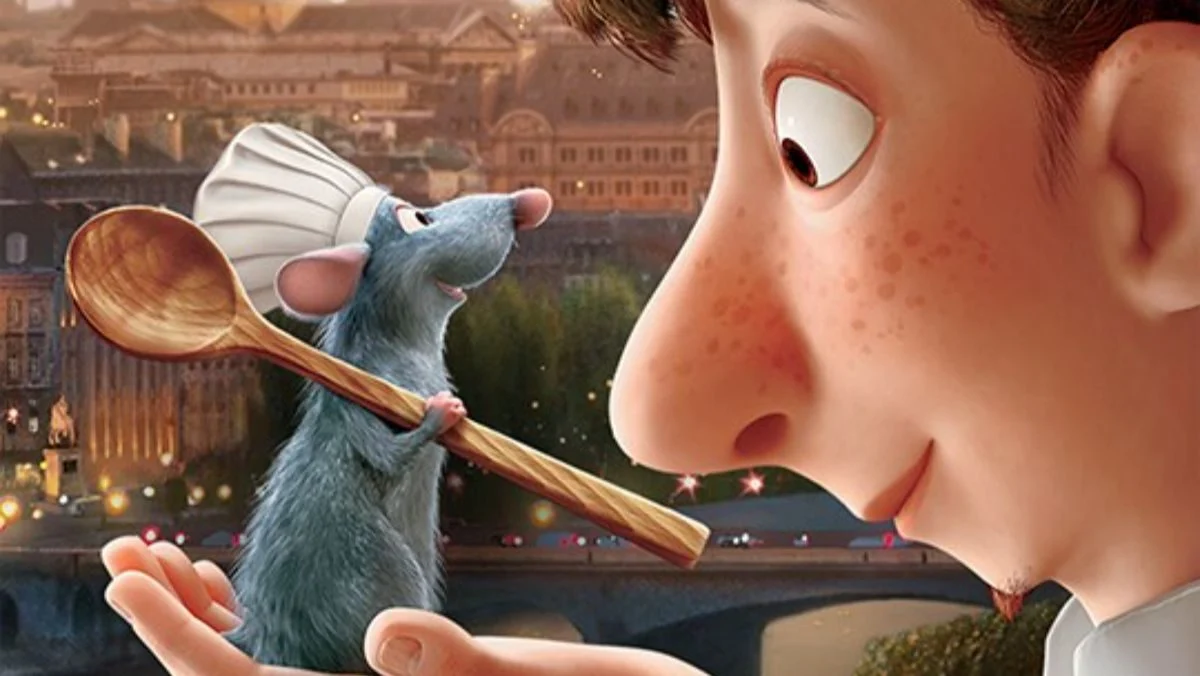
In an era defined by the "franchise-first" mentality—where intellectual property is treated as a bottomless well of recurring revenue—the stance taken by visionary director Brad Bird serves as a rare, refreshing act of creative integrity. While major studios scramble to greenlight sequels, spin-offs, and soft reboots for properties that reached their natural creative conclusion years ago, Bird has firmly slammed the door on the possibility of a Ratatouille sequel.
In a recent interview with Collider, the filmmaker behind modern classics like The Incredibles, The Iron Giant, and Ratatouille offered a blunt assessment of his filmography: “No, that story’s been told.” This refusal to succumb to the industry’s insatiable appetite for nostalgia-baiting highlights a growing divide between the corporate mandate of endless content and the artistic necessity of a definitive ending.
The Case for Creative Finality
For many, Ratatouille—the 2007 Pixar masterpiece about a rat with a refined palate and an aspiring chef—remains a pinnacle of animated storytelling. It is a heartwarming, meticulously crafted narrative that explores themes of artistic passion, elitism, and the transformative power of a good meal.
The film’s conclusion was not merely an ending; it was an achievement. Remy the rat found his place in the world, Linguini found his purpose, and Gusteau’s restaurant evolved into a sanctuary of culinary innovation. By closing the book on Remy’s journey, Bird preserved the film’s emotional resonance. As history has shown, adding chapters to a complete story often risks diluting the original impact.
The Anatomy of the Sequel Culture
To understand why Bird’s decision feels so radical, one must look at the current state of the film industry. We live in an age of abundance, where streaming platforms and theatrical slates are flooded with "more of the same." This over-consumption is not limited to cinema; it is a byproduct of a digital economy that prioritizes engagement metrics over narrative arc.
The Disney/Pixar Paradigm
Disney, in particular, has become the poster child for the "franchise-to-death" model. While the Toy Story franchise was once held up as the gold standard of sequel-making, the recent release of Toy Story 5 has drawn mixed reactions. Many fans felt the narrative reach a perfect emotional zenith at the conclusion of Toy Story 3, and even Toy Story 4 provided a poignant, albeit debated, farewell. Now, with Toy Story 5 hinting at a potential sixth installment, the sense of "story fatigue" is palpable.
The industry’s reliance on these established brands is a risk-mitigation strategy. It is easier to market a sequel with a built-in audience than it is to nurture an original concept. However, this reliance creates a feedback loop: studios stop investing in new ideas because they believe audiences only want what is familiar, and audiences become conditioned to expect nothing but familiar sequels.
Brad Bird’s Philosophical Stance
Bird’s philosophy extends beyond Ratatouille. During his conversation with Collider, he addressed the constant pressure to revisit his previous successes, specifically pointing to The Iron Giant.
"Any time you do something that ends up connecting with people, they automatically think, ‘How about another?’" Bird remarked. "People have mentioned it about The Iron Giant, which is hilarious to me because the film didn’t succeed at all in its initial release. It’s caught up in time, but what would you do to follow that up? He’s lumbering around, still undiscovered? In other words, to me, that story is told."
This perspective is rooted in the belief that a story’s value is intrinsically linked to its arc. A character’s growth is only meaningful if it has a trajectory. When a director is forced to keep that character "lumbering around" for the sake of a quarterly earnings report, the character ceases to be a person and becomes a product.
The Impetus for a Film Renaissance
While the landscape appears dominated by sequels, a flicker of hope remains. The success of recent original films and television series proves that audiences are still hungry for stories they haven’t seen before.
Recent Triumphs of Originality
- The Power of Original Screenplays: Films like Project Hail Mary and Obsession have captivated audiences by relying on compelling hooks and unique character-driven narratives rather than pre-existing IP.
- Television Innovation: Shows such as Widow’s Bay and The Pitt have demonstrated that original television series can achieve cult status and critical acclaim, provided they are given the space to breathe and develop their own mythologies without the constraints of an established brand.
These projects prove that the "originality crisis" in Hollywood is not a failure of audience taste, but a failure of studio courage. When creators are empowered to tell new stories, the public responds with enthusiasm.
Implications for the Future of Hollywood
The industry is currently at a crossroads. The model of infinite expansion is hitting a wall of diminishing returns. As audiences become increasingly savvy about "nostalgia-baiting," the effectiveness of using beloved properties to mask lackluster scripts is waning.
Economic and Creative Considerations
If studios continue to ignore the lessons offered by directors like Brad Bird, they risk alienating their most loyal demographics. The "franchise fatigue" currently being observed in the box office performance of several major superhero and animated sequels suggests that quantity does not equate to quality.
Furthermore, the creative drain caused by focusing on sequels is significant. When top-tier talent is constantly diverted to shepherd the fifth or sixth installment of an existing brand, they are unavailable to develop the next Ratatouille or the next Iron Giant. The industry needs a "renaissance of the original," which requires:
- Studio Restraint: A willingness to accept that a successful film does not always require a sequel.
- Investment in Risk: A budget allocation strategy that favors emerging voices and new concepts over guaranteed returns.
- Audience Curation: A shift in consumer behavior where audiences prioritize original, high-quality storytelling over franchise loyalty.
Conclusion: Knowing When to Stop
Brad Bird’s refusal to revisit Ratatouille is not an act of indifference; it is an act of respect. He respects the characters, he respects the narrative arc he created, and most importantly, he respects the audience’s intelligence.
By resisting the urge to turn his films into perpetual machines, Bird preserves the magic of the original experience. As the entertainment industry moves forward, it would do well to take a page from his book. Sometimes, the most powerful creative choice a director can make is simply to say, "The story is told." In a world of endless, noise-filled content, that kind of restraint is not just refreshing—it is essential.
As we look toward the future of cinema, the hope is that more filmmakers will find the strength to draw lines in the sand, ensuring that our greatest stories remain, first and foremost, stories, and not just assets on a balance sheet.

 Siti Muinah
 Azzam Bilal Chamdy