Jia Lissa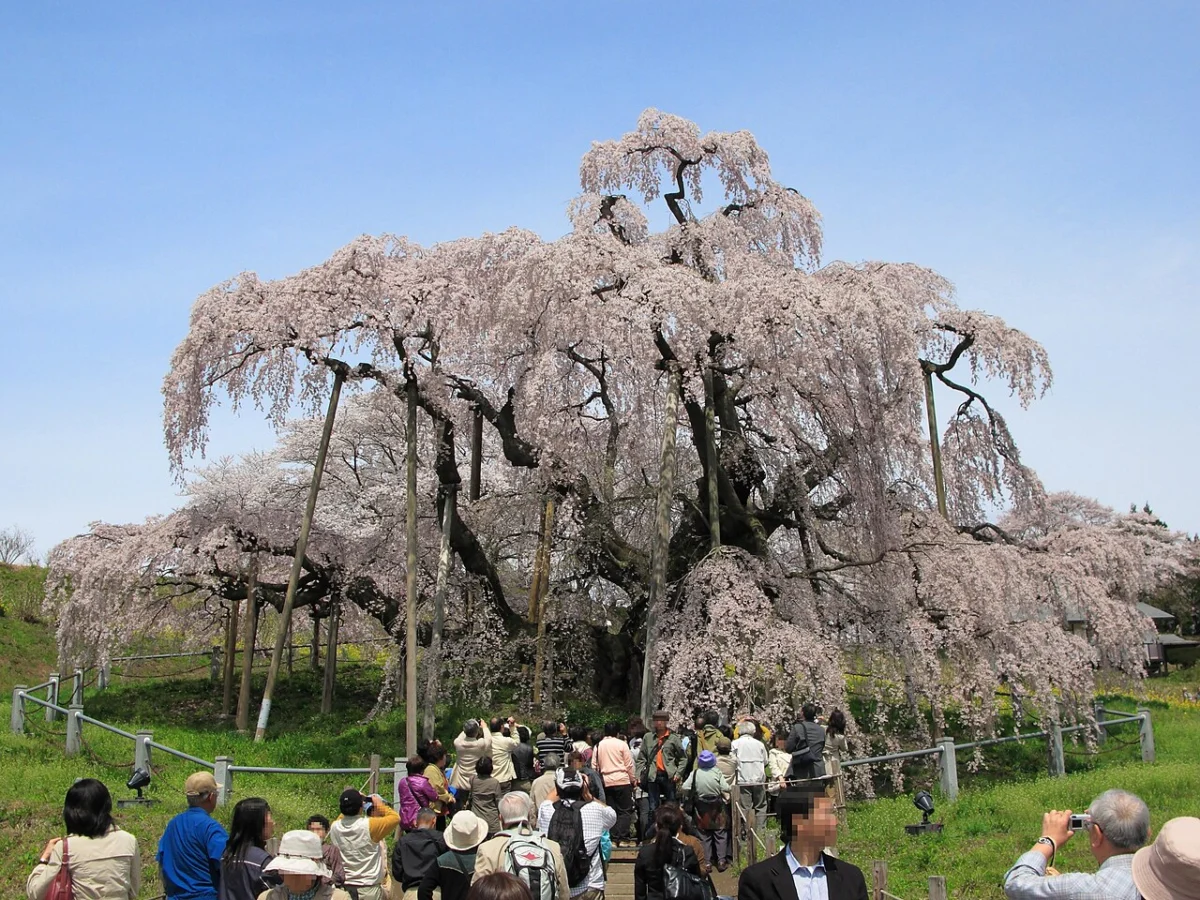
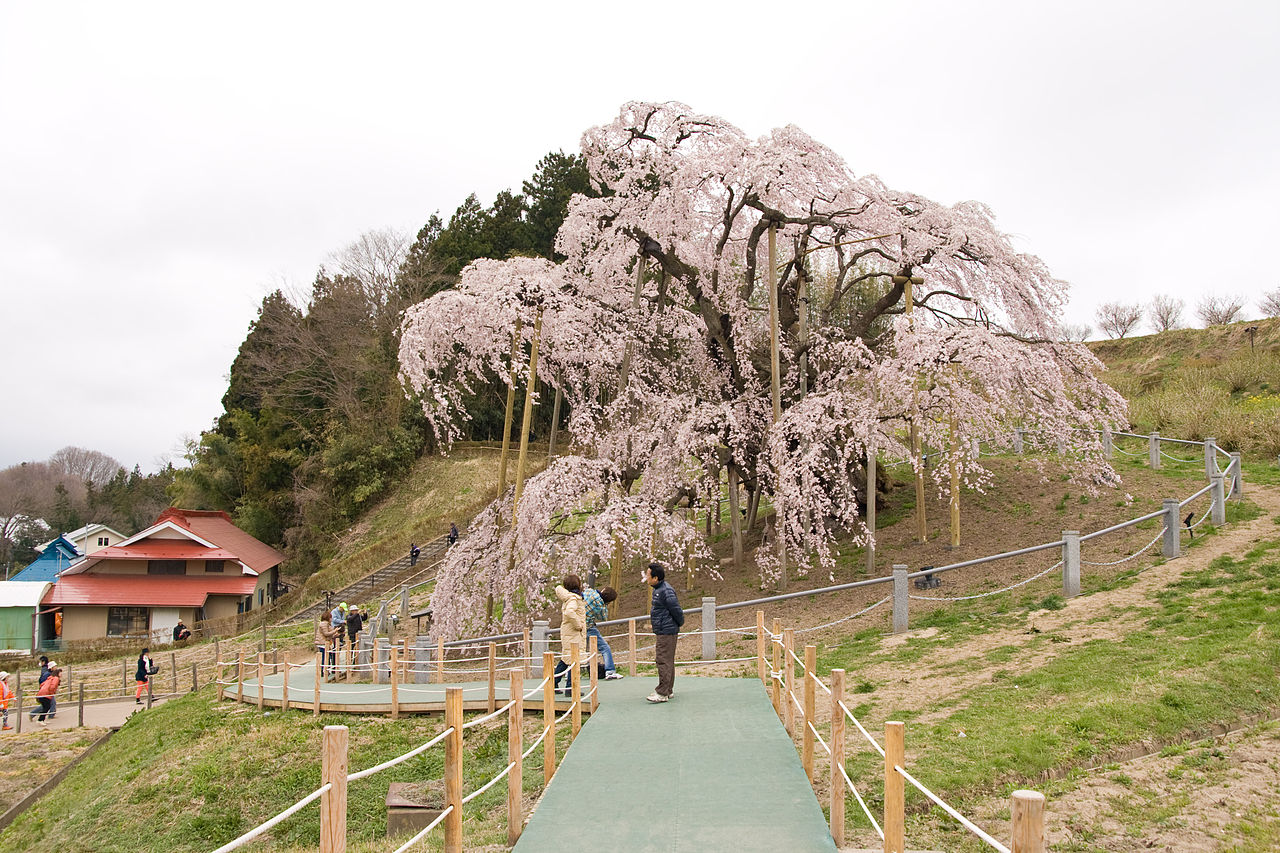
Every mid-April, in the quiet hills of Fukushima Prefecture, a silent, singular event draws thousands of pilgrims from across the globe. They arrive in hushed anticipation, walking the final incline to a hillside in Miharu, where the air grows heavy with the scent of spring. Then, they round the bend and stop dead. Before them stands the Miharu Takizakura—the "Waterfall Cherry Tree"—a living monument of such profound scale and beauty that it renders the modern world invisible.
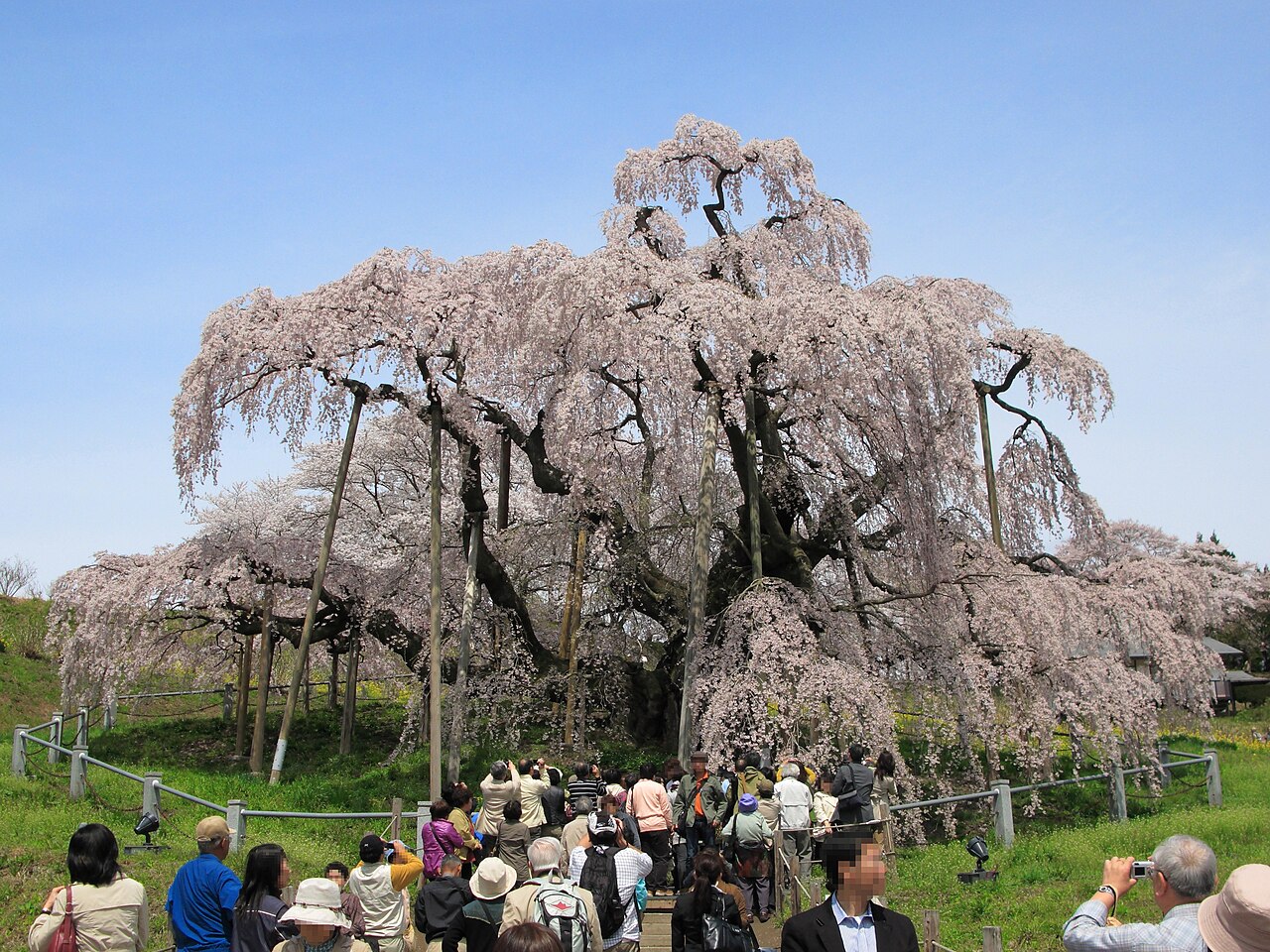
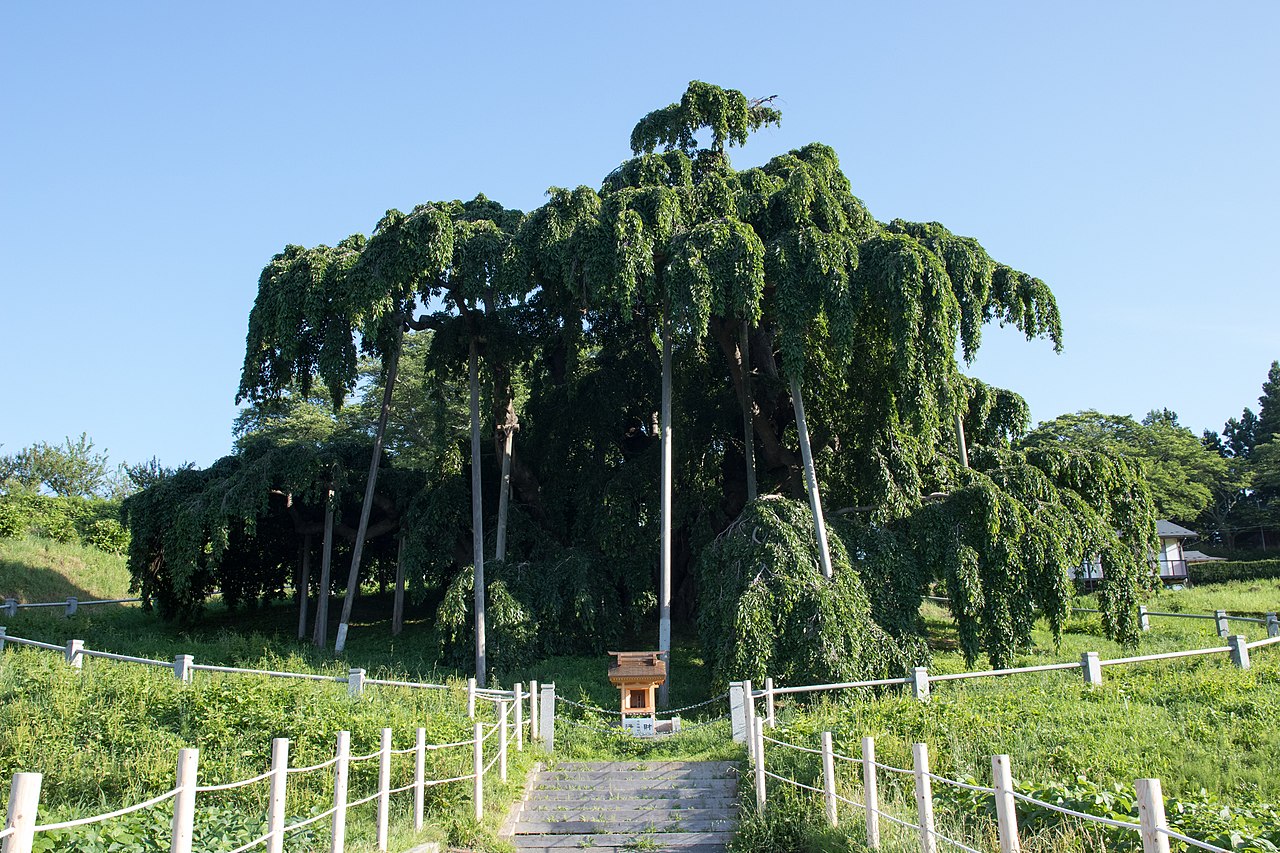
Standing over thirteen meters tall, with branches that cascade outward like a frozen pink deluge, the Takizakura is more than a botanical specimen; it is an icon of Japanese heritage. Designated a National Natural Monument in 1922, it remains one of the "Three Great Cherry Trees of Japan," a title shared only with the Usuzumi-zakura of Gifu and the Yamataka Jindai-zakura of Yamanashi. To stand beneath its boughs is to witness a history that spans forty human generations.
Main Facts: The Anatomy of a Legend
The Takizakura is not merely a tree; it is an architectural marvel of nature. Unlike the Somei-yoshino cherry trees that define Tokyo’s urban landscapes—cloned, uniform, and short-lived—the Takizakura is a beni-shidare (red weeping cherry) of the Prunus pendula species. While a standard cherry tree may survive for eighty years, the Takizakura has persisted for over a millennium.
Physical Specifications
The tree’s dimensions are staggering, reflecting a thousand years of struggle against the elements and adaptation to the sun:
- Height: 13.5 meters
- Trunk Circumference (at 1.2m): 8.1 meters
- Root Spread: 11.3 meters
- Branch Spread: 14.5 meters (South), 14.0 meters (West), 11.0 meters (East), 5.5 meters (North)
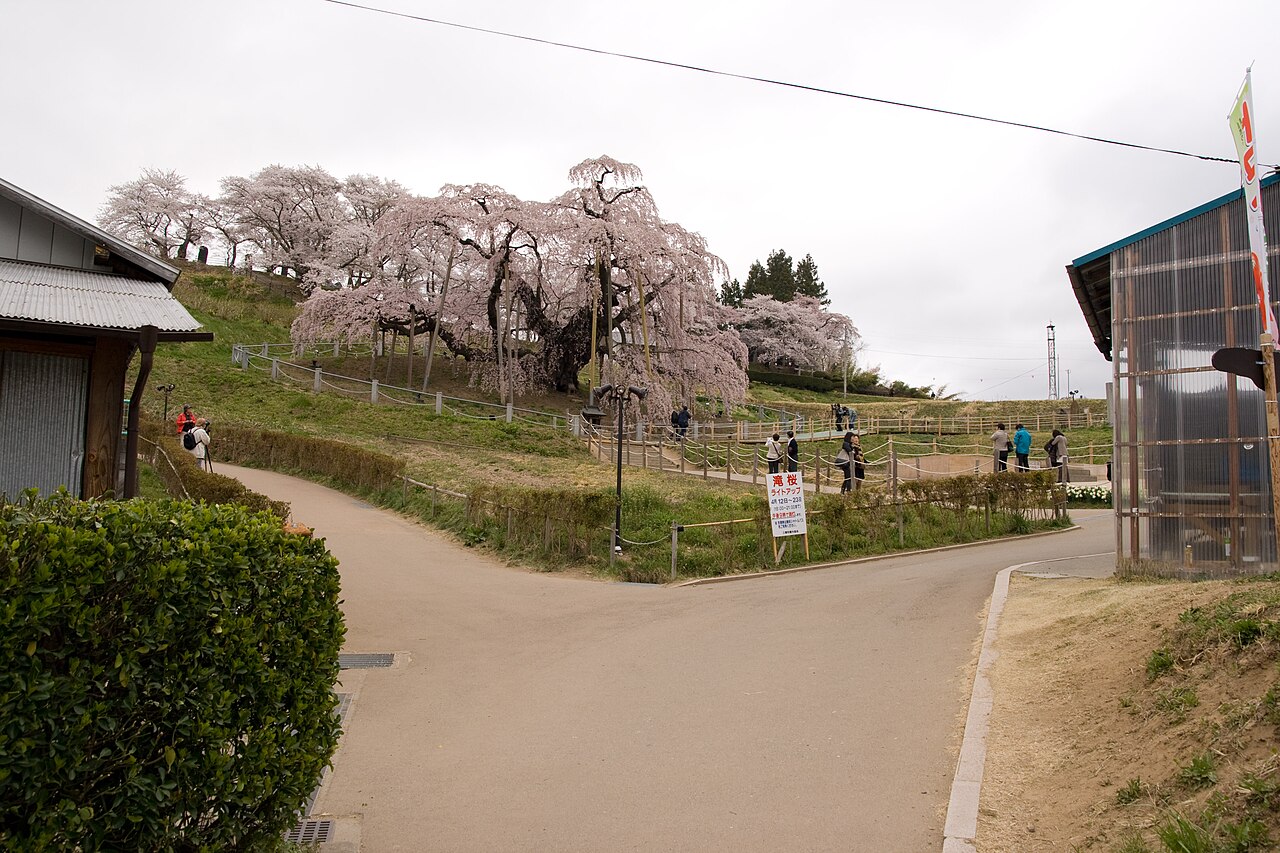
The dramatic asymmetry of its branch spread tells the story of its existence. Leaning perpetually into the sunlight while bracing against the harsh winds of the Tohoku region, the tree has sculpted itself over ten centuries into a form that no human gardener could replicate. Its weight is so significant that, since the 1970s, the tree has been supported by a sophisticated network of wooden struts, preserving its structural integrity against the pressures of time and gravity.
Chronology: A Millennium of Stewardship
The history of the Takizakura is inextricably linked to the history of the Miharu domain. Protected as an oya-boku (official tree) by feudal lords during the late Edo period, it has been a focal point of regional pride for centuries.
- 1830s: The poet Kamo no Suetaka immortalized the tree in verse, describing its blossoms as "reaching to every corner of Oshu," effectively cementing its place in the national consciousness.
- October 12, 1922: The Japanese government designated the Takizakura as a National Natural Monument, the first cherry tree to receive such a high-level classification.
- 1970s: The implementation of modern conservation measures, including the installation of permanent support poles, marked a transition from passive appreciation to active, science-based preservation.
- 2011–Present: Following the Fukushima Daiichi nuclear accident, the tree became a symbol of resilience. Despite its proximity to the affected areas, the tree remained safe and continued to bloom, serving as a beacon of normalcy and recovery for a prefecture in transition.
Supporting Data: The Logistics of the Pilgrimage
Visiting the Takizakura is a logistical exercise that requires careful planning. With 150,000 to 200,000 visitors arriving within a narrow ten-day window, success depends on understanding the "bloom-window" dynamic.
The Timing Problem
The bloom follows a strict biological calendar, but climate fluctuations can shift the peak (mankai) by as much as two weeks. While a normal year sees peak bloom in the third week of April, unseasonably warm springs can accelerate the process to April 10, while cold snaps can delay it past April 25.
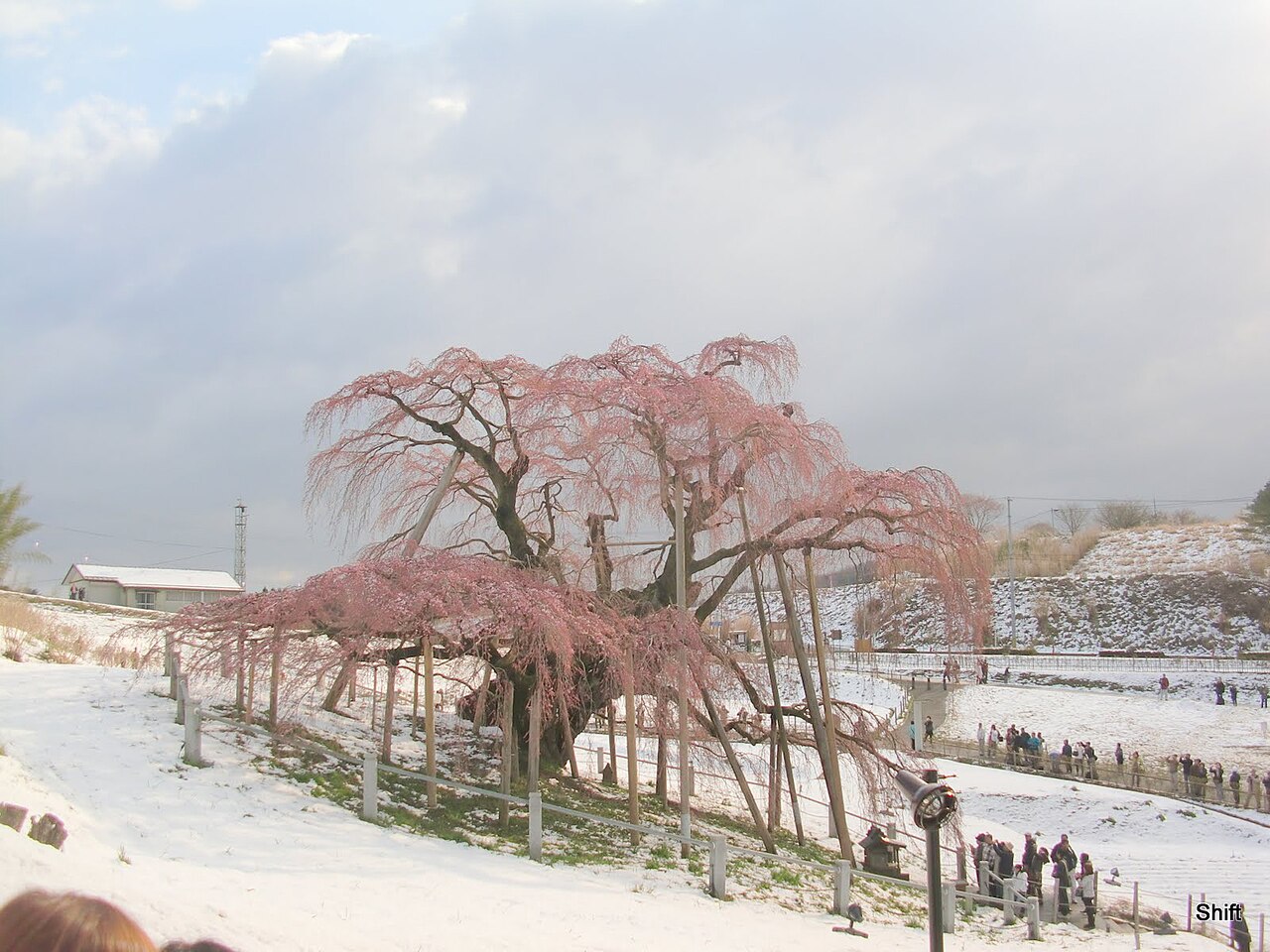
Prospective visitors should monitor the official Miharu Tourism Association website, which provides daily updates on the tree’s status, from tsubomi (bud) to chiri-hajime (starting to fall).
Transportation Strategies
For those traveling without a private vehicle, the most reliable route is via the Banetsu-to Line to Miharu Station, followed by the seasonal "Takizakura-go" shuttle bus.
- Shuttle Bus: Runs throughout the bloom period; a one-day pass is roughly ¥700.
- Taxis: Available at Miharu Station, but peak demand often leads to 40-minute wait times.
- Rental Car: The most flexible option for exploring the broader Miharu region, including the nearby Miharu Dam and the Takashiba Dekoyashiki craft village.
Official Responses and Conservation Efforts
The preservation of the Takizakura is managed by the Miharu Town government and local environmental specialists. Their primary objective is the mitigation of soil compaction and root damage caused by high visitor volumes.
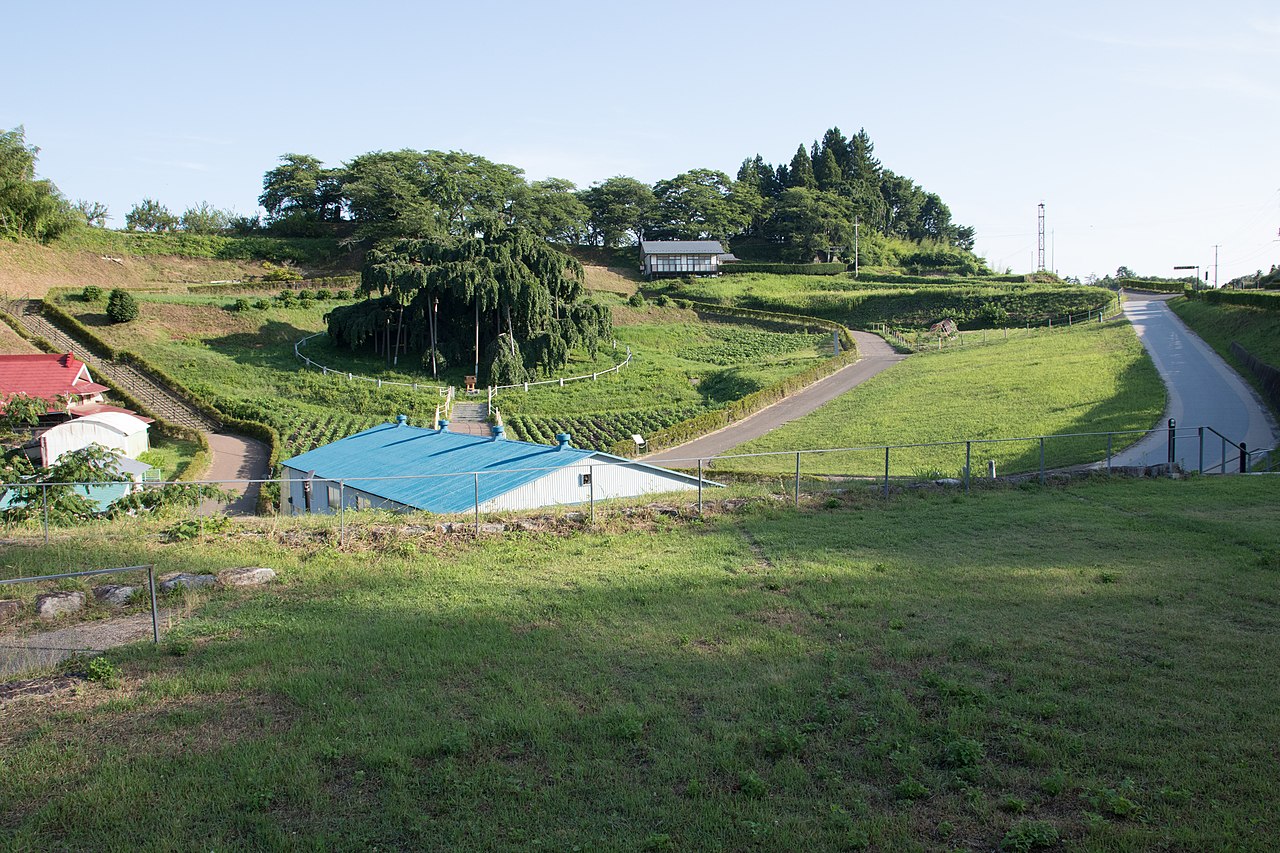
The site utilizes a strict one-way path system to manage the flow of 10,000 people per day. The ¥300 admission fee is reinvested directly into the maintenance of the viewing grounds, the hiring of seasonal staff, and the monitoring of the tree’s health. Official guidance consistently stresses that the tree is an organism under stress; visitors are strictly prohibited from crossing the wooden perimeter fences.
In the wake of 2011, the Miharu tourism office undertook a significant communication effort to provide data on radiation levels, confirming that the area is, and has been, safe for tourists. This transparency has been vital in sustaining the tree’s status as a premier tourist destination.
Implications: The Cultural and Economic Impact
The Takizakura serves as the economic engine for Miharu, a town of approximately 17,000 people. Its influence extends far beyond the tree itself, stimulating interest in local folk crafts and regional history.
The "Sakura-Meguri" Effect
The Miharu tourism office publishes a sakura-meguri (cherry-tour) map annually, highlighting forty notable trees across the town. This strategy encourages visitors to spend a second day in the region, distributing the economic benefit more evenly and reducing the burden on the main site.
Beyond the Blossoms
The town’s cultural identity is further bolstered by the Miharu-goma (a traditional black-lacquered wooden horse), one of the three great folk toys of Japan. Visitors are encouraged to visit the Takashiba Dekoyashiki craft village to witness the centuries-old process of creating these hand-painted figurines. Additionally, institutions like Commutan Fukushima provide a necessary, sobering look at the prefecture’s history, offering an educational counterpart to the aesthetic experience of the blossoms.
Final Reflections: Is it Worth the Journey?
The question of whether to travel for a single tree is common. For the casual traveler, the answer is nuanced. If you are unable to align your trip with the mankai (full bloom) period, the Takizakura is essentially a dormant, skeletal giant—a profound sight for a dendrologist, perhaps, but a disappointment for the blossom-seeker.
However, for those who catch the bloom, the experience is transformative. The Takizakura represents the pinnacle of the "Three Great Cherries" precisely because of its perfect synthesis of scale, color, and setting. It stands as a testament to the power of long-term stewardship.
Pro-Tips for the Serious Traveler
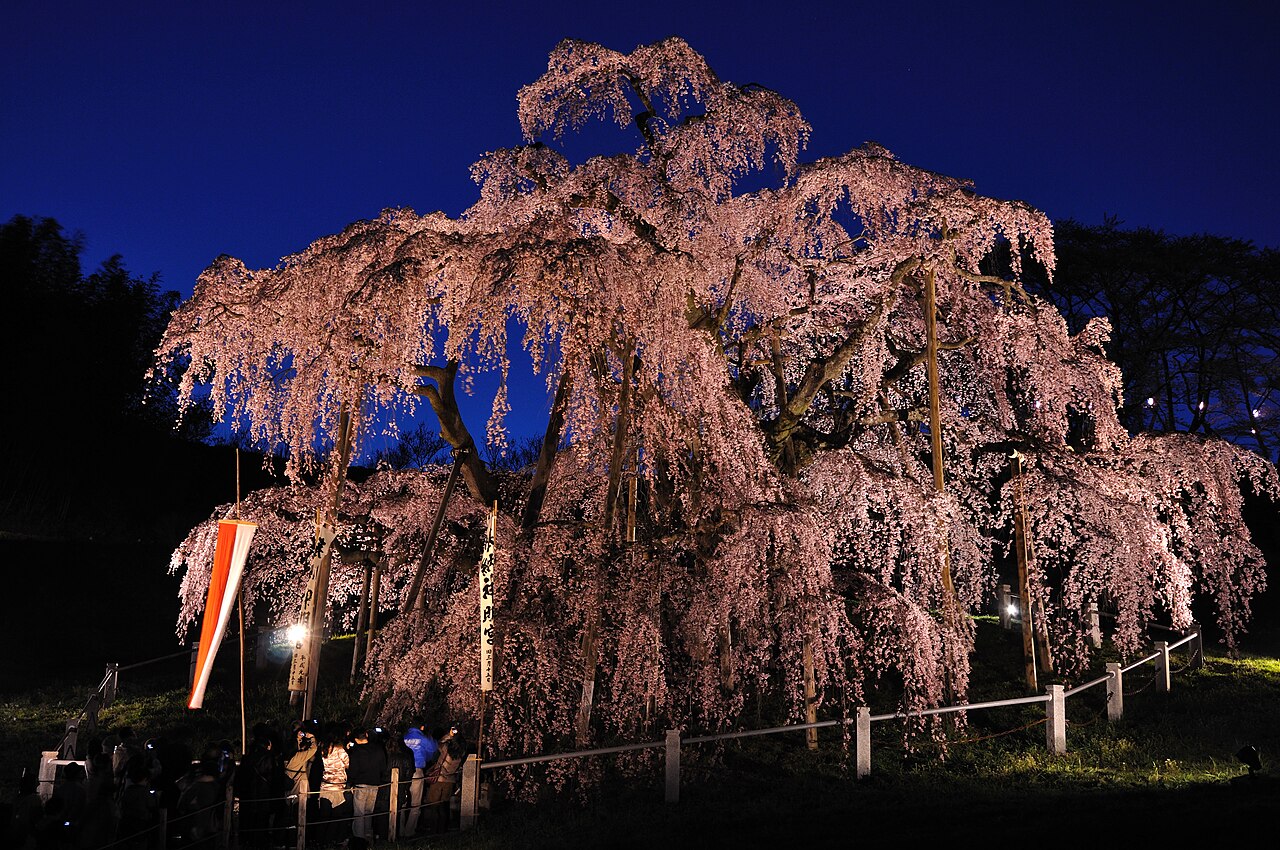
- The Night Light-up: Do not settle for the day view. The evening illumination (typically 18:00–21:00) transforms the blossoms into a warm, golden canopy against the deep blue of the April sky.
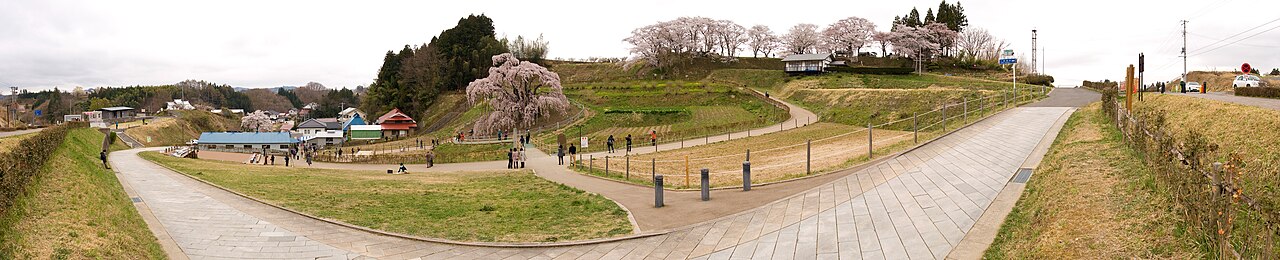
- The Two-Lap Rule: Most tour groups stay for twenty-five minutes. Plan for at least ninety. Walk the perimeter twice—once to photograph, once to observe—and spend ten minutes in silent contemplation on the benches overlooking the paddy fields.
- The Cold Reality: Even if the afternoon reaches 15°C, the night wind at 370 meters elevation is biting. Bring high-quality outerwear to ensure you can stay for the full light-up experience.
In a world defined by the transient and the digital, the Miharu Takizakura offers something increasingly rare: a tangible, living connection to the past. It is not just a destination; it is an endurance of beauty, waiting patiently for the next thousand years to unfold.


 Neng Nana
 Asro
Asro