Ammar Sabilarrohman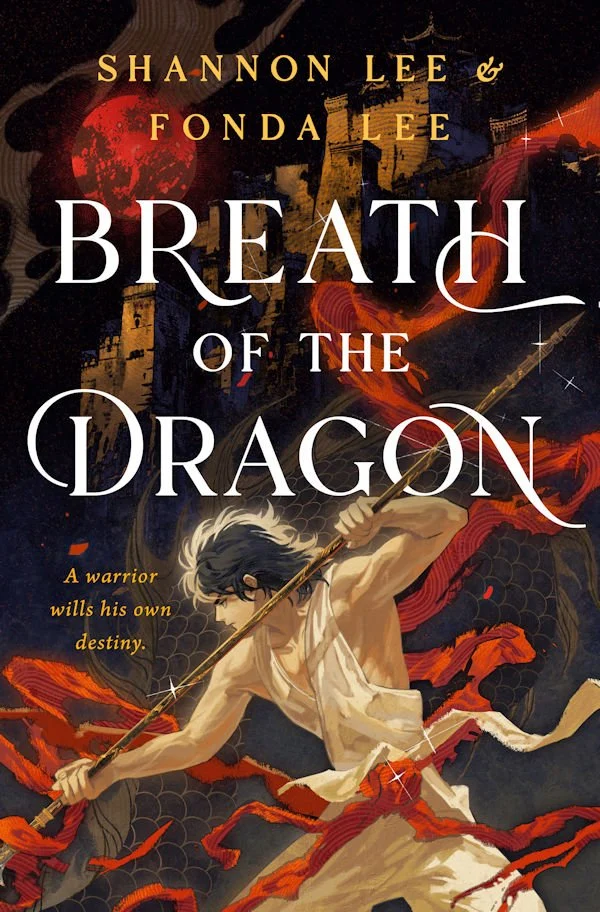
In the landscape of modern Young Adult (YA) literature, few collaborations have garnered as much intrigue as the pairing of legacy and literary prestige found in Breath of the Dragon. Released in January 2025, this novel serves as the inaugural installment of the Breathmarked Duology. It represents a unique intersection of creative forces: Shannon Lee, CEO of the Bruce Lee Family Companies and daughter of the martial arts icon, and Fonda Lee, the Hugo and World Fantasy Award-winning author behind the critically acclaimed Green Bone Saga.
At its core, Breath of the Dragon is a masterful synthesis of a traditional "Coming of Age" hero’s journey and the profound, life-affirming philosophies of Bruce Lee. While it may have initially been viewed by skeptics as a "celebrity-driven" project, the work has solidified its place as a robust piece of fantasy literature that stands firmly on its own merits, transcending the notoriety of its authors.
Main Facts: The Narrative Arc and World-Building
The story introduces us to sixteen-year-old Jun Li, a youth haunted by the shadow of his family’s past. In a world where the magical "Scroll of Earth" is entrusted every six years to a new protector via the elite Guardian’s Tournament, Jun is desperate to restore his father’s honor. His family, however, has been disgraced and banished from their home, separated from his mother and twin brother, Sai Li.
The conflict is deeply personal: Jun is not "breathmarked." In this universe, those blessed by the god, Dragon, are born with literal patches of dragon scales on their skin, granting them extraordinary physical and psychological abilities. Sai Li is marked; Jun is not. Forbidden by his father to pursue a path as a warrior, Jun defies his family’s wishes, stowing away in a wagon belonging to a traveling performer named Chang and his daughter, Ren. What begins as a desperate bid for personal redemption quickly spirals into a high-stakes struggle for the fate of the entire nation.
Chronology: A Roadmap of the Breathmarked Universe
To understand the trajectory of the Breathmarked saga, one must look at the intentional pacing set by the authors:
- January 2025: The publication of Breath of the Dragon introduces readers to the world of the Guardians, the mechanics of Breath Marks, and the socio-political fractures of the realm.
- The Tournament Arc: The central focus of the first book, the Guardian’s Tournament, serves as the crucible for Jun Li’s development. It is here that the reader is introduced to the systemic corruption and the "Cobu" influence that threatens the stability of the country.
- The Interstitial Period: The narrative bridges the gap between the initial tournament challenge and the broader, brewing conflict that spans the realm.
- October 27, 2026: The scheduled release of the concluding volume, Mark of the Warrior, promises to resolve the lingering threads of the epic quest and solidify the evolution of Jun Li from a scorned youth to a figure of true consequence.
Supporting Data: Philosophy as a Literary Foundation
What separates Breath of the Dragon from standard YA fare is the explicit infusion of Bruce Lee’s philosophy. The authors have stated in various promotional materials that the project was born from a desire to share the late martial artist’s legacy through a medium that could reach a new generation.
The Core Pillars of the Narrative
The novel functions as a vehicle for three primary philosophical tenets:
- Self-Ownership: As the character Ren aptly puts it, "Marked or not, every one of us has Breath enough to will our own destiny into being." This theme challenges the fatalism inherent in the "Breathmarked" system, suggesting that internal discipline outweighs innate biological gifts.
- Unity vs. Division: The narrative explicitly critiques the "us vs. them" mentality. Jun’s internal monologue reflects a rejection of tribalism, noting that those behind the walls are not inherently different from those within—a direct nod to Bruce Lee’s views on human interconnectedness.
- The Integrity of Effort: The book posits that "The gifts we work for are greater than the ones we’re given." This is the cornerstone of Jun’s character arc. Without the magical aid afforded to his brother, Jun must rely on grueling, repetitive, and disciplined training—a direct homage to the training regimens practiced by Bruce Lee himself.
Official Perspectives and Critical Reception
The critical reception of the novel has been largely positive, with reviewers praising the prose for its accessibility and clarity. Unlike the dense, flowery prose common in high fantasy—which can often alienate younger readers—Fonda Lee and Shannon Lee opted for a "crisp and clean" style. This stylistic choice makes the book an ideal entry point for younger readers transitioning into the fantasy genre.
However, the book is not without its challenges. Some readers have noted a lack of environmental grounding in the early chapters. Unlike Western-inspired fantasy, which relies on shorthand tropes like "towers" or "corsets" to set the scene, the world of Breath of the Dragon is inspired by Ancient China. For readers unacquainted with these historical markers, the setting can occasionally feel nebulous. Nevertheless, this is a minor hurdle in what is otherwise a richly textured world.
Regarding the "celebrity" aspect of the project, the consensus among critics has shifted. The collaboration between Shannon Lee and a seasoned professional like Fonda Lee has resulted in a synergy where the source material (the philosophy) is elevated by the craft (the narrative structure). The book is recommended for readers aged fourteen and up, primarily due to depictions of martial arts combat and sporadic, albeit mild, instances of profanity.
Implications: The Future of the Breathmarked Duology
The implications of Breath of the Dragon extend beyond its current commercial success. It establishes a template for how legacy projects can be handled with both artistic integrity and commercial viability. By choosing a duology format, the authors have ensured that the story remains tight and focused, avoiding the "middle-book slump" that plagues many longer fantasy series.
Thematic Resonance and Cultural Impact
The book serves as a cultural bridge, introducing non-European fantasy aesthetics to a wider audience while simultaneously preserving the specific, actionable philosophy of one of the 20th century’s most influential figures. The emphasis on "becoming the best version of yourself" provides a moral compass for the characters that resonates with the real-world anxieties of today’s youth.
As we look toward the release of Mark of the Warrior, the stakes are clear. Jun Li has moved past the initial, short-sighted goals of his teenage years and is now positioned at the center of a national crisis. The "bad wind" that the mentor figure, Chang, senses, serves as a harbinger for the conclusion of the series.
For the reader, Breath of the Dragon offers more than just a plot-driven fantasy experience; it offers a meditation on the nature of strength. Whether one is drawn to the tactile satisfaction of the book’s physical production—such as the ASMR-inducing sprayed edges—or the profound, prescient nature of its dialogue, the work stands as a testament to the idea that true power is not granted by birth, but forged through the unyielding discipline of the mind and spirit.
As the series moves toward its conclusion, it is evident that the "Breath" mentioned in the title is not merely a magical force, but the lifeblood of a story that encourages readers to look inward, cultivate their own inner strength, and, ultimately, take ownership of their own destiny.


 Laily UPN
 Evan Lee Salim