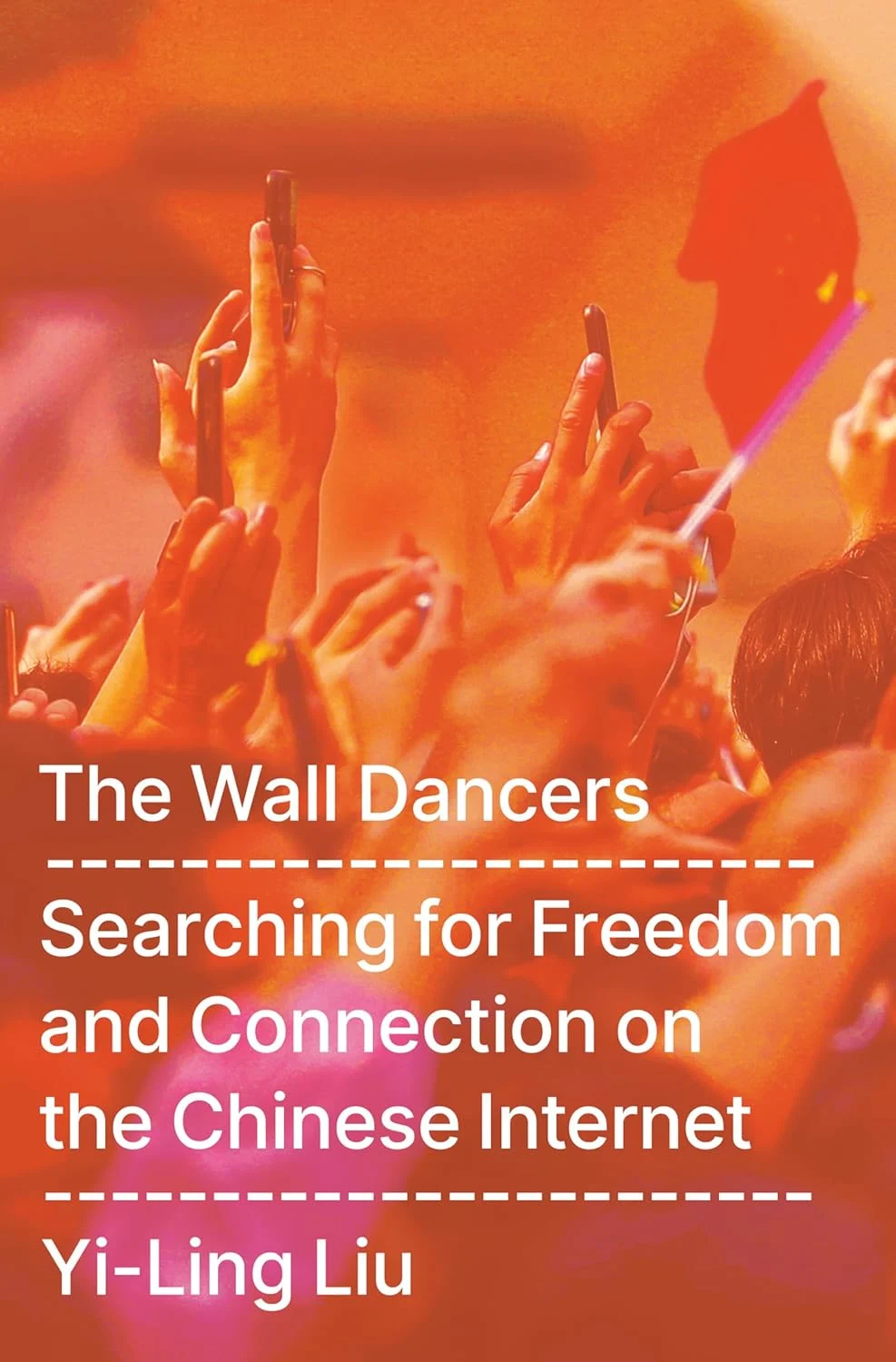
In the mid-2010s, a subtle but seismic shift occurred within the cultural landscape of the People’s Republic of China. Following a period of shou (tightening) of state control, the government entered a phase of fang (opening), an strategic loosening that allowed science fiction to migrate from the fringes of literary curiosity into the heart of the national mainstream. According to journalist Yi-Ling Liu in her compelling new book, The Wall Dancers, this was not a mere accident of literary taste. The Chinese state saw in science fiction a potent vessel to project "the Chinese imagination, Chinese style, and Chinese spirit"—a way to modernize the national narrative while keeping it firmly under the party’s ideological umbrella.
The Wall Dancers is far more than a literary critique; it is a sprawling, deeply human examination of the Chinese internet and the lives of those who attempt to navigate its heavily fortified borders. By focusing on the lives of individuals who operate within, around, and against the "Great Firewall," Liu provides a nuanced cartography of a society caught between technological hyper-acceleration and absolute political stagnation.
The Architecture of the Great Firewall
To understand contemporary China, one must first understand the infrastructure of its digital existence. The internet in China is not a public square in the Western sense; it is a meticulously curated ecosystem. The Great Firewall acts as a digital iron curtain, filtering out "subversive" ideas and ensuring that platforms like WeChat and Weibo remain under the constant supervision of the state.
The rules governing this digital space are, by design, opaque. This ambiguity serves a specific purpose: it compels users to practice self-censorship. When the red line is invisible, the safest place to stand is as far away from it as possible. As Liu explains, to live in China is to participate in a "dance in shackles"—a precarious, rhythmic negotiation between personal expression and state survival. Those who engage in this dance, whether through defiance, compliance, or a complex blend of both, are what Liu terms "wall dancers."
Chronology: From Sci-Fi Fringe to Digital Resistance
- The Mid-2010s: The "Fang" period begins. Science fiction gains state approval as a tool for national branding. Liu Cixin’s The Three-Body Problem achieves international acclaim, acting as a catalyst for the genre’s mainstream acceptance.
- The Era of Chen Qiufan: Chen, a former tech employee turned novelist, emerges as a voice of the era. His work uses the genre to critique the societal toll of rapid modernization without directly challenging the state’s historical legitimacy.
- The Growth of Digital Subcultures: Throughout the late 2010s, marginalized communities—including LGBTQ+ activists like Ma Baoli—leverage the nascent, relatively ungoverned spaces of the internet to build networks of support.
- The Modern Present: The digital landscape becomes increasingly polarized, defined by a rise in state-sponsored nationalism (the "Little Pinks") and a growing, weary disillusionment among the youth who find themselves "lying flat" (tang ping) in response to insurmountable economic and political pressures.
The Human Faces of the Digital Wall
The true strength of The Wall Dancers lies in its intimacy. Liu moves beyond abstract political theory to focus on the individuals for whom these digital barriers are a daily reality.
Consider the journey of Ma Baoli, a police officer who transformed a small, niche website for gay men into Blued, one of the world’s most successful LGBTQ+ dating apps. His story is a microcosm of the broader struggle for identity in China. Ma’s trajectory—from an academic in the police force to an entrepreneur navigating the shifting winds of state tolerance—illustrates the "dance" perfectly. At times, he works in tandem with state health initiatives; at others, he must retreat into the shadows to avoid the cyclical purges of the morality police.
Similarly, Liu highlights figures like Lü Pin, the founder of the digital magazine Feminist Voices, and Eric Liu, a former Weibo censor. These stories are punctuated by the small, visceral details of their lives: the hesitant pauses in conversation, the careful physical arrangements of their apartments, and the palpable tension of speaking truth in an environment where one’s digital footprint can result in the loss of financial security or liberty.
Science Fiction as a Strategy of Survival
Chen Qiufan, a pivotal figure in the book, utilizes science fiction not merely as entertainment, but as a survival mechanism. His novels, such as The Waste Tide, which explores the toxic reality of electronic waste processing, provide a lens through which readers can examine the consequences of unbridled technological growth.
"The Fish of Lijiang," one of Chen’s most haunting stories, depicts an office worker who finds that his reality is entirely manufactured—a metaphor for the burnout and disillusionment felt by China’s modern workforce. Chen is an expert wall dancer; he justifies his work to officials by emphasizing its potential to drive "innovation," all while embedding scathing critiques of labor conditions and social inequality within his narratives. As Liu notes, the central question of his work is one that transcends borders: What happens to us when our drive for progress outpaces our humanity?
Official Responses and the "Speech Tax"
The Chinese state does not simply ban content; it manages it through a sophisticated "speech tax." Citizens often engage in "performative patriotism," uttering phrases that contradict their true beliefs to avoid being flagged by censors. This environment has fostered a unique brand of nationalism, characterized by what Liu identifies as "smug triumphalism"—a sense of superiority derived from the perceived functionality of the Chinese state compared to the volatility of Western democracies.
However, Liu warns her Western audience against viewing China through the narrow, biased lens of US national security interests. She argues that the American perspective is often just as filtered and propagandistic as the one pushed by the Party. "Reading the Chinese internet," she writes, "requires rigor and nuance, empathy and skepticism. And now, more than ever, we need better readers."
Implications: A Global Perspective
The Wall Dancers leaves the reader with a profound sense of the universality of the struggle for connection. While the specific pressures—the Firewall, the state-mandated social credit systems, the constant threat of censorship—are uniquely Chinese, the underlying themes are global. The digital era has promised us a world without walls, yet we find ourselves increasingly divided by them.
The book’s limitations, however, are noteworthy. While Liu provides an excellent guide for Westerners, she occasionally relies on the assumption that her readers share a specific, progressive, and anti-Trumpian view of American politics. By framing much of the Chinese experience in opposition to the United States, she occasionally misses the opportunity to explore how these individuals relate to other parts of the world, or how they might view their identity entirely independent of the US-China binary.
Furthermore, one is left wondering about the "silent majority." Are the factory workers, the rural farmers, and the elderly outside of the tech hubs also dancing in shackles, or are they navigating an entirely different, perhaps more pragmatic, reality? Liu’s subjects are largely intellectuals, activists, and entrepreneurs—individuals with the resources and the inclination to look beyond the border. The voices of the truly disenfranchised, who may not care about Western media at all, remain a haunting absence in the narrative.
Conclusion
Ultimately, The Wall Dancers is a vital addition to our understanding of the modern age. It forces us to reconsider what "freedom" means in a digital world where our movements are tracked, our interactions are mediated, and our thoughts are subject to the whims of algorithms and autocrats.
Yi-Ling Liu has produced a work that is as much a cautionary tale as it is a testament to the resilience of the human spirit. Whether or not we ever set foot in China, we are all, in some sense, dancing in shackles. We are all living in the shadow of the digital walls we have built. By looking closely at those who are trying to jump, dismantle, or live within these walls, we might learn something about who we are, and who we might become, in the silicon-driven future that awaits us all.