

In the evolving landscape of additive manufacturing, the boundaries between industrial utility and personal expression are becoming increasingly porous. While 3D printers were historically relegated to the sterile environments of engineering firms and prototyping labs, a new generation of digital creators is pushing the technology into the realm of haute couture. YouTuber Matthew Trahan, a prominent figure in the additive manufacturing space, recently attempted a feat that challenges our fundamental understanding of garment production: he successfully 3D-printed an entire, wearable outfit from head to toe.
While the project serves as a compelling demonstration of what modern desktop fabrication can achieve, it also raises critical questions about the efficiency, cost-effectiveness, and environmental viability of “printed fashion.” As Trahan’s latest project demonstrates, just because we can print a pair of trousers does not necessarily mean we should.
The Anatomy of an Additive Outfit: Key Facts
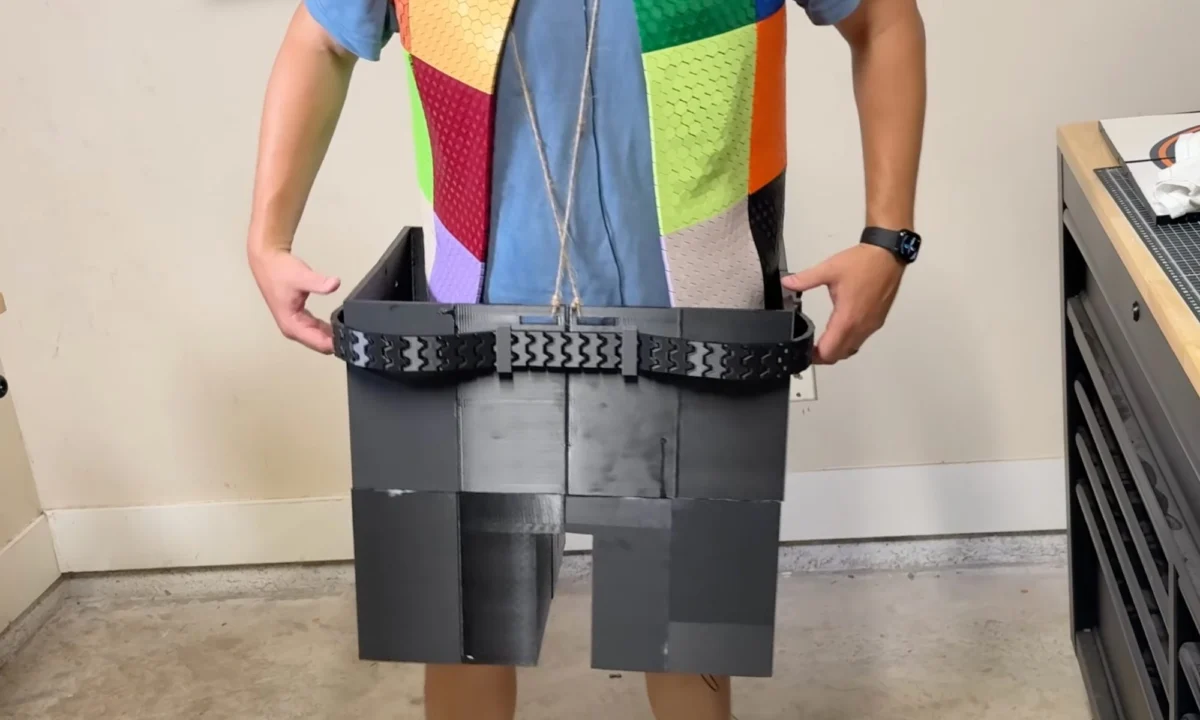
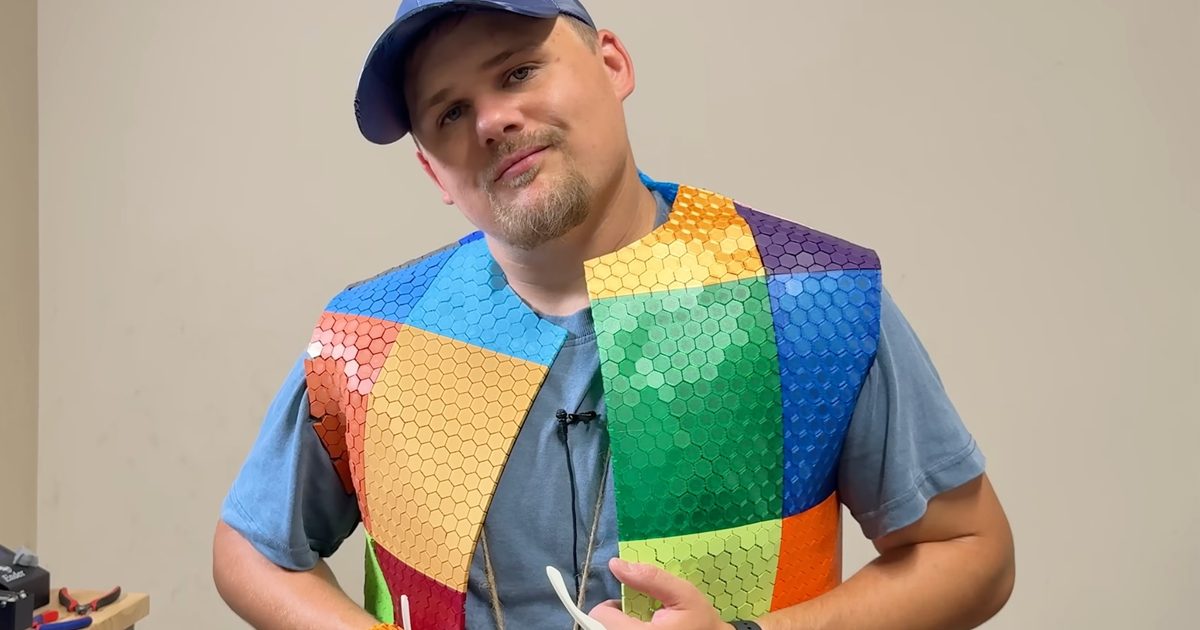
Trahan’s ambitious project was not merely an aesthetic experiment; it was a comprehensive logistical undertaking. The goal was to construct a full ensemble—shirt, shorts, shoes, socks, belt, hat, wallet, bag, tie, and glasses—entirely through 3D printing. The resulting collection, while technically functional, showcased the stark disparity between the ease of digital design and the physical reality of material deposition.
The project relied on a fleet of 3D printers, each chosen for specific material properties and build volumes. The most significant challenge proved to be the shorts, which required a specialized large-format machine—the Prusa Core 1L—to accommodate the scale of the garment. The result was a rigid, geometric aesthetic that drew immediate comparisons to the low-fidelity, voxel-based graphics of Minecraft, highlighting the current limitations of flexible, textile-like printing filaments. Conversely, other items, such as the “Waveform” shoe design by Stephen Drunks, demonstrated that with the right geometry, 3D printing could produce structurally complex and surprisingly ergonomic items.
A Chronology of Fabrication
The timeline of Trahan’s project provides a sobering look at the “on-demand” manufacturing future. What appears to be a rapid manufacturing process is, in reality, a labor-intensive marathon.
The Modeling Phase (Hours 1–33)
Before a single layer of filament could be laid, Trahan spent 33 hours in the digital design phase. This involved CAD (Computer-Aided Design) work to ensure that items were not only dimensionally accurate but also physically wearable. Unlike traditional sewing, where fabric is draped and pinned to fit the human form, 3D printing requires precise measurements to ensure that rigid or semi-rigid plastics do not impede movement or cause chafing.
The Printing Phase (Hours 34–593)
The actual production phase consumed a staggering 560 hours—roughly 23 days of non-stop printing. This represents the primary bottleneck of current consumer-grade additive manufacturing. Unlike the textile industry, which utilizes high-speed looms and automated cutting systems, the 3D printer works by slowly depositing material layer by layer. This 560-hour window is a testament to the fact that, while 3D printers are excellent for prototypes, they are currently ill-equipped for mass-market garment production where throughput is a necessity.
Supporting Data: The Hidden Costs of Innovation
When examining the viability of a 3D-printed wardrobe, the financial breakdown is as revealing as the final product.
Material vs. Capital Investment
The raw materials for the project—the plastic filament—cost approximately $100. For an outsider, this might seem like a bargain for a custom-made wardrobe. However, this figure ignores the massive capital expenditure required to enable such a feat. The inclusion of the Prusa Core 1L, which carries a price tag of $1,999, effectively shifts the cost of the project from a few dollars per item to a multi-thousand-dollar investment.
The Energy Consumption Factor
A frequently overlooked aspect of 3D printing is the electrical demand of long-term machine operation. By utilizing a power cost estimator, the electricity usage for the 560-hour print run can be quantified. At a U.S. average of $0.16 per kilowatt-hour (kWh), the energy cost sits at roughly $13.30.
However, regional variance is significant. With the U.S. Energy Information Administration (EIA) reporting an increase in average electricity rates to approximately $0.19 per kWh as of April 2026, the cost rises accordingly. For residents in states like California, where rates can exceed $0.38 per kWh, the cost of powering the machines alone becomes a factor. When calculating the total investment—$100 in materials, $1,999 in equipment, and the hidden costs of electricity and time—it becomes clear that 3D printing an outfit is a hobbyist’s endeavor, not a sustainable retail model.
Perspective from the Tech Community
While the internet has reacted with both awe and amusement to Trahan’s project, the broader additive manufacturing community remains divided on the implications. Industry proponents point to the fact that the patterns for these items are publicly available on platforms like MakerWorld, democratizing the ability to create bespoke items. They argue that as material science advances—specifically with the development of TPU (Thermoplastic Polyurethane) and other flexible, skin-safe filaments—the comfort level of 3D-printed clothing will inevitably improve.
Conversely, skeptics argue that the "Future of Fashion" is not found in rigid plastic meshes. Engineers point out that the sustainability argument for 3D printing often falls apart when one considers the energy-intensive nature of creating, shipping, and disposing of plastic filaments compared to the carbon footprint of organic, renewable textiles like cotton or hemp.
Future Implications: Innovation or Novelty?
The trajectory of 3D printing is undeniably leaning toward the mainstream, but the "full outfit" experiment highlights the "Valley of Despair" that often follows a new technology’s initial hype.
Can it Scale?
For 3D printing to become a viable alternative to the traditional garment industry, two things must change: printing speed and material science. Current FDM (Fused Deposition Modeling) technology is simply too slow for mass-market clothing. Furthermore, the tactile experience of plastic is a far cry from the breathability and drape of traditional fabrics.
The Role of Customization
The real value of Trahan’s experiment may not be the clothes themselves, but the proof-of-concept for hyper-customization. 3D printing allows for designs that are perfectly tailored to an individual’s body—a level of precision that is expensive and difficult to achieve in ready-to-wear retail. While we are unlikely to swap our denim and wool for plastic mesh anytime soon, the ability to print specific accessories, buttons, or custom-fitted components is already changing how independent designers approach their work.
Environmental Considerations
Finally, there is the question of the circular economy. While 3D printing can reduce fabric waste associated with traditional garment cutting, the recyclability of the plastics used in these outfits remains a hurdle. As the world pushes toward more sustainable production methods, the industry will need to pivot toward bio-polymers that can be easily repurposed or composted after the garment has reached the end of its lifecycle.
Conclusion
Matthew Trahan’s foray into printed fashion is a fascinating case study in the intersection of digital craft and physical utility. It serves as a stark reminder that while we have the tools to construct complex items from thin air, the "cost" of such creations—measured in time, electricity, and capital—remains prohibitively high for the average consumer.
The project is unlikely to replace the local clothing store, but it serves a vital purpose: it forces us to reconsider the origins of the items we wear every day. As we look toward the future, the integration of additive manufacturing into fashion will likely be found in the subtle, high-performance details—custom-molded footwear, modular accessories, and adaptive garments—rather than a full, head-to-toe plastic suit. For now, the most practical advice for those interested in 3D-printed fashion remains the same as it is for any complex project: appreciate the technical marvel, enjoy the digital patterns, but perhaps keep the sewing machine handy for your next pair of shorts.











