In the wake of Valve’s latest hardware release, the gaming community has been gripped by a familiar sense of frustration. Despite the excitement surrounding the brand’s return to the living room, the reality of limited availability and aggressive scalping has left many enthusiasts empty-handed. While the market has been flooded with various "compact" PC solutions, few have managed to capture the specific aesthetic and functional spirit of Valve’s original vision.
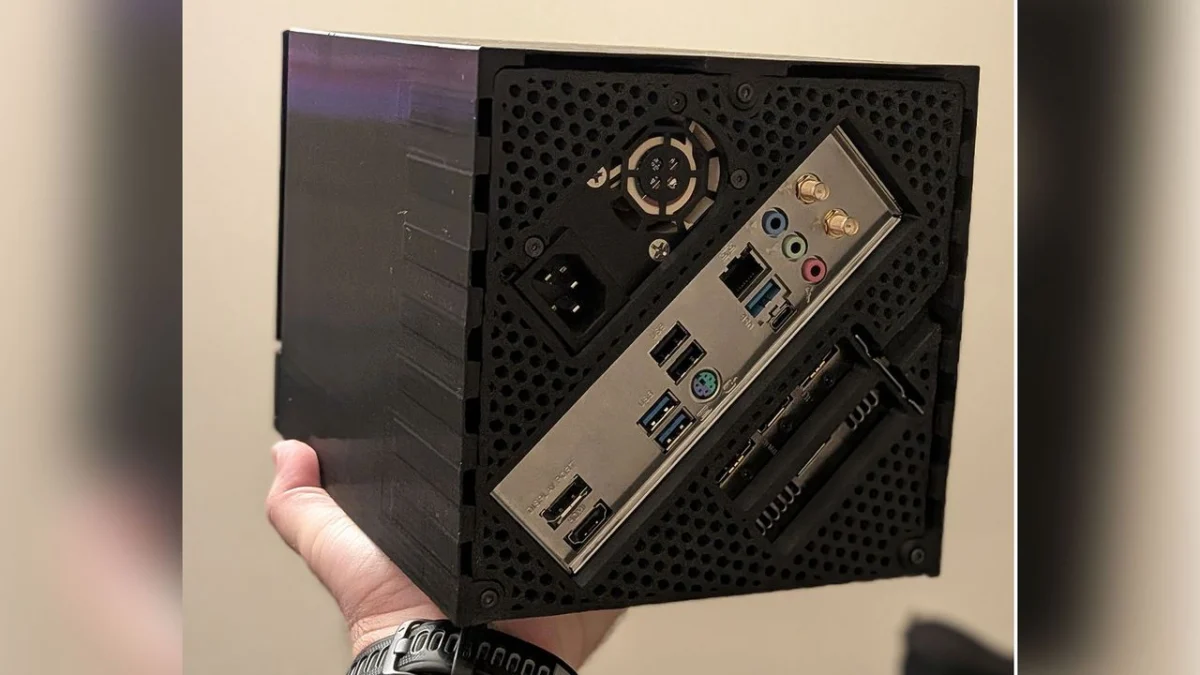
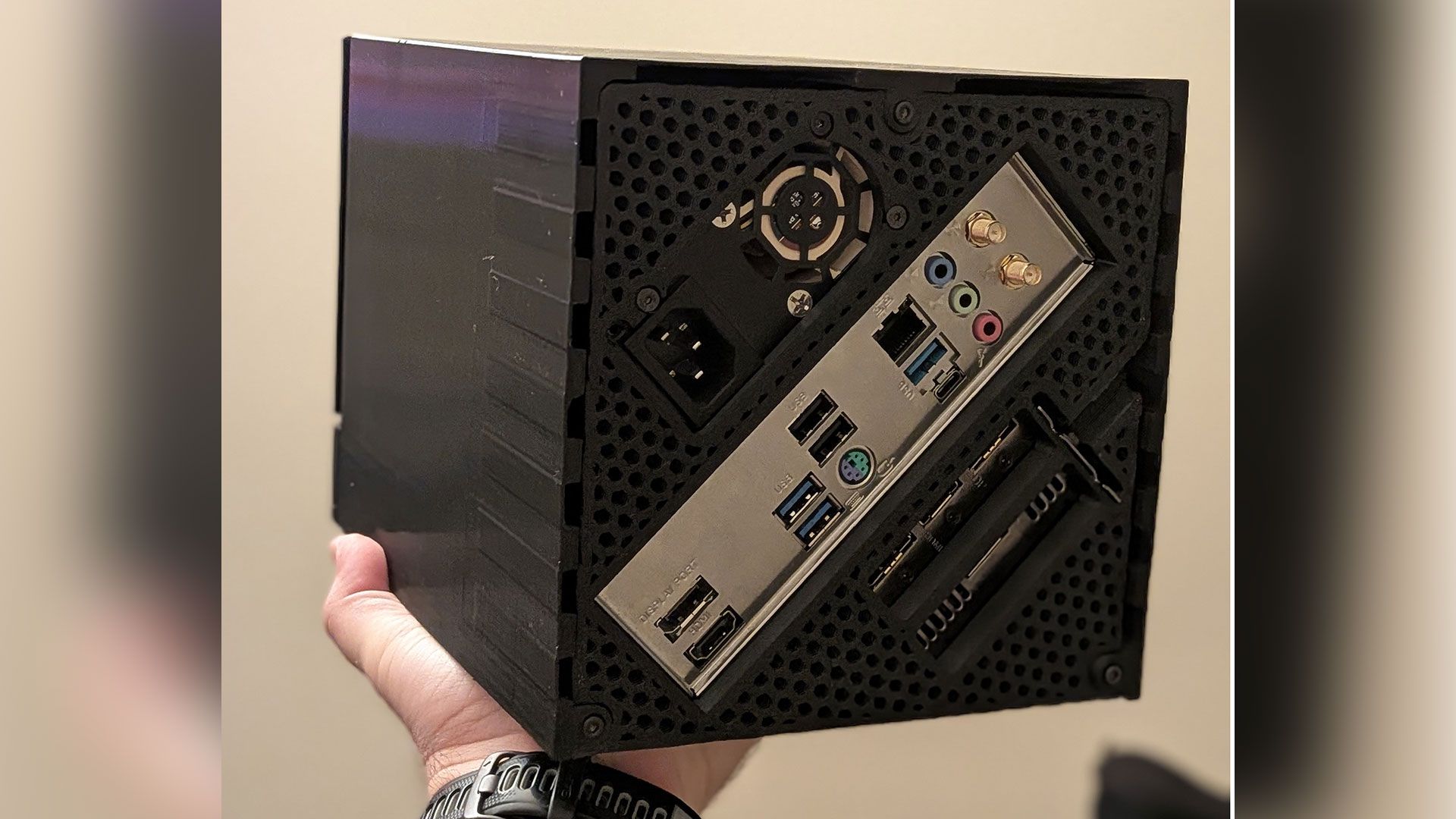
Enter the Terk Box v1.1, a 3D-printed, small-form-factor (SFF) chassis that has emerged as the most compelling, community-driven answer to the supply crisis. Born from a collaboration between industry veteran Jacob Terkelsen—a former Tom’s Hardware contributor now applying his expertise at AMD—and the 3D printing specialist known as "3DCatt," the Terk Box isn’t just a case; it is a manifesto for the DIY PC community.
The Genesis of the Terk Box: A Chronology of Innovation
The project began as an attempt to rectify the accessibility issues plaguing modern gaming hardware. Recognizing that mainstream SFF cases often sacrifice the "console-like" footprint for compatibility, the design team sought to balance ultra-compact dimensions with the thermal overhead required for modern components.
- Initial Concept (Early 2026): The design phase focused on replicating the footprint of the Steam Machine. The goal was to create a chassis that felt at home in an entertainment center while housing a fully functional gaming rig.
- The v1.0 Prototype: The first iteration proved the concept was viable but faced immediate thermal challenges. Users reported that high-end GPUs were essentially being "choked" by the lack of airflow, leading to thermal throttling.
- The Refinement (June 2026): After weeks of iterative testing, the v1.1 revision was released. This version introduced critical ventilation modifications, particularly around the rear exhaust, to allow the GPU to breathe.
- Public Release: With the design finalized for the first major revision, the files were uploaded to Printables.com under a Creative Commons license, signaling the project’s shift from a private experiment to an open-source community effort.
Design Philosophy: Balancing Form and Function
The Terk Box v1.1 measures approximately 167 x 168 x 225mm. To put this into perspective, the official Steam Machine dimensions are roughly 152 x 162 x 156mm. While the Terk Box is slightly larger, it remains significantly more compact than the vast majority of off-the-shelf Mini-ITX chassis currently available.
The core challenge of this project lies in the "physics of the squeeze." Building an SFF PC is a game of millimeters, and the Terk Box demands precise component selection. The current design supports a maximum GPU length of approximately 180mm. This constraint effectively limits builders to specialized LP (low-profile) or compact variants, such as the NVIDIA RTX 5060 LP utilized by Terkelsen himself.
The design team’s commitment to transparency is evident in their documentation. The project page on Printables.com provides a comprehensive Bill of Materials (BOM), including specific screw sizes, riser cable lengths, and assembly guides. However, the documentation also serves as a warning: this is not a build for the faint of heart.
Technical Hurdles and Component Constraints
The DIY nature of the Terk Box v1.1 introduces complexities that pre-built systems circumvent. Among the most frequent hurdles reported by the community are:
- PCIe Riser Compatibility: Because the internal layout is non-standard, the length and flexibility of the PCIe riser cable are paramount. Several builders have reported that recommended cables in the initial documentation were occasionally too short depending on the specific GPU model, leading to unnecessary frustration.
- Thermal Management: Despite the improved ventilation in the v1.1, the tight confines necessitate careful fan configuration. Terkelsen has openly discussed the need for further refinements to accommodate larger front-mounted intake fans (such as a 140mm unit), which would allow for lower noise profiles without sacrificing cooling performance.
- PSU/CPU Proximity: Perhaps the most significant "v1.1" compromise is the positioning of the CPU socket relative to the power supply. This layout requires a low-profile cooler with a small footprint to avoid clearance issues, limiting the choice of high-performance CPU cooling solutions.
The Role of the 3D Printing Community
The success of the Terk Box is a testament to the power of open-source hardware. By utilizing Creative Commons licensing, the designers have allowed for "forks" and remixes. This is vital, as the "one-size-fits-all" approach rarely works in the PC space.
For the 3D printing aficionado, the Terk Box serves as a blank canvas. Users with access to high-resolution printers can experiment with different materials, such as heat-resistant PETG or reinforced carbon-fiber filaments, to improve structural integrity and thermal dissipation. The community-led development is already looking toward a v1.2, which promises to address the current ergonomic quirks and expand compatibility for a wider array of power supplies and GPUs.
Implications for the Future of SFF Gaming
The existence of the Terk Box speaks to a growing disconnect between major hardware manufacturers and their core user base. When a company fails to provide sufficient stock, or when the "official" ecosystem becomes too restrictive, the community does not simply wait for a restock; it builds its own solution.
Market Disruption
The "Steam Machine scalping" phenomenon, where units are being resold for double or triple their MSRP, has created a vacuum. The Terk Box is filling this vacuum, proving that gamers are willing to put in the labor—and spend the money on high-quality components—to achieve the experience they were promised.
The Cost of DIY
It is important to note that the Terk Box is not a "budget" solution. While the case itself is cheap to print, the requirement for high-end SFF components—specifically the specialized PSUs, low-profile GPUs, and custom riser cables—means that the total cost of a fully realized Terk Box build can rival or exceed the price of a mid-range pre-built system. However, the value proposition here isn’t just financial; it’s about ownership and the ability to repair, upgrade, and customize the hardware without proprietary interference.
A Call to Action for Enthusiasts
For those interested in the project, the Terk Box serves as a reminder that the PC platform is defined by its modularity. The designers are actively soliciting feedback. Every user who downloads the STL files, encounters a build issue, and reports it back to the community is helping to refine the next generation of the case. This collaborative loop is the antithesis of the "black box" design philosophy often found in modern consumer consoles.
Looking Ahead: The Road to v1.2
As the project matures, the focus is shifting toward modularity. Future iterations are expected to move beyond the "fixed-cube" design, potentially introducing adjustable panels that could accommodate slightly larger GPUs or alternative liquid cooling loops.
While Valve continues to navigate the complexities of global supply chains and retail distribution, the Terk Box v1.1 stands as a beacon for the DIY community. It is a work in progress, certainly—but it is also a tangible, functional, and highly satisfying answer to the shortcomings of the current market.
For the reader who owns a 3D printer and has a penchant for precision engineering, the Terk Box is more than just a project; it is an invitation to participate in the ongoing evolution of the SFF gaming movement. Whether the final product is a perfect replica or a heavily modified "remix," the spirit of the project remains clear: the user should always have the final say in the hardware they own.
For those interested in tracking the development of the Terk Box, or to view the latest documentation and parts lists, the project remains active on Printables.com.