In the world of high-performance computing, the prevailing philosophy has long been "more fans, more cooling." However, a small but dedicated contingent of enthusiasts has spent decades chasing the holy grail of PC building: the truly silent, fanless powerhouse. MonsterLabo, a boutique manufacturer known for pushing the boundaries of thermal physics, has officially launched an updated iteration of its flagship chassis, The Beast. This massive, passive-cooled tower seeks to prove that top-tier gaming performance doesn’t require the roar of high-RPM fans.
Main Facts: The Evolution of The Beast
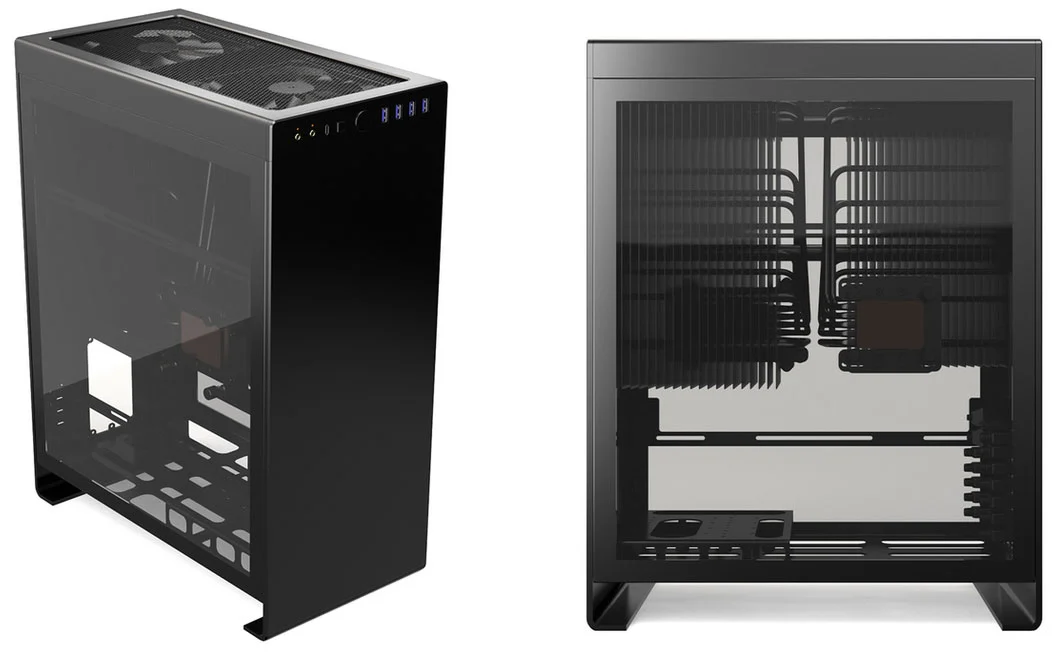
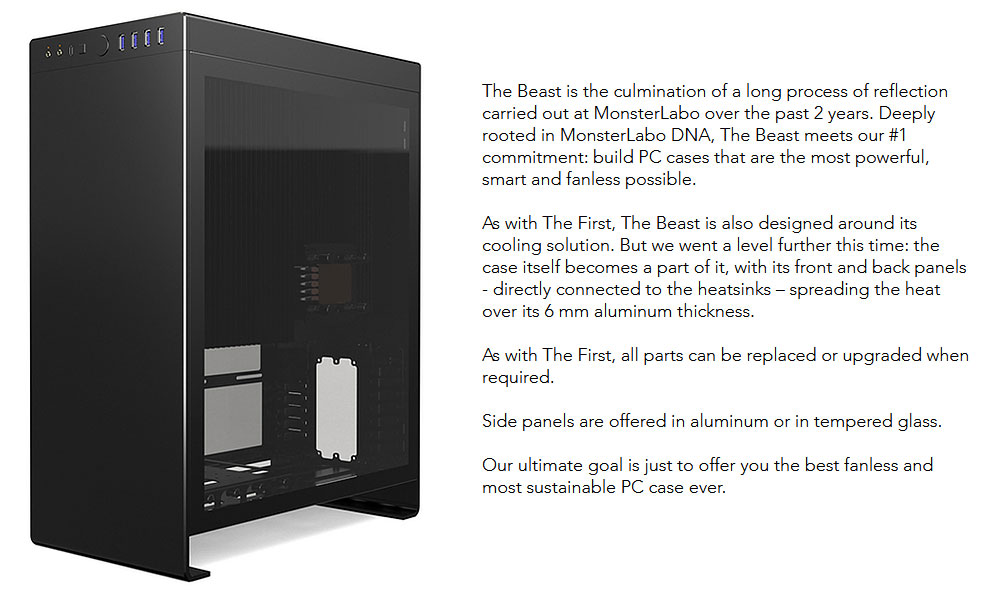
MonsterLabo’s latest campaign on Indiegogo marks a significant maturation of their design language. The core proposition remains unchanged: a monolithic, passively cooled PC case capable of housing some of the most power-hungry components on the market.
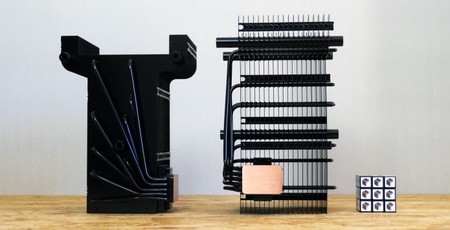
The heart of the system—quite literally—is "The Heart²," an updated thermal mass module that occupies roughly 50% of the internal chassis volume. This massive heatsink structure is bifurcated into two distinct sections: one dedicated to the CPU and the other to the GPU. By segregating these heat sources, MonsterLabo avoids the thermal soak issues that plague more compact passive systems.
Key highlights of the updated campaign include:
- Enhanced Compatibility: The chassis design has been tweaked to accommodate a wider array of modern graphics cards.
- Customization: For the first time, backers can opt for bespoke color finishes, with MonsterLabo handling the industrial-grade painting process.
- Personalization: Beyond standard serial numbering, the company is now offering custom laser-engraved logos.
- Pre-built Solutions: Catering to users who want the silence without the headache of assembly, MonsterLabo now offers pre-built systems starting at €2,850.
A Chronological Perspective: From Concept to Reality
The journey of The Beast has been one of incremental refinement. Earlier this year, in March, the tech community was captivated by a demonstration of the case running an AMD Ryzen 3800X paired with an Nvidia GeForce RTX 3080.
During that demonstration, the system was subjected to the grueling Microsoft Flight Simulator 2020 at 1440p on an ultrawide display. The results were startling: despite the total lack of active airflow, the CPU maintained a stable 75°C, while the GPU hovered at a comfortable 65°C. These figures silenced many critics who insisted that an RTX 3080 would throttle to death within minutes in a fanless environment.
Following that success, MonsterLabo spent the subsequent months analyzing thermal dissipation patterns. The transition from "The Heart" to "The Heart²" represents the company’s attempt to standardize the cooling performance across a wider range of hardware architectures, ensuring that the heatsink’s geometry is optimized for the TDP requirements of the latest generation of chips.
Supporting Data and Technical Realities
The performance of The Beast is not magic; it is an exercise in extreme thermal engineering. To maintain a fully silent profile, the system relies on high-surface-area heat dissipation.
The Thermal Equation
A critical development in this new iteration is the partnership with EKWB. MonsterLabo has integrated specialized heatspreaders, particularly for memory and for GPUs exceeding 220W TDP. By increasing the thermal conductivity between the board components and the main chassis heatsink, they have effectively turned the entire PC case into one massive radiator.
Real-World Testing: The Optimum Tech Benchmark
Prominent hardware enthusiast Optimum Tech recently put the updated version of The Beast through its paces. Choosing the Intel i9-10900K—a notoriously hot-running chip—he pushed the system to its limits. Running at 4.5GHz at 1.13V across all 10 cores, the CPU settled at 89°C.
While 89°C is warm, it is well within the operational limits of modern silicon. The GPU, an RTX 3080, required more finesse. By utilizing MSI Afterburner to apply a slight undervolt and reducing the base clock by 150-200MHz, the system achieved a rock-solid sub-80°C temperature under full load. This experiment highlighted a crucial reality for potential owners: building in The Beast requires a degree of "tuning literacy." To extract peak performance, users must be willing to engage in undervolting to balance thermal output against clock speeds.
Component Recommendations
MonsterLabo’s engineers and independent reviewers emphasize the importance of the supporting ecosystem. To ensure a fully silent build:
- PSU Choice: The SilverStone NightJar, a high-efficiency fanless power supply, is the gold standard for this build.
- Motherboard Selection: Users should prioritize motherboards with "overspecced" VRM (Voltage Regulator Module) sections. Because there is no ambient airflow, the heatsinks on the motherboard’s VRMs are critical to preventing system instability.
Official Responses and Strategic Shifts
In its communication, MonsterLabo has been transparent about the trade-offs of the passive lifestyle. Their decision to offer "fanless optimization" services for users who send in their own components suggests they recognize the technical barrier to entry.
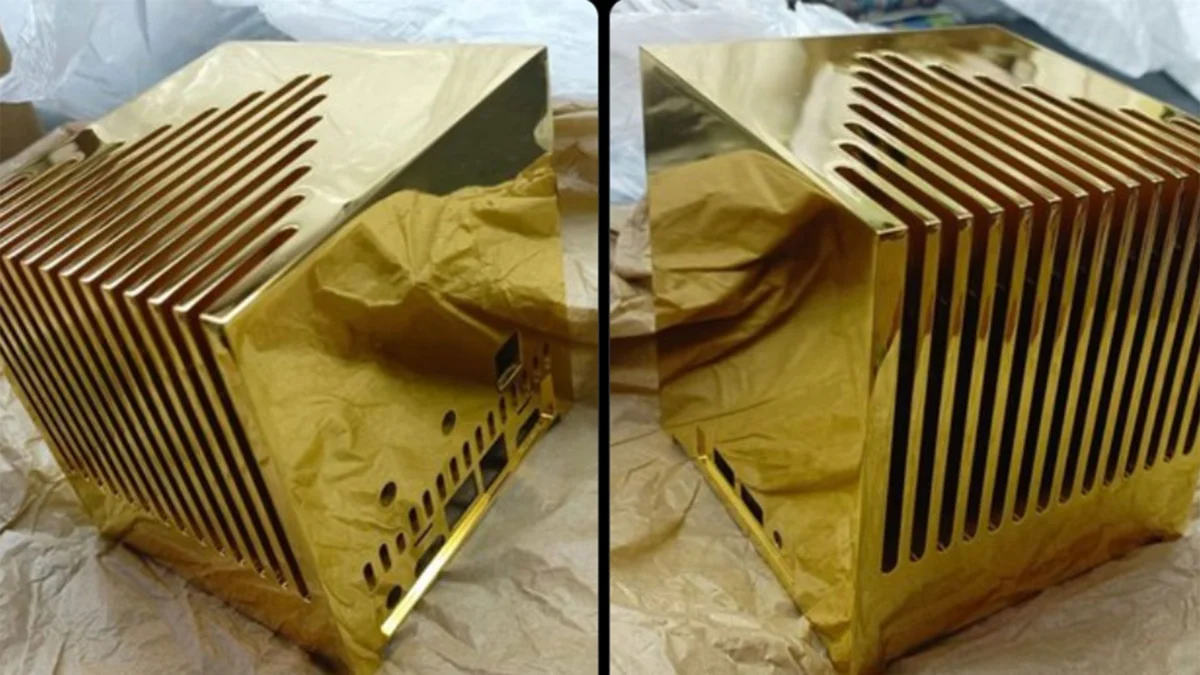
"We will take care of the painting," the company stated regarding their new customization tier, highlighting a shift toward becoming a premium lifestyle brand rather than just a chassis manufacturer. By offering the "Brass Edition" and various color finishes, they are acknowledging that The Beast is not just a tool, but a piece of industrial art that many users will want to display prominently in their homes or offices.
Implications: The Future of Silent Computing
The success of The Beast raises an interesting question: is active cooling becoming an obsolete crutch for high-end PCs?
The Death of the Fan?
For the average gamer, the convenience of a traditional AIO (All-in-One) liquid cooler or a standard tower fan will likely remain the standard. The ease of use, lower cost, and ability to handle sudden power spikes without manual tuning make them superior for general-purpose machines. However, for specialized use cases—such as professional audio recording, high-end studio work, or the burgeoning market of silent-living enthusiasts—MonsterLabo has created a product that is effectively peerless.
Market Accessibility and Lead Times
The logistical reality of the campaign is a testament to the niche nature of this product. With the first batch of units expected to arrive by Christmas, and the second batch slated for an Easter 2022 delivery, The Beast is not a mass-market commodity. It is a slow-burn, high-precision product. The €790 entry price for the chassis alone positions it firmly in the "enthusiast luxury" category.
Sustainability and Longevity
One implication often overlooked is the longevity of fanless systems. By eliminating the mechanical failure points—specifically, cooling fans that degrade and gather dust over time—The Beast is arguably more durable than traditional builds. In an era of e-waste, there is an inherent value in a chassis that can be easily repurposed for multiple generations of internal components, provided the mounting systems remain compatible.
Conclusion
MonsterLabo’s The Beast is more than just a case; it is a statement of intent. It challenges the status quo of modern PC design, daring users to rethink the necessity of noise. While it demands a higher level of technical knowledge and a willingness to compromise on raw "out-of-the-box" clock speeds in favor of thermal stability, the reward is an unparalleled computing experience.
As we move toward a future where computing power continues to climb, the thermal management solutions pioneered by MonsterLabo will likely find a larger audience. For now, those who choose to back The Beast are joining a select group of users who believe that the most powerful systems are the ones that never make a sound. Whether through the custom Brass Edition or the standard black finish, The Beast is poised to remain the definitive centerpiece for the silent-enthusiast community well into 2022 and beyond.