Laily UPN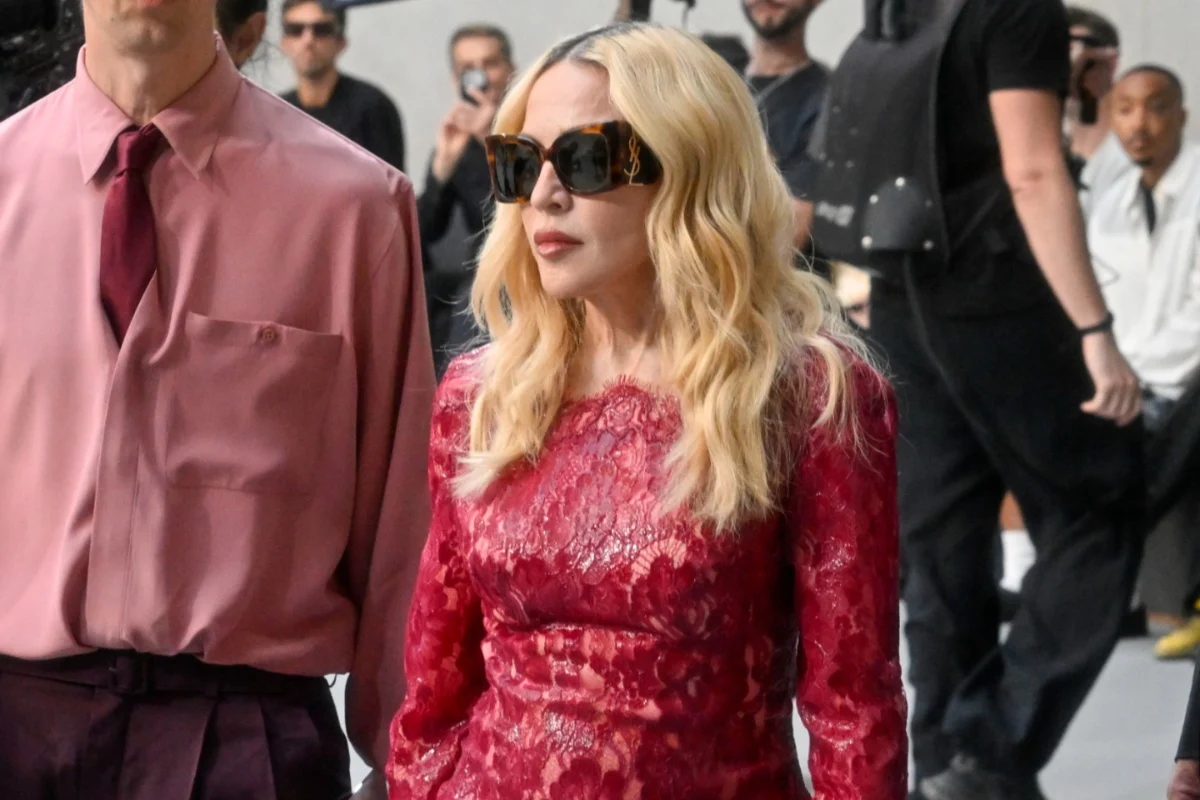
In a cultural landscape increasingly defined by the cold efficiency of artificial intelligence and the relentless quantification of human value via social media metrics, few voices carry as much weight as that of Madonna. The music icon, whose career has been defined by constant reinvention and the subversion of industry norms, has issued a searing indictment of the current technological trajectory in the arts. In a candid, exclusive cover interview for Vogue Italia, the pop legend did not mince words, characterizing the reliance on AI and algorithmic trends as the "opposite of making art."
For an artist who has spent four decades pushing the boundaries of what is possible in music, fashion, and performance, this critique is not merely a reactionary stance against new tools. Instead, it is a philosophical defense of the "pure place" from which true creativity must originate.
The Core Conflict: Artistry Versus Optimization
At the heart of Madonna’s critique is the fundamental tension between risk-taking and algorithmic predictability. In the interview, the "Material Girl" singer lamented the decline of the communal, tactile creative process that once defined the music industry.
"Once you were around painters and musicians and dancers and artists in one place and working from a very pure place for each other," Madonna told Vogue Italia. "I value that experience a lot. Nowadays you don’t do that anymore. Now to have a record deal, you think about how many followers you have."
This shift in priority—from the quality of the work to the size of the digital footprint—is what she views as the primary antagonist of contemporary creativity. She points to her own lyric in "Bring Your Love"—“Don’t try to distract me with numbers”—as a personal mantra intended to shield her creative process from the pressures of streaming charts and performance metrics.
"Algorithms and artificial intelligence are the opposite of taking risks," she asserted, "and to me, that is the opposite of making art."
Chronology of a Disconnection: A Pattern of Resistance
Madonna’s recent comments are not an isolated outburst, but rather the latest development in a long-standing pattern of resistance against the digital erosion of human connection. Her skepticism toward the "always-on" culture has been building for years, manifesting in various public forums.
- The Early 2020s: As the music industry pivoted aggressively toward TikTok-friendly "viral moments," Madonna began publicly distancing herself from the pressure to cultivate a hyper-curated online persona.
- The Confessions II Premiere (2026): During a high-profile Q&A at the premiere of her film, Confessions II – The Film, Madonna took direct aim at the modern concert-goer’s compulsion to record every second of a performance. Her directive to the audience—"put your f***ing phones down and connect"—was widely reported as a watershed moment in the growing "digital detox" movement within the music industry.
- The July 2026 Vogue Italia Cover: The current interview serves as the most comprehensive articulation of her stance to date, linking her disdain for social media distraction to the existential threat posed by generative AI.
Supporting Data: The Digital Weight of Modern Stardom
The data supporting Madonna’s claims reflects a music industry that has undergone a radical transformation. According to industry analysis from the past three years, the "Algorithm-First" model is no longer just a strategy; it is a structural necessity for survival.
The Metrics of Modern Success
- Audience Retention: Modern streaming platforms utilize algorithms that prioritize tracks with high "skip rates" or "retention rates." This has led many artists to shorten song intros and structure compositions to fit the "hook-heavy" demands of short-form video apps.
- Influencer-Artist Crossover: Record labels now frequently assess a prospective artist’s "Total Social Reach" before offering a contract, often prioritizing pre-existing engagement over vocal capability or songwriting talent.
- AI-Assisted Production: While generative AI tools are marketed as "creative assistants," industry reports suggest that in 2025 and 2026, over 40% of mid-tier pop productions utilized AI-generated backing tracks or vocal processing, leading to what critics call the "homogenization of sound."
Madonna’s argument is that by feeding these systems, the artist becomes a slave to the data rather than a pioneer of sound. When a machine predicts what an audience wants to hear, it eliminates the possibility of the audience hearing something they didn’t know they needed.
Official Responses and Industry Context
The reaction to Madonna’s comments has been polarized, reflecting the deep divide between the tech-optimist and the traditionalist camps in the music business.
Proponents of AI in music, including several prominent music-tech startups, argue that AI is simply a new evolution of the synthesizer or the digital audio workstation (DAW). "Madonna is a purist, and she has earned that right," said one prominent music producer in a recent trade publication. "However, to dismiss AI entirely is to ignore the democratization of production. It allows bedroom artists who don’t have access to the ‘painters, musicians, and dancers’ she describes to finally find their voice."
Conversely, songwriters and legacy performers have largely rallied behind her. Several high-profile artists have taken to social media to echo her sentiments, using the hashtag #ArtIsNotData to signify a pushback against the "playlistification" of music. The consensus among this group is that while AI can emulate the structure of a song, it cannot replicate the subtext of human experience—the trauma, the joy, and the lived reality that defines a masterpiece.
The Implications: Is Human Artistry Under Threat?
The implications of Madonna’s stance reach far beyond her own discography. We are currently witnessing a period of "creative fatigue," where the sheer volume of content produced via generative AI is leading to a paradoxical decrease in cultural impact. If everything is optimized for the algorithm, then nothing stands out.
1. The Search for "Stillness"
Madonna’s remedy for this crisis is a radical, intentional withdrawal. "Lately it’s been hard because of my record and so many things connected to it," she admitted. "But I do like to take breaks… and disappear. Because that’s how you fuel your imagination. You have to have stillness and you have to have days where you’re just connecting to nature, my children, my horses."
This call for "stillness" is a direct challenge to the modern artist’s expectation to be "content creators" 24/7. It suggests that the future of elite artistry may belong to those who are willing to reject the pressure to be constantly available.
2. The Devaluation of the "Chart"
If the industry continues to prioritize streaming numbers over artistic risk, we risk entering a period of stagnation. The history of music is built on the "mistakes" and the "unpredictable choices"—the very things that an algorithm is designed to filter out. Madonna’s warning serves as a cautionary tale: if we automate the creative process, we may eventually find that we have created a culture that is technically perfect but emotionally hollow.
3. A Return to the Human Element
Ultimately, Madonna’s words act as a rallying cry for the next generation of performers. She is encouraging them to prioritize the "pure place"—the studio environment, the collaborative rehearsal, the physical presence—over the metrics of a screen. Whether this leads to a new "analog revival" or a more nuanced way of integrating technology into art remains to be seen.
Conclusion
Madonna has never been one to follow trends; she has always been the one to set them. By positioning herself in direct opposition to the algorithmic machine, she is once again challenging her peers and her audience to look deeper.
As we navigate the intersection of human consciousness and machine intelligence, the question remains: Can an algorithm ever replicate the soul of an artist? If Madonna has her way, we will never find out, because we will be too busy "putting our phones down" to listen to the silence that precedes true inspiration. Her critique is a necessary friction in a world that is becoming increasingly frictionless, reminding us that art, by its very definition, is not a calculation—it is a human risk.

 Layla Zulfa
 Ammar Sabilarrohman