Layla Zulfa
In a case that has reignited national outrage over the handling of sexual violence in Japanese institutions, a former middle school teacher in Kanagawa Prefecture has finally been arrested, more than a year after his initial dismissal from the classroom. The arrest of 52-year-old Mamoru Yamaguchi brings to light a troubling pattern of institutional inertia, where schools and boards of education appear to prioritize reputation management over the safety of minors.
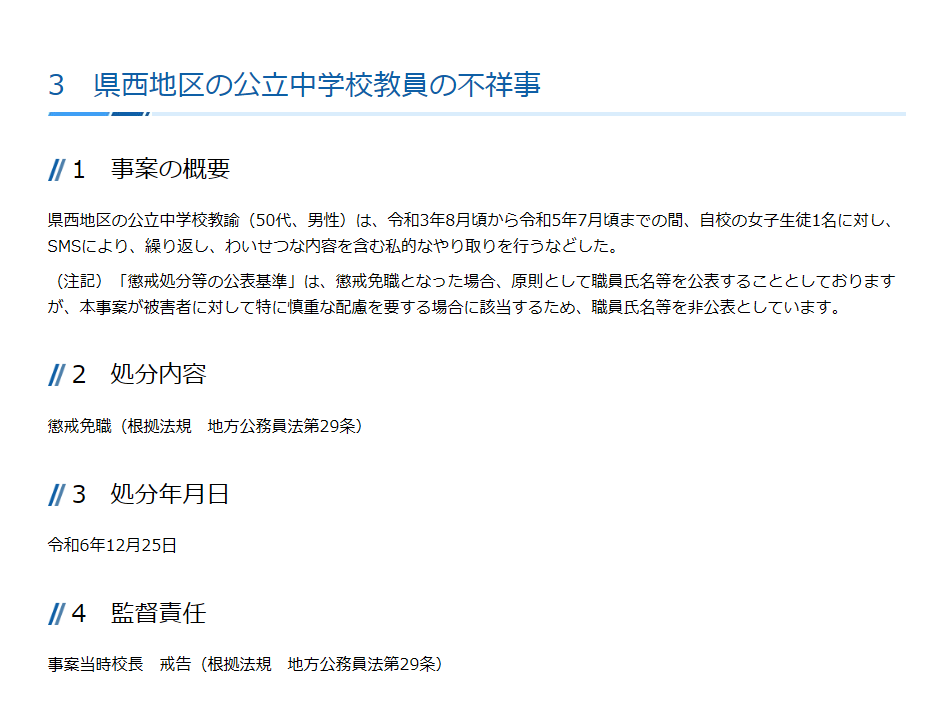
Yamaguchi, who served as a teacher and advisor for a sports club at an Odawara public middle school, stands accused of engaging in a systematic campaign of sexual coercion against a female student under his supervision. According to authorities, between January 2022 and July 2023, Yamaguchi sent the student 192 emails, many of which contained invasive, sexually charged demands.
The delayed nature of the arrest—coming 18 months after the school board initially took action—has prompted civil rights advocates and legal experts to question whether the Japanese education system is fundamentally incapable of addressing sexual predation without external intervention.
The Chronology of Coercion and Complacency
The timeline of the case against Yamaguchi reveals a jarring disconnect between the severity of his actions and the speed of the judicial response.
- January 2022 – July 2023: During this 18-month window, Yamaguchi allegedly maintained a barrage of communication with a female student. Reports indicate he used the platform of his position to demand that the student provide detailed logs of her menstrual cycles via SMS.
- December 2024: Following an internal investigation, the Kanagawa Board of Education dismissed Yamaguchi from his teaching post. While the board cited "crimes against children in his care," the administrative notice was characteristically euphemistic, failing to name the perpetrator or detail the full extent of the psychological and sexual trauma inflicted upon the student.
- June 2026: The arrest of Yamaguchi finally took place, but only after the victim’s mother bypassed the school board and filed a formal criminal complaint with the police.
This 18-month gap is not merely a procedural delay; it is a manifestation of the "keep it quiet" culture that persists in many Japanese government institutions. By handling the matter internally through a dismissal rather than immediately involving law enforcement, the school board essentially allowed the perpetrator to remain in the public sphere for over a year without facing criminal accountability.
Discrepancies in Reporting and the Fight for Transparency
The media coverage surrounding the case has highlighted the sensitivity—and often, the obfuscation—that accompanies reporting on sexual violence in Japan.
Early reporting by LiveDoor News focused on the teacher’s demands for menstruation reports. However, other outlets, including the Mainichi Shimbun, reported more disturbing allegations, including demands that the student masturbate. This discrepancy sparked a heated debate in the Japanese digital sphere, with many observers accusing the media of "soft-pedaling" the accusations to protect the reputation of the male educator, thereby undermining the victim’s experience.

The Kanagawa Board of Education’s internal report, which justified the firing, claimed that the teacher’s behavior was an attempt to "draw up an exercise plan suited to her physical condition." This defense—that a male teacher needed to monitor a student’s menstruation and check if her underwear was visible through her sportswear—is a classic example of "institutional gaslighting," where predatory behavior is reframed as professional or pedagogical concern.
Supporting Data: A Systemic Crisis
The Yamaguchi case is far from an isolated incident. In 2024 alone, 281 public-school teaching staff members were disciplined for sex crimes or sexual violence. While this reflects a marginal decrease from the record-breaking 320 cases reported in 2023, the numbers remain staggering.
Data consistently shows that roughly 98% of these offenders are male, and more than 60% of their victims are children within their own or neighboring schools. The statistics suggest that the Japanese education system is not just dealing with "bad apples," but with a systemic failure to vet, monitor, and report predatory behavior.
Despite the April 2024 ordinance in Kanagawa Prefecture mandating the automatic dismissal of teachers involved in child sexual violence, the implementation of such policies remains inconsistent. The law mandates dismissal, but it does not mandate prosecution or even reporting to the police, leaving a massive loophole that allows perpetrators to walk away from a school board hearing and move on to other roles involving children.
Institutional Responses and the Culture of "Internal Handling"
The refusal to involve police is a recurring theme in Japanese schools. In many documented cases, schools prefer to handle incidents internally to avoid the "scandal" of a police investigation, which they fear would tarnish the school’s image and upset the local community.
This institutional preference for silence has profound consequences:
- Second Victimization: Students who report abuse are often treated with skepticism or told that the school will handle it, which prevents them from receiving the legal protection and counseling they need.
- Lack of Accountability: When a school board fires a teacher but does not pursue a criminal record, that teacher is often free to seek employment elsewhere, particularly in private cram schools (juku) or other sectors that may have less rigorous background check requirements.
- The "Safety Pin" Phenomenon: The lack of faith in police and institutional mechanisms is so profound that many Japanese women have resorted to vigilante tactics, such as carrying safety pins to prick gropers, rather than filing reports that they believe will be ignored or turned against them.
The Path Forward: Can the System Change?
The Japanese government has taken some steps to address these failures. Recent years have seen a landmark revision of the penal code, which included raising the age of consent and expanding the legal definition of coercive sexual assault. These changes were hard-won, following decades of public protests and the tireless work of sexual assault survivors.
Furthermore, Japan is preparing to launch a national sexual offender tracking system, modeled after the United Kingdom’s Disclosure and Barring Service (DBS), scheduled for operation on December 25, 2026. This system is designed to prevent sex offenders from working with children.
However, critics point out that the DBS system will only be as effective as the data fed into it. If local school boards continue to fire teachers for "disciplinary reasons" without registering them as criminal offenders, the system will fail to catch repeat predators. The Yamaguchi case serves as a cautionary tale: unless there is a mandatory requirement to report all allegations of sexual violence to the police, the tracking system may be easily bypassed.
Implications for the Future
The 18-month delay in the Yamaguchi case underscores a harsh reality: in Japan, the burden of seeking justice for sexual violence remains squarely on the victim and their family.
For the school board, the priority was the 2024 dismissal—a box-ticking exercise that cleared the school of its immediate problem. For the victim, however, the process of healing and the pursuit of justice was only possible because her mother refused to let the school’s internal resolution be the final word.
The legal and educational establishment in Japan is at a crossroads. As the country moves toward a more digitized and transparent vetting process for professionals, it must also address the deep-seated cultural discomfort surrounding the discussion of sexual violence. Without a fundamental shift—one that prioritizes the testimony of children over the reputations of institutions—cases like that of the Odawara middle school will continue to occur, and the cycle of silence will remain unbroken.
The fundamental question remains: how many more "18-month gaps" must occur before the Japanese government realizes that protecting a student’s future is far more important than protecting a school’s image? As it stands, the system is still failing those it is meant to protect, leaving victims to navigate a labyrinthine legal and social structure that often seems designed to keep the truth hidden.


 Neng Nana
 Asro
Asro