
 Iffa Jayyana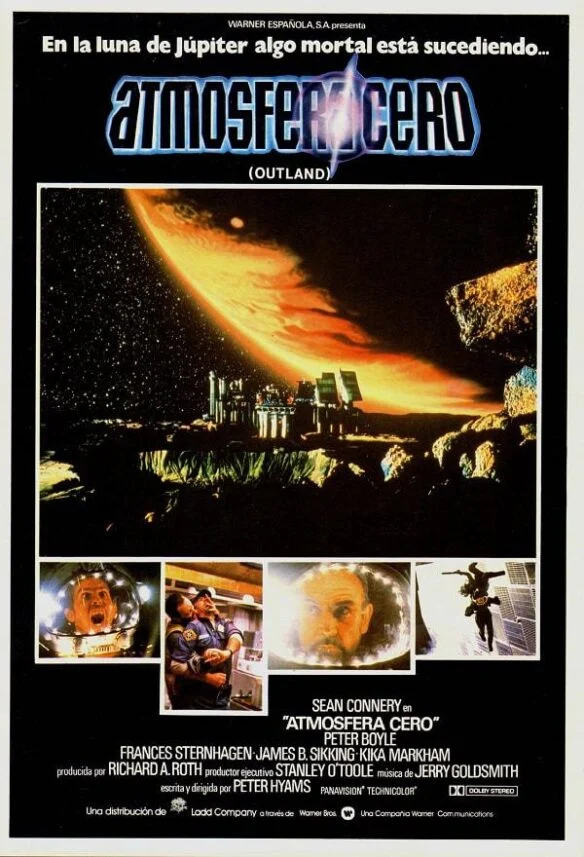
This week in the world of science fiction, pop culture, and historical inquiry, we navigate a diverse landscape of events—from the surreal, cinematic conclusion of a late-night television titan to the tactile reality of Neolithic archaeology. As we scroll through the digital ether, we find ourselves reflecting on the intersection of human ingenuity, the rapid pace of technological advancement, and the enduring legacy of the stories we tell.
1. The Final Frontier of Late-Night: Stephen Colbert’s Galactic Exit
The landscape of American late-night television shifted permanently this week as Stephen Colbert concluded his storied run. In a finale that defied the conventions of the genre, the New York Times reported on the episode, titled "Stephen Colbert Went Out His Way: Through a Wormhole." The production was noted for its high-concept science fiction special effects, which served as a surreal backdrop for the host’s departure.
As the program reached its climax, a wormhole portal materialized on set. Colbert was joined by luminaries including Neil deGrasse Tyson, Jon Stewart, and Andy Cohen, who assisted in the host’s transition into the unknown. The moment was marked by the reunion of the "Strike Force Five"—Jimmy Fallon, Seth Meyers, John Oliver, and Jimmy Kimmel—who gathered to bid their colleague farewell.
The exchange between the hosts highlighted the absurdity of the current television landscape. When Colbert questioned why his peers weren’t being pulled into the void as well, Kimmel offered a dry, meta-commentary on the volatility of the industry, referencing his own show’s brief hiatus following political controversy. John Oliver delivered the final, poignant sentiment: "At some point, this may come for all of our shows. But, Stephen, what’s important to remember is tonight it is going to eat you."
2. Literary Exploration: Shelfies and the Art of the Collection
For those who view a personal library as a window into the soul, the Shelfies newsletter, curated by Lavie Tidhar and Jared Shurin, continues to offer a compelling look at the curated collections of speculative fiction luminaries.

In a recent installment, the series profiled Rachel Cordasco, a scholar whose work bridges the gap between academic rigor and fan enthusiasm. Cordasco, who holds a PhD in literary studies, has dedicated her career to the translation and critique of speculative fiction. Her recent publication, Out of This World: Speculative Fiction in Translation From the Cold War to the New Millennium (University of Illinois Press), serves as a critical resource for those interested in the global reach of the genre. Shelfies provides a necessary, intimate context to such scholarly work, reminding us that every great intellectual contribution begins with a well-stocked shelf.
3. The Hugo Awards: Navigating the "Dramatic Presentation" Category
As the annual Hugo Awards cycle approaches its climax, fan commentary is reaching a fever pitch. Prominent critic Camestros Felapton has published an analysis titled "Hugo 26: Dramatic Presentation Longggggg," offering a candid assessment of the current slate of finalists.
Felapton’s review highlights the subjective, and often contentious, nature of the Hugo voting process. With six finalists vying for the top spot, the critic noted that half of the field failed to make a positive impression, sinking immediately to the bottom of the ballot. This sentiment serves as a reminder of the "bovine mileage may vary" philosophy inherent in fan-voted awards—where the "cream" of creative output often depends entirely on the palate of the voter.
4. Audio Chronicles: Sharon Lee and the Liaden Universe
The Baen Free Radio Hour has provided a deep dive into the work of Sharon Lee, co-author of the beloved Liaden Universe. Through a comprehensive two-part interview titled "A Liaden Universe Constellation," listeners are granted insight into the creative mechanics of one of science fiction’s most enduring collaborative partnerships. These discussions are vital for understanding the sustained world-building efforts required to maintain such an expansive fictional universe, offering fans both a retrospective of the series’ development and a glimpse into the future of the Liaden saga.
5. Archaeological Realism: Reconstructing the Neolithic Hall
History is rarely as static as the stones that represent it. This week, The Guardian reported on a significant project by English Heritage: the unveiling of a 4,500-year-old Neolithic hall near Stonehenge.

The £1 million project, which took nine months to complete, involved over 100 volunteers working by hand to reconstruct a structure based on the archaeological footprint of "Durrington 68." This "square in the circle" building remains a point of mystery for historians. Was it a communal space, a ritual center, or a storage barn for winter feasts? By building the structure in its original dimensions—7 meters high—English Heritage is providing a visceral, immersive environment that challenges our assumptions about the sophistication of prehistoric societies. The hall is set to open as a learning space this summer, turning archaeological data into an accessible educational experience.
6. Historical Reflection: The 45th Anniversary of Outland
In his recurring "Memory Lane" column, Cat Eldridge examines the 45th anniversary of the 1981 film Outland. Starring Sean Connery, the film was a bold attempt to transplant the Western genre into the cold, claustrophobic environment of a mining colony on Jupiter’s moon, Io.
Eldridge provides a fascinating breakdown of the film’s troubled production history. Originally titled Io, the film was renamed to evoke the Western aesthetic—a genre that director Peter Hyams believed was "alive and well, but in outer space." Despite the film’s innovative use of "Introvision" technology and a powerful performance by Connery, it faced a difficult reception. Critics were divided, with some dismissing it as "trite" while others praised it as a "brilliant sci-fi Western." Ultimately, the film struggled to find commercial success, illustrating the risks inherent in genre-blending long before it became the industry standard.
7. A Lesson in Orbital Geopolitics: The Sergei Krikalev Story
SpaceDaily has resurfaced one of the most remarkable stories in the history of human spaceflight: the experience of cosmonaut Sergei Krikalev. Launching in May 1991, Krikalev departed as a citizen of the Soviet Union. By the time he returned to Earth 311 days later, the USSR had ceased to exist.
This account serves as a profound case study in the fragility of political structures compared to the relative constancy of orbital mechanics. Krikalev’s mission, which was extended due to financial constraints, saw him orbiting a world that was fundamentally changing beneath him. He learned of the renaming of his home city from Leningrad back to Saint Petersburg while in space, and witnessed the independence of Kazakhstan—the very nation hosting his launch site. It remains a stark reminder that while the cosmos may seem indifferent to human borders, the astronauts who traverse it are tethered to the shifting tides of history.

8. The Future of Flight: SpaceX and the V3 Starship
The aerospace sector continues to advance at a breakneck pace. This week, NBC News reported on the test flight of the latest, "beefed-up" version of SpaceX’s Starship. The V3 iteration, which stands 407 feet tall, represents a critical step in the company’s efforts to facilitate lunar landings for NASA’s Artemis program.
Following CEO Elon Musk’s recent announcement regarding the company’s move toward an initial public offering, the stakes for these test flights have never been higher. By carrying 20 mock Starlink satellites, the mission aimed to demonstrate the rocket’s payload capacity and stability. Despite the history of explosive setbacks, the successful launch of this third-generation vessel signals a transition from experimental prototyping to operational capability.
Implications for the Future
As we synthesize these disparate threads—the cultural shifts in media, the preservation of our collective history, and the rapid expansion of our reach into space—a common theme emerges: the necessity of adaptation. Whether it is the late-night host pivoting to digital-age surrealism, the archaeologist reconstructing a forgotten hall, or the astronaut forced to redefine his identity in the wake of a collapsing state, the human experience is defined by our ability to navigate change.
As we look toward the next week, the lessons of the past—both recent and prehistoric—provide a foundation for the innovations of the future. The "scrolling of the pixel," as Steve Davidson so eloquently put it, is more than just a digital habit; it is a way of witnessing the ongoing, often chaotic, and always fascinating story of human endeavor.
Acknowledgments: This summary was compiled with contributions from Jonathan Cowie, Chris Barkley, Mark Roth-Whitworth, Kathy Sullivan, Steven French, Mike Kennedy, Andrew Porter, John King Tarpinian, and Cat Eldridge. Title credit: Steve Davidson.


 Nana Wu
 Ali Ikhwan





