Basiran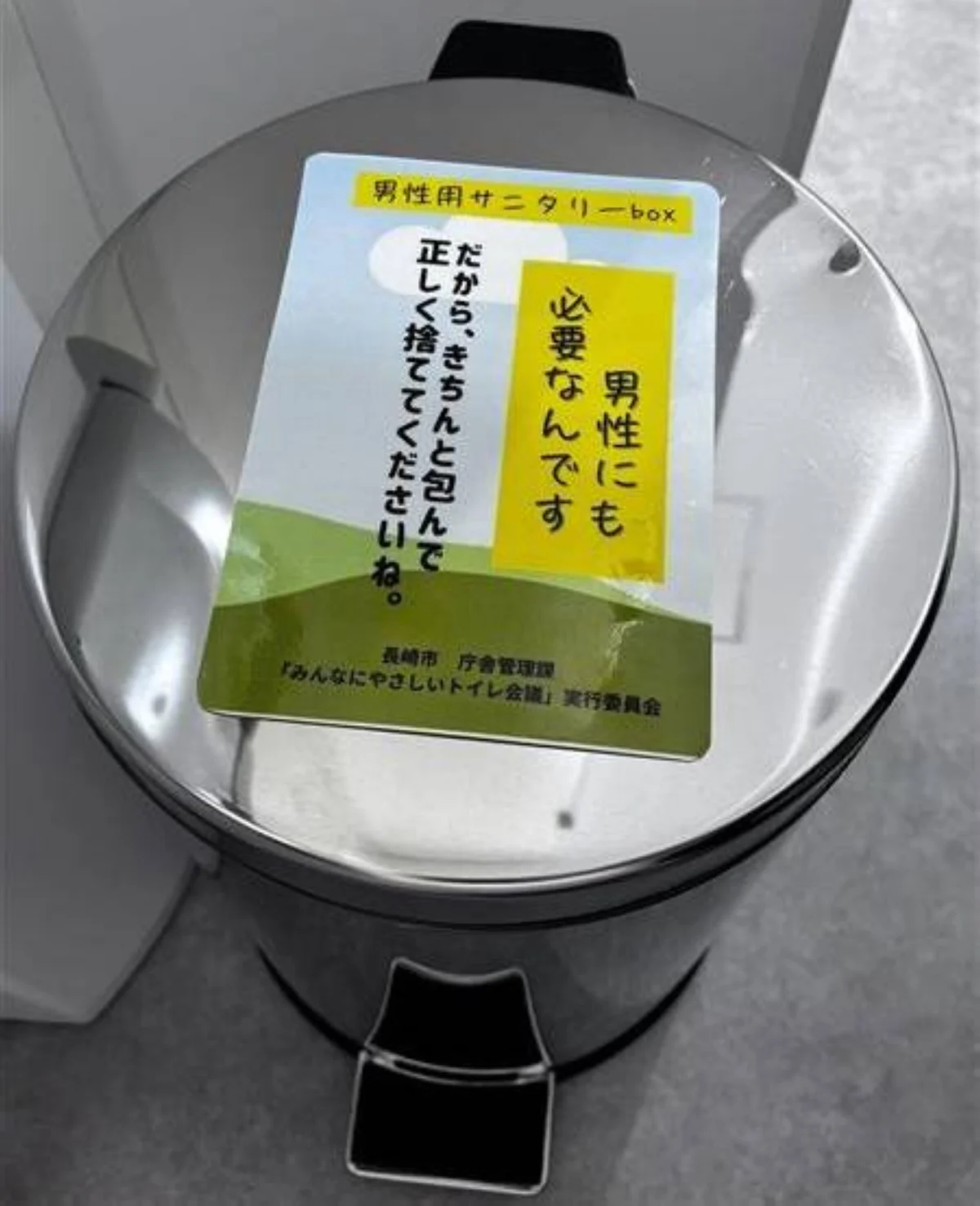
Introduction: A Changing Landscape in Public Hygiene
In the quiet corners of Japan’s public infrastructure, a subtle but significant transformation is underway. As the nation grapples with the dual pressures of an rapidly aging population and a shifting landscape in healthcare—specifically the rising number of cancer patients—the design of men’s restrooms is undergoing a long-overdue evolution. The installation of sanitary disposal bins, once exclusively found in women’s facilities, is becoming a necessary inclusion in men’s rooms across the country.
However, this transition is not without its growing pains. While the physical infrastructure is being updated to meet the biological realities of an older male population, a significant gap remains in social awareness. Many of these specialized bins are being misused as standard trash receptacles, highlighting a broader societal challenge: how to normalize a conversation about incontinence and health management in a culture that has long stigmatized these topics.
The Catalyst for Change: Why Now?
The push for this accessibility initiative is rooted in cold, hard demographics. Japan holds the world record for the highest proportion of elderly citizens, with nearly 30% of its population aged 65 or older. This demographic shift has inevitably led to a higher prevalence of age-related conditions, including bladder control issues and incontinence.
Furthermore, medical advancements have allowed more patients to live with cancer for longer periods. Treatments, particularly those involving prostate or colorectal surgery, often result in temporary or permanent incontinence. For these individuals, the ability to leave their homes and participate in public life is inextricably linked to the availability of proper sanitary facilities.
A doctor at Nagasaki University, recognizing the profound isolation these patients face, approached the Minna ni Yasashii Toire Kaigi (The "Everyone Deserves a Nice Toilet" Council), a Nagasaki-based citizens’ group dedicated to making public sanitation more inclusive. This consultation served as the spark that would eventually ignite a nationwide conversation on dignity, accessibility, and the practical requirements of a graying society.
Chronology of a Quiet Movement
The movement to integrate sanitary bins into men’s restrooms did not happen overnight; it is the result of years of grassroots advocacy and incremental policy shifts.
- Early 2010s: As the aging crisis became a prominent political topic, individual advocates began pointing out the lack of dignity afforded to elderly men who required incontinence products.
- 2018–2020: The Minna ni Yasashii Toire Kaigi began formalizing its outreach, working with municipal governments in Nagasaki to pilot the installation of disposal units in high-traffic public areas, such as train stations and community centers.
- 2021–2022: The initiative gained traction as medical professionals began publicly speaking about the mental health benefits of inclusive infrastructure. Hospitals and university clinics began installing these bins, normalizing their presence for patients and visitors.
- 2023–Present: The issue has moved into the national spotlight. Retail chains and corporate office complexes have begun following suit, though the "misuse" problem has emerged as the primary hurdle to widespread adoption.
Supporting Data: The Scope of the Need
To understand why this change is necessary, one must look at the market data. Japan’s market for adult incontinence products has seen consistent, year-over-year growth. According to data from the Japan Hygiene Products Industry Association, the sales of adult diapers and pads have surpassed those for infants for several years running.
This shift is not merely a commercial trend; it is a public health requirement. Studies conducted by the Minna ni Yasashii Toire Kaigi suggest that nearly 15% of men over the age of 60 in urban Japan utilize some form of incontinence protection. When this group is unable to find a discrete way to dispose of these items, they often limit their time away from home. This "social withdrawal" contributes to further health deterioration, creating a cycle that inclusive restroom design aims to break.
The "Trash Bin" Conundrum: A Crisis of Misinformation
Despite the increasing presence of these bins, they are frequently treated as standard trash cans. This is not necessarily an act of malice; rather, it is a consequence of deep-seated social taboos. Because men have never had to consider the disposal of hygiene products in a public setting, the presence of a lidded bin is often interpreted as a general-purpose waste receptacle for empty coffee cans, food wrappers, or tissues.
The Minna ni Yasashii Toire Kaigi has noted that when these bins are stuffed with general trash, the primary users—those who actually need the bins for sanitary pads—are unable to use them, rendering the installation useless. This has necessitated a secondary phase of the project: the implementation of clear, respectful signage that explains what the bin is for, without resorting to overly clinical or shaming language.
Official Responses and Stakeholder Perspectives
The response from municipal governments has been largely supportive, though cautious. In Nagasaki, local officials have emphasized that the goal is "universal design."
"Restrooms are the most basic unit of public service," says a spokesperson for the council. "If a facility is not accessible to those with specific medical needs, it is not truly a public facility. Our goal is to make these bins as standard and unremarkable as a hand dryer."
Corporate entities, however, have been more measured. Retailers are concerned about the maintenance costs—specifically, the need for increased cleaning staff to monitor and empty these specialized bins. There is also the delicate issue of "men’s pride." Executives worry that labeling the bins too explicitly might discourage men from using them due to embarrassment. This has led to a debate over whether to use symbols, such as a neutral medical icon, or to rely on discreet, minimalist design to signal the bin’s purpose.
Implications for the Future
The installation of sanitary bins in men’s restrooms is a microcosm of a much larger shift in Japanese society. As the country faces a shrinking workforce and an aging population, the "hidden" needs of the elderly must be brought into the light.
1. The De-stigmatization of Health
The movement is forcing a conversation that many Japanese men find uncomfortable. By placing these bins in the public sphere, the stigma surrounding incontinence is being slowly dismantled. It is no longer a "private shame" to be hidden at home, but a manageable condition that requires public infrastructure.
2. Economic and Social Participation
For the elderly and cancer survivors, the ability to navigate public spaces without anxiety is a prerequisite for social participation. By ensuring that men can safely and hygienically change incontinence products, the community is effectively extending the "active" lifespan of its citizens, allowing them to remain involved in community activities, work, and leisure.
3. A Model for Global Cities
Japan is effectively acting as a laboratory for the rest of the world. As global populations age—from Europe to North America—the challenges faced by Japan today will be the challenges faced by the West tomorrow. The lessons learned in Nagasaki regarding signage, maintenance, and public education will likely serve as a blueprint for global urban planners who must eventually reconcile public infrastructure with the realities of an aging global demographic.
Conclusion: Designing for Dignity
The journey of the Minna ni Yasashii Toire Kaigi is a testament to the power of citizen-led initiatives in shaping a more compassionate society. While the misuse of sanitary bins as general waste containers presents a significant logistical hurdle, it is a problem of education, not intent.
As Japan continues to refine its approach—moving toward better signage, more discreet designs, and increased public awareness campaigns—the primary goal remains clear: ensuring that no individual, regardless of their age or health condition, is excluded from the public sphere.
The humble sanitary bin in the men’s restroom is more than just a piece of plastic or metal; it is a symbol of a society that recognizes the changing needs of its people and is willing to adapt its environment to ensure dignity for all. In the coming years, as these bins become a standard feature in restrooms nationwide, the hope is that they will eventually be as invisible and taken for granted as the water fountains themselves. Only then will the mission of "everyone deserves a nice toilet" truly be accomplished.


 Neng Nana
 Asro
Asro