For the modern traveler, the concept of "getting away from it all" has evolved from simple beach resorts to the pursuit of extreme, near-total isolation. In an era of constant connectivity, silence has become the ultimate luxury. Yet, few places on Earth offer a genuine disconnection from civilization as effectively as the Tiki Suites—a unique, anchored hotel structure floating in the Atlantic Ocean off the coast of Florida.
While social media influencers often exaggerate the "remoteness" of cabin rentals, this floating sanctuary presents a different reality entirely. It is not merely a place to sleep; it is a maritime experience that requires legal certification, self-sufficiency, and a stomach for the unpredictability of the open sea.
The Reality of Floating Isolation: Main Facts
The Tiki Suites represent a radical departure from traditional hospitality. Unlike a standard hotel, where staff cater to every whim, this facility is a self-contained vessel anchored in the middle of the ocean. The primary draw is its exclusivity: the structure accommodates only one party at a time, ensuring that the guest is, for all intents and purposes, the sole inhabitant of their own private nautical domain.
Despite its proximity to the Florida mainland—roughly an hour’s boat ride from civilization—the psychological distance is vast. Guests are stripped of the traditional hotel infrastructure. There is no concierge, no room service, and no neighbors. Instead, the "amenities" include a television, air conditioning, and the raw, unadulterated power of the Atlantic.
However, this isolation comes with significant, often overlooked "catches." To occupy the space, guests must possess a valid boating license, as the structure is legally classified as a vessel. This transforms the stay from a passive vacation into an active maritime operation.
A Journey into the Void: The Chronological Experience
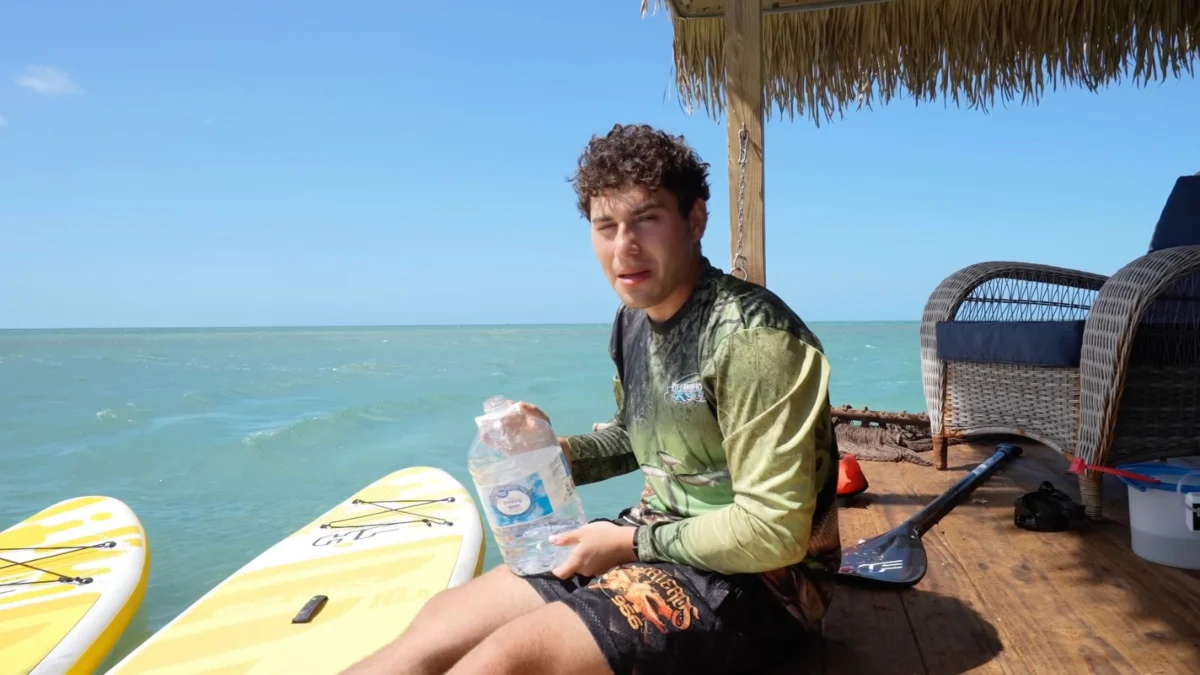
YouTuber Rubén Holgado recently documented his journey to this unique location, providing a rare glimpse into the logistical and emotional demands of such an excursion. His experience highlights that the adventure begins long before the check-in.
Pre-Departure and Logistics
Before even departing from the mainland, the burden of preparation rests entirely on the guest. Holgado noted that he was required to secure his own supplies, including all food, water, and necessities for the duration of his stay. Because the suite is essentially a floating island, any oversight in the packing stage cannot be rectified by a quick trip to a local store.
Arrival and Orientation
Upon arrival, the reality of the vessel’s classification becomes apparent. The guest is not a "patron" in the traditional sense, but a "captain" of their temporary quarters. Orientation involves understanding the emergency protocols, which are far more stringent than those found in a land-based hotel.
The Experience of Solitude
The stay itself is defined by a rhythmic, nautical existence. Holgado spent much of his time fishing, a pursuit that serves as both a source of food and a way to pass the vast stretches of time. While the suite offers modern comforts like air conditioning, the environment remains hostile. Guests are explicitly warned about the local marine life, specifically the presence of sharks, which dictates that swimming is not a leisure activity to be undertaken lightly.
The Element of Danger
The vulnerability of the structure was tested when Holgado encountered a tropical storm. While the vessel held its ground, the experience underscored the inherent danger of living on the water. Reports suggest that prior guests have required rescue, a sobering fact that necessitates the presence of walkie-talkies for emergency communication with the mainland.
The Logistics of Seclusion: Supporting Data
The Tiki Suites operate within a complex intersection of maritime law and hospitality regulations. The classification of the room as a "vessel" is the defining constraint of the business model.
- Legal Requirements: To operate or stay in the suite, the guest must comply with state and federal maritime regulations. This includes the mandatory boating license, which acts as a filter, excluding those unprepared for the responsibilities of sea life.
- Emergency Protocols: Because the site is beyond the immediate reach of conventional emergency services, the hotel provides long-range communication devices. The history of rescues highlights that the Atlantic, even near the coast, is a formidable adversary.
- Economic Cost: Holgado famously described the price of his stay as costing him "a kidney," a hyperbolic reference to the high financial barrier to entry. This premium pricing covers not just the room, but the significant overhead of maintaining a structure capable of withstanding ocean tides, storms, and the corrosive nature of saltwater.
Industry and Safety Perspectives: Official Responses
While the hotel is not owned by a global conglomerate, the industry at large views such projects with a mix of fascination and caution. Travel safety experts emphasize that the trend of "extreme isolation" travel often underestimates the physical and psychological toll on the average vacationer.
Maritime authorities often remind operators of these floating structures that their primary duty is safety. The requirement for a boating license is not merely a formality; it is a vital safety measure intended to ensure that the occupant has the basic navigational and emergency knowledge required to operate a vessel in open water.
For the operators, the challenge is balancing the "Instagrammable" appeal of the suite with the harsh realities of ocean-based hospitality. Their liability is immense, which is why the briefings provided to guests are rigorous and focused on self-reliance.
The Broader Implications of Extreme Travel
The popularity of the Tiki Suites speaks to a larger cultural phenomenon. In a world where the North Sentinel Island incident—where a traveler attempted to breach one of the most isolated locations on Earth—shows that people are willing to go to extreme, and often dangerous, lengths to find "untouched" places, the floating hotel offers a safer, albeit still intense, alternative.
The Commodification of Silence
The commercialization of isolation is a growing niche. As cities become denser and technology becomes more pervasive, the value of silence and solitude is skyrocketing. However, this commodification creates a paradox: to be truly isolated, one must have the resources to pay for that isolation. The Tiki Suites are effectively an elite commodity, turning the concept of "getting lost" into a luxury purchase.
The Risks of "Extreme Tourism"
The fascination with the "most isolated" locations carries risks. As travel becomes more decentralized, individuals are increasingly venturing into environments they are ill-equipped to handle. The "rescue" incidents cited by Holgado serve as a warning. There is a fine line between a memorable adventure and a catastrophic error in judgment.
Environmental Impact
Finally, one cannot overlook the environmental implications of placing artificial structures in sensitive marine ecosystems. As these types of accommodations grow in popularity, regulators will likely be forced to examine the ecological footprint of floating hospitality. The intersection of tourism and ocean conservation will become an increasingly contentious point of policy in the coming years.
Conclusion
The world’s "most isolated" hotel is a fascinating case study in how far humanity will go to escape the pressures of modern life. It offers a glimpse into a world where the ocean is not just a view, but the very floor beneath one’s feet. For those willing to navigate the legal hurdles, the threat of storms, and the persistent presence of deep-sea predators, it offers a rare opportunity to exist in a space that feels entirely separated from the rest of the world.
However, as the experiences of travelers like Rubén Holgado suggest, the true luxury of such a trip is not the accommodation itself, but the resilience required to survive it. It is a reminder that in the face of nature’s vast, unyielding ocean, we are not guests—we are merely visitors, transient and entirely dependent on our own ability to adapt to the elements.