Lina Hope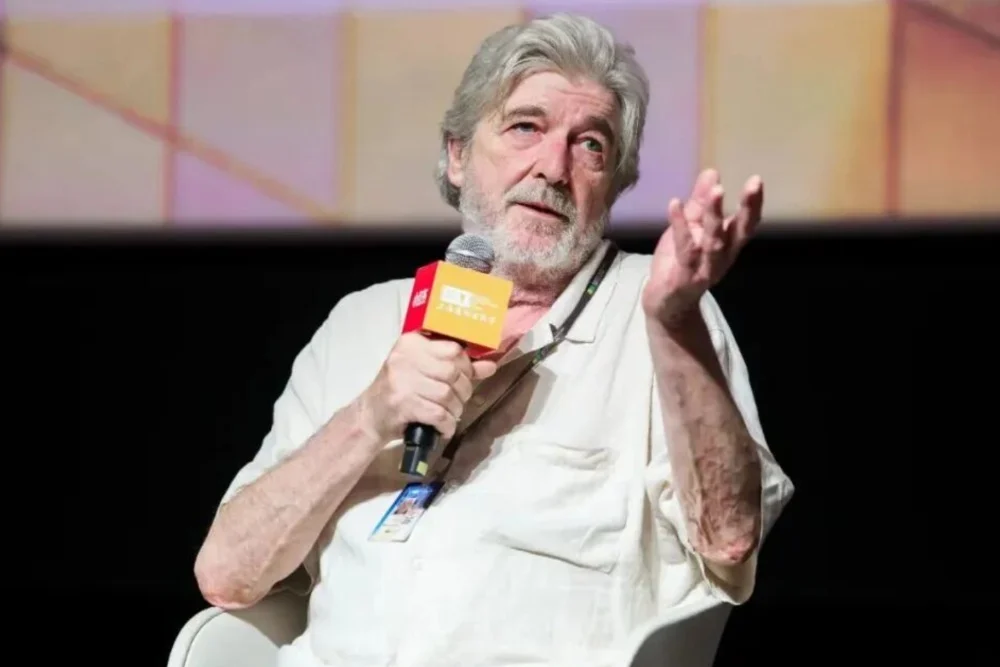
At the 28th Shanghai International Film Festival, the audience sat in a hushed, reverent silence as the closing credits of The Turin Horse faded into black. Following the screening, the stage was graced by Mihály Víg—the Hungarian composer, actor, and screenwriter whose haunting, cyclical scores have become synonymous with the cinema of Béla Tarr. For more than forty years, Víg has acted as the sonic architect of Tarr’s existentialist landscapes. His appearance at the festival served as a rare, intimate retrospective on a partnership that redefined the boundaries of modern art-house cinema.
The Genesis of an Unlikely Partnership
The story of Víg and Tarr began in 1984, a pivotal year in the history of Hungarian film. Tarr, already recognized as a rising auteur, had been searching for a specific sonic texture to accompany his evolving visual style. He discovered Víg by happenstance, spotting him in concert footage belonging to a mutual acquaintance. The initial meeting was characteristically brief and remarkably informal; Tarr extended an invitation for Víg to score Almanac of Fall. The collaboration was sealed not in a boardroom, but over a simple glass of champagne.
At the time, Víg possessed no formal experience in film composition. This lack of conventional training proved to be an asset rather than a liability. The production of Almanac of Fall relied heavily on documentary-style aesthetics and improvised performances, forcing Víg to develop a unique methodology from the ground up. He was not merely tasked with writing music; he was tasked with capturing the inherent rhythm of the human condition as viewed through Tarr’s unflinching lens.
A Chronology of Artistic Evolution
The partnership between Víg, Tarr, and the acclaimed novelist and screenwriter László Krasznahorkai evolved into one of the most prolific creative triads in European cinema history. Their trajectory moved from the experimental roots of Almanac of Fall to the monolithic, sweeping narratives of their later years.
- 1984: The inaugural collaboration, Almanac of Fall, sets the tone for a career-long exploration of enclosed spaces and human isolation.
- 1988: Damnation marks the solidification of the Tarr-Víg visual and auditory language—characterized by long takes and brooding, atmospheric soundscapes.
- 1994: The release of the seven-hour magnum opus Sátántangó. Víg’s contribution here expanded beyond music; he assumed a prominent acting role, demonstrating his ability to embody the characters he once only scored.
- 2000: Werckmeister Harmonies further refined their signature aesthetic, blending metaphysical inquiry with stark, monochromatic cinematography.
- 2011: The Turin Horse serves as the final statement of the collaboration. A film of extreme minimalism, it crystallized the philosophy that had driven the trio for nearly three decades.
The Architecture of Sound and Silence
Víg’s approach to composition remains an anomaly in the film industry. Unlike most composers who score to a picture-lock, Víg completes his musical compositions before a single frame of the film is shot. He works exclusively from the screenplay, absorbing the emotional impression of the text rather than the visual pacing of the edit.
"I listen deep within myself, waiting for inspiration and quietude to descend," Víg explained to the Shanghai audience. This introspective process is made possible by a rare level of creative alignment. Because Víg, Tarr, and Krasznahorkai share a fundamental belief that human existence is defined by a refusal to confront the "true nature" of reality, Víg’s music requires little to no revision. Tarr trusts Víg’s instincts implicitly, typically selecting from a handful of variations that the composer provides.
Crucially, Víg rejects the traditional definition of a "score." To him, sound design and music are indistinguishable. He points to the relentless, rhythmic rainfall in Sátántangó or the oppressive, howling winds that haunt The Turin Horse as vital musical components. "If we quiet our minds and truly listen, we can call them beautiful music," he remarked, challenging the audience to expand their understanding of what constitutes a film’s soundtrack.
Behind the Lens: The Human Element
Víg’s role as an actor—specifically as the enigmatic con man in Sátántangó—provided him with unique insight into Tarr’s directing philosophy. The process of memorizing over thirty pages of dialogue and executing a twelve-minute, unbroken shot taught him that Tarr does not cast actors based on their ability to mimic a character. Instead, Tarr seeks individuals who embody the essence of the role at their core. Whether the performer is a seasoned professional or a complete amateur, the demand remains the same: a total rejection of performance-based affectation in favor of raw, unrehearsed naturalism.
This debunked the persistent myth that Tarr is a "tyrant" on set. Víg described a set defined by profound calm. Tarr never raised his voice, and any creative disputes were handled with discretion. The long-take aesthetic, which Tarr inherited from his mentor Miklós Jancsó, was treated with the gravity of live theater. Once the camera began to roll, the director remained in a state of absolute silence, allowing the scene to breathe and unfold without the interruption of external interference.
Philosophical Implications: Beyond Nihilism
While critics often categorize Tarr’s body of work—particularly The Turin Horse—as nihilistic, Víg offers a different interpretation. He draws a deliberate contrast between the "lightness" found in the literature of Milan Kundera and the "heaviness" present in Tarr’s imagery.
For Víg, these elements are not diametrically opposed. He argues that even the most tragic circumstances are laced with threads of dark comedy. "It is akin to catharsis," Víg noted. "By the end, everything feels cleansed. Audiences peer into the heart of things, and the whole world suddenly becomes lucid." He views their films as an invitation to engage with the harshness of life as a path to discovering its hidden, profound beauty.
Production Anecdotes and Legacy
The masterclass also shed light on the rigorous, often eccentric nature of their productions. Víg shared the story of how The Turin Horse came to be: after a heated argument regarding a screenplay draft, Krasznahorkai left the set in frustration, only to return forty-eight hours later with a sixty-page short story that would eventually serve as the film’s foundation.
Even the casting of the animal co-stars was treated with existential gravity. The production team spent weeks scouting for a horse with a "sufficiently sorrowful gaze." Once filming was complete, the team ensured the horse was relocated to a sanctuary, ensuring it could live out the remainder of its life in dignity—a testament to the empathy that drives their work.
When asked to choose his favorite among his works, Víg bypassed the critically lauded Werckmeister Harmonies, instead highlighting Damnation and The Turin Horse for their personal resonance. Regarding the daunting seven-hour runtime of Sátántangó, he offered a piece of pragmatic advice: "Push through the first hour, and the rest takes care of itself."
A Final Philosophical Gift
As the masterclass concluded, Víg distilled the four-decade-long creative journey into a single, poignant sentiment that serves as the cornerstone of the Tarr-Víg philosophy: "Life is a gift, and it would be discourteous to turn that gift away."
Through this lens, the films of Béla Tarr are not merely exercises in cinematic bleakness, but a celebration of existence in its most unvarnished form. Mihály Víg, through his compositions and his presence, continues to ensure that the gift is not only accepted but felt by audiences across the globe. His legacy is one of uncompromising artistic integrity, a reminder that in the space between the notes and the silence, there lies a truth worth listening for.

 Nana Muazin
 Nana
Nana