Every so often, an indie title emerges that manages to strike a chord of immediate, visceral familiarity—a "know it when you see it" moment that bridges the gap between childhood nostalgia and modern mechanical sophistication. Slayblade, the latest project from developer Oscar Brittain (Henry’s House), is precisely that kind of game. It attempts to marry the high-stakes, physics-based tension of early 2000s top-battling culture with the addictive, infinite replayability of the modern roguelite genre. While the current demo offers a tantalizing glimpse into a world of custom-built combat, it also serves as a reminder that the path from a strong concept to a polished release is fraught with technical and structural hurdles.
Main Facts: The Anatomy of a Spinning Roguelite
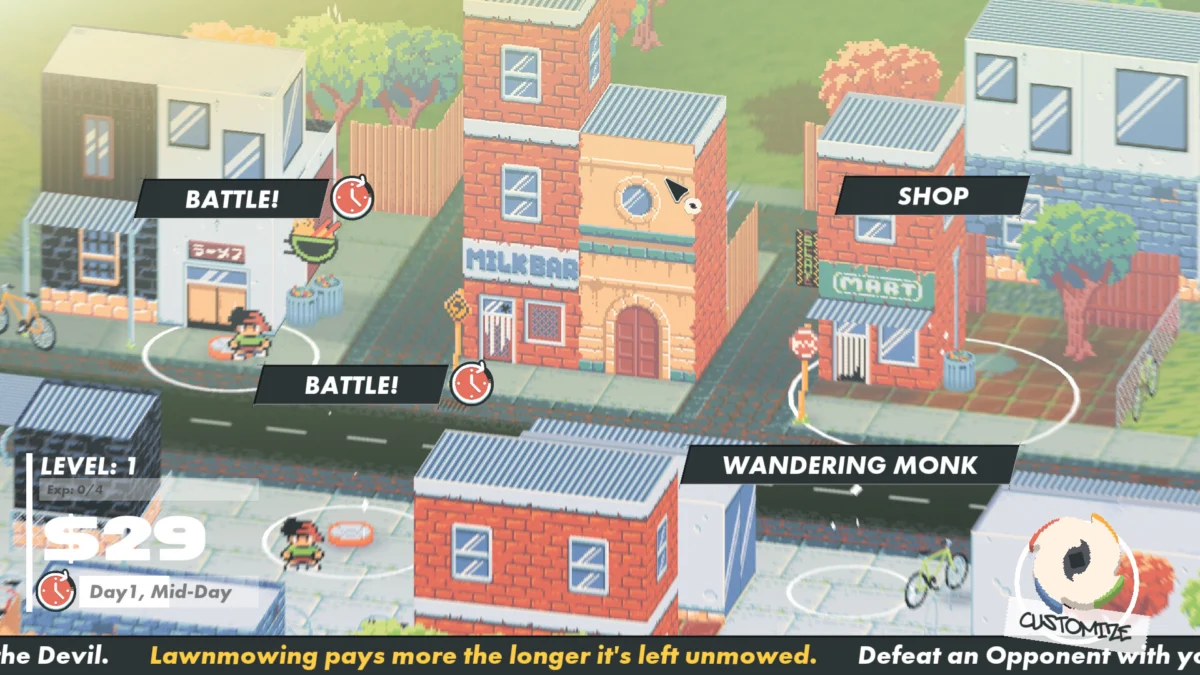
At its core, Slayblade is a title built on the foundations of customization and kinetic strategy. Players are thrust into a miniature, vibrant city—a world that feels like a love letter to the Y2K era—where the primary objective is to assemble the ultimate fighting top and dominate the local scene.
The game’s progression loop is fundamentally roguelite in nature. Each run requires the player to manage resources, collect modular components, and navigate a series of increasingly difficult matchups. The customization system is the game’s crown jewel, boasting over 60 distinct parts that can be swapped between the top, body, and bottom of the player’s blade. Each component contributes unique statistical bonuses and mechanical abilities, allowing for a level of experimentation that feels deeply rewarding.

The control scheme is remarkably intuitive, relying entirely on mouse-driven inputs. This accessibility masks a surprisingly deep combat engine where victory is determined by momentum and collision physics. Movement speed acts as the primary arbiter of combat: colliding with an opponent while carrying more velocity results in damage, while a slower approach leaves the player vulnerable to counter-attacks. By incorporating environmental hazards and random "power-up" boxes that spawn in the arena, the game forces players to adapt their strategies in real-time, shifting from aggressive strikes to defensive positioning based on the current board state.
Chronology: From Concept to Current Demo
The development of Slayblade by Oscar Brittain has been marked by a clear commitment to a specific aesthetic and mechanical vision. The game first garnered attention for its distinct PS1-inspired lo-fi art style—characterized by vibrant, hand-drawn character portraits, low-poly environments, and a soundtrack that echoes the high-energy, synthesized intensity of classic Saturday morning cartoons.
The journey to the current demo release has been focused on establishing the core "feel" of the combat loop. Early testing phases focused on the physics of the blade collisions and the integration of the modular part system. As the project moved toward its public demo release, the focus shifted to the "roguelite layer"—the overworld exploration, currency management, and the variety of battle types.

Currently, the demo offers a truncated experience, allowing players to explore a small slice of the city, engage in various battle tiers, and participate in non-combat activities like a surprisingly relaxing lawn-mowing minigame. However, as of June 2026, the game remains in a state of active development, with significant gaps in content and balancing that underscore its "in-progress" status.
Supporting Data: The Mechanics of Momentum
The strength of Slayblade lies in its mathematical approach to combat. Unlike traditional fighting games that rely on health bars and complex input combos, Slayblade utilizes a system of velocity-based damage mitigation.
- Customization Depth: The 60-plus available parts are categorized into three main archetypes—Top, Body, and Bottom—which dictate mass, friction, and special ability activation. This tripartite structure creates a vast array of potential synergies, where a lightweight, high-speed build might prioritize evasion, while a heavy, low-center-of-gravity build might excel at "ring-out" tactics.
- Arena Dynamics: The arena is not merely a stage; it is a tactical participant. The spawning of power-up boxes adds a layer of "on-the-fly" deck-building (or rather, build-modifying). These buffs—ranging from speed boosts to damage-over-time effects—allow players to pivot their playstyle mid-match.
- Economic Progression: Between matches, the player manages a budget. The inclusion of both "safe" sanctioned matches and "illegal" high-stakes battles provides a risk-reward dynamic that is essential to the roguelite experience. This duality forces players to decide whether to grind for consistency or gamble on higher-tier rewards at the risk of losing their current build progress.
Official Responses and Developer Intent
While official patch notes and formal developer diaries for Slayblade have been sparse, the design choices reflect a developer who is acutely aware of the "niche" they are targeting. The decision to prioritize an accessible, mouse-only control scheme over a complex button-mapping system suggests a focus on ease-of-entry, aiming to capture the casual appeal of its inspiration while retaining the depth that roguelite veterans demand.

The developer’s focus on the aesthetic—specifically the Y2K, PS1-era visual fidelity—is an intentional choice to lean into nostalgia, ensuring the game stands out in an increasingly crowded indie market. The inclusion of unconventional side-activities, such as the aforementioned lawn-mowing minigame, indicates a desire to create a world that feels "lived-in" rather than just a series of combat menus.
Implications: The Road to Full Release
Despite the undeniable charm and the robust mechanical foundation, Slayblade faces several critical hurdles before it can be considered a complete, day-one purchase.
The Content Deficit
The most glaring issue identified by early players and critics is the brevity of the current build. The demo concludes abruptly, often right as the player begins to feel comfortable with their custom build. Specifically, the absence of the promised "tournament" structure—a feature that serves as the narrative and mechanical climax of the experience—leaves a significant void in the game’s current loop. The inability to participate in a high-stakes tournament after spending time preparing feels like a missed opportunity to showcase the game’s full potential.

The Polish Barrier
Beyond the volume of content, there are technical refinements required:
- Tutorialization: The game currently suffers from "feature shock." With a complex system of parts and physics-based combat, the lack of clear, in-game documentation or guided tutorials makes the learning curve steeper than it needs to be for newcomers.
- Camera Controls: The dynamic camera, which pans across the map to track the action, remains a point of contention. While ambitious, the current implementation often feels clunky or unresponsive, occasionally losing sight of the action during high-speed, chaotic encounters.
- Information Density: As the game expands, the UI will need to become more intuitive. Players need clearer indicators of their current velocity, the active status of their power-ups, and the impact of the parts they have selected.
Final Assessment
Slayblade is currently a diamond in the rough. It possesses the "it factor" that defines successful indie titles—a unique hook, a charming aesthetic, and a combat system that feels fundamentally "fun." However, the transition from a 15-minute demo to a full-length title will require more than just additional levels. It will require a tightening of the UI, a more robust explanation of its underlying mechanics, and a fully realized tournament structure that justifies the roguelite grind.
For those who grew up in the era of plastic tops and arena battles, Slayblade is already a must-watch. If the developer can address the pacing and polish issues highlighted in the demo, this title has the potential to move beyond mere nostalgia and become a definitive entry in the roguelite space. The foundation is solid; the challenge now lies in the build.