Jia Lissa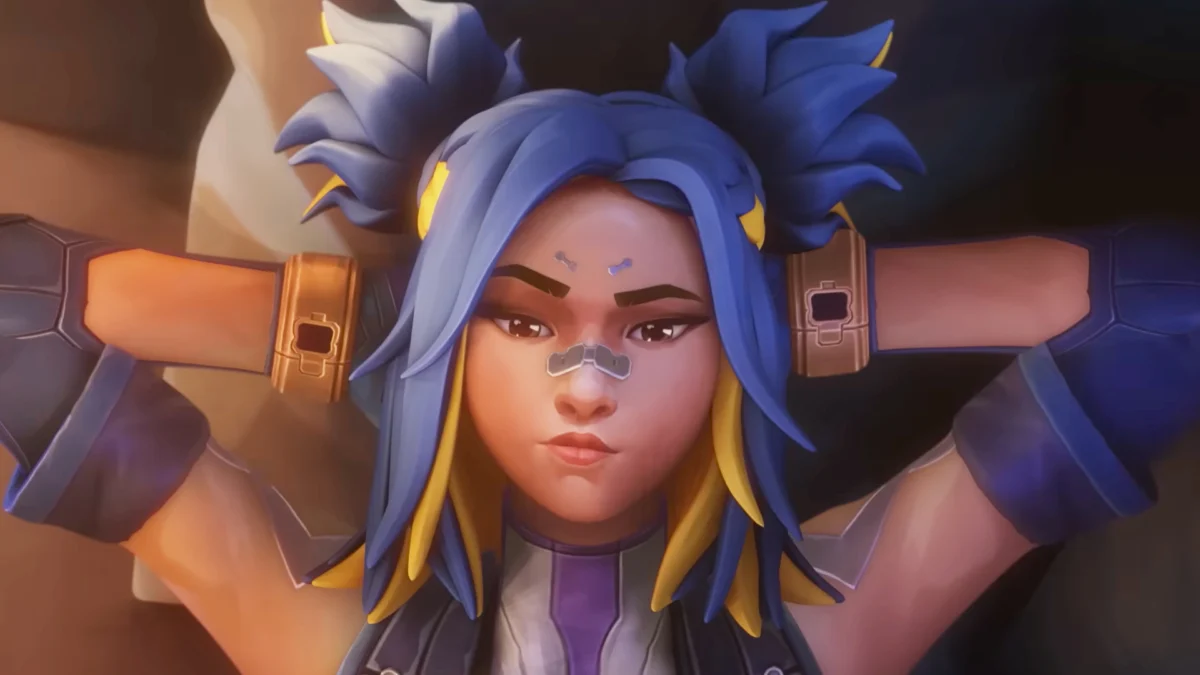
In the high-stakes ecosystem of competitive tactical shooters, balance is the elusive "Holy Grail." For Riot Games’ Valorant, the challenge is compounded by a diverse roster of Agents, each possessing unique utility that can shift the meta overnight. No character has embodied this volatile balancing act quite like the Filipina Duelist, Neon. After a 2026 season defined by her blistering dominance, the community is finally catching its breath as developers recalibrate her place in the game.
The Chronology of a Speedster’s Reign
Neon has always been a point of contention. From her introduction, she was designed as a high-velocity disruptor, a character built to break the static defenses of the game’s more traditional tactical anchors. However, as the meta matured, the sheer potency of her kit—specifically her High Gear sprint and Fast Lane walls—began to overshadow other options.
By early 2026, Neon had transcended from a niche pick to an absolute menace. The frustration for the average player was palpable: a Neon player with a Bucky or Judge could dismantle an entire site defense in seconds, leaving opponents with almost no time to react. The mechanical exploitation of her bunny-hopping (bhop) while sprinting allowed her to traverse maps with unprecedented speed while maintaining near-perfect accuracy.
The tipping point arrived in the first half of 2026, where Neon’s presence became suffocating. Following a brief "bench" period—a precautionary measure by Riot to address emerging exploits—the developer deployed patch 12.09. This update acted as the long-awaited "nerf hammer," targeting the core of her mobility: normalizing her jump speed to match other Agents and restricting her fuel gauge replenishment exclusively to ultimate ability kills. While she has since slid down the tier lists, making room for the rising popularity of Clove, the memory of her 2026 dominance remains a case study in how movement utility can reshape a tactical landscape.
Supporting Data: From Santiago to London
The shift in Neon’s performance can be tracked through the cold, hard numbers of the VCT (Valorant Champions Tour). At Masters Santiago, Neon was a staple of the professional meta, boasting a staggering 45% pick rate. She was the engine driving aggressive site executes, forcing teams to burn precious utility just to slow her momentum.

By the time the circuit moved to London, the landscape had shifted. Following the implementation of patch 12.09, her pick rate dropped to 32%. While still a relevant choice, the data suggests that the changes successfully incentivized teams to explore a more varied composition of Duelists. This decline in pick rate is not necessarily a failure; rather, it represents a healthier, more diverse ecosystem where teams are no longer forced to run a Neon-centric strategy to remain competitive.
Official Perspectives: The Philosophy of "Game Health"
To understand the logic behind these changes, we must look at the design philosophy shared by the Riot Games team. During Masters London, I sat down with Lead Agent Designer Dan ‘penguin’ Hardison and Agents & Live Product Manager Tiffy ‘TiffyMunchsnax’ Tsay to discuss the "Neon saga."
The Duelist Dilemma
"Balancing Neon is definitely challenging," Hardison admits. "I think Duelists are some of our harder characters to balance because our internal expectation for them is that they go forward, take space, and take risks for their team."
Hardison highlights a perennial struggle for the balance team: the dominance of mobility-based Duelists like Jett and Raze. "Over time, as we’ve balanced the game, we’ve found that getting players to move off of Jett and Raze—the mobility Duelists that can fly over setups or take space really quickly—is really challenging."
The Experimental Swing
Patch 8.11 was a watershed moment for the game. The team initiated an "experimental design swing" intended to make grounded characters more effective at taking space. This update included the buffs to Neon and Iso that ultimately led to the chaotic, Neon-heavy meta. Hardison acknowledges the friction this caused: "There were some tuning challenges as a result of those changes, but I believe the game ended up in a decent spot."

Prioritizing the "Playing Against" Experience
Perhaps the most insightful takeaway from the interview is the shift in focus from raw power to "game health." Hardison clarifies that the recent nerfs were not simply about lowering a bar graph of power, but about the user experience of those facing Neon.
"The hypothesis was that she could take too much space without expending abilities or having to use similar tools compared to other characters because of her bunny-hopping while sprinting," Hardison explains. "Every time we do a game-health-oriented list and it seems to curb some player frustration and make the ecosystem more varied, we consider that a win."
Tiffy ‘TiffyMunchsnax’ Tsay echoed these sentiments, emphasizing that the team strives to preserve a character’s identity without making them oppressive. "We don’t want to hamper Neon’s expressive movement," Tsay noted. "But we recognize that the bunny-hopping needed a hit. It’s about finding the right way to have the player playing as a Duelist, while giving the opponents a reasonable expectation of counterplay."
Implications for the Future of Valorant
The "Neon Saga" serves as a microcosm for the broader challenges of live-service game design. When a character’s movement mechanics allow them to bypass the fundamental rules of the game—such as the need to clear angles or the reliance on team utility—the resulting frustration is inevitable.
Movement vs. Utility
The primary implication of these changes is that Riot is doubling down on "grounded" tactical play. While Valorant will always retain its flashy movement, the developers are signaling that movement must be gated by resource management (fuel) or risk (vulnerability). By forcing Neon players to be more selective with their engagements, Riot has essentially restored the "chess" element of the game that was arguably lost during her peak.

The Cycle of the Meta
Looking forward, the success of the 12.09 patch suggests that Riot has found a repeatable framework for balancing. By focusing on "game health" rather than simple damage modifiers, the dev team can address the feeling of playing against an Agent, which is often just as important as the win-rate statistics.
However, the question remains: will Neon return to prominence? History suggests that in a game as complex as Valorant, no Agent stays down for long. If the current meta of Clove and other utility-based agents begins to stagnate, or if a new discovery in movement tech emerges, we could see the pendulum swing back.
Conclusion: A Delicate Dance
The balancing of Neon is a testament to the fact that the "perfect" state of a game is a moving target. As an observer, it is easy to demand nerfs when a character feels "disgusting" to play against, but the reality of development is a far more nuanced dance.
For now, the player base can enjoy a slightly more predictable, yet still vibrant, competitive environment. The developers have proven that they are willing to pull the levers of power when a character threatens the integrity of the tactical experience. As for the future, we can only hope that the next "menace" to enter the meta receives the same level of thoughtful, health-focused scrutiny that Neon received in the wake of her 2026 reign. The game is in a better place, and for those of us who have spent the last year being obliterated seconds into a round, that is a victory worth celebrating.


 Muslim
 Rifan Muazin