Neng Nana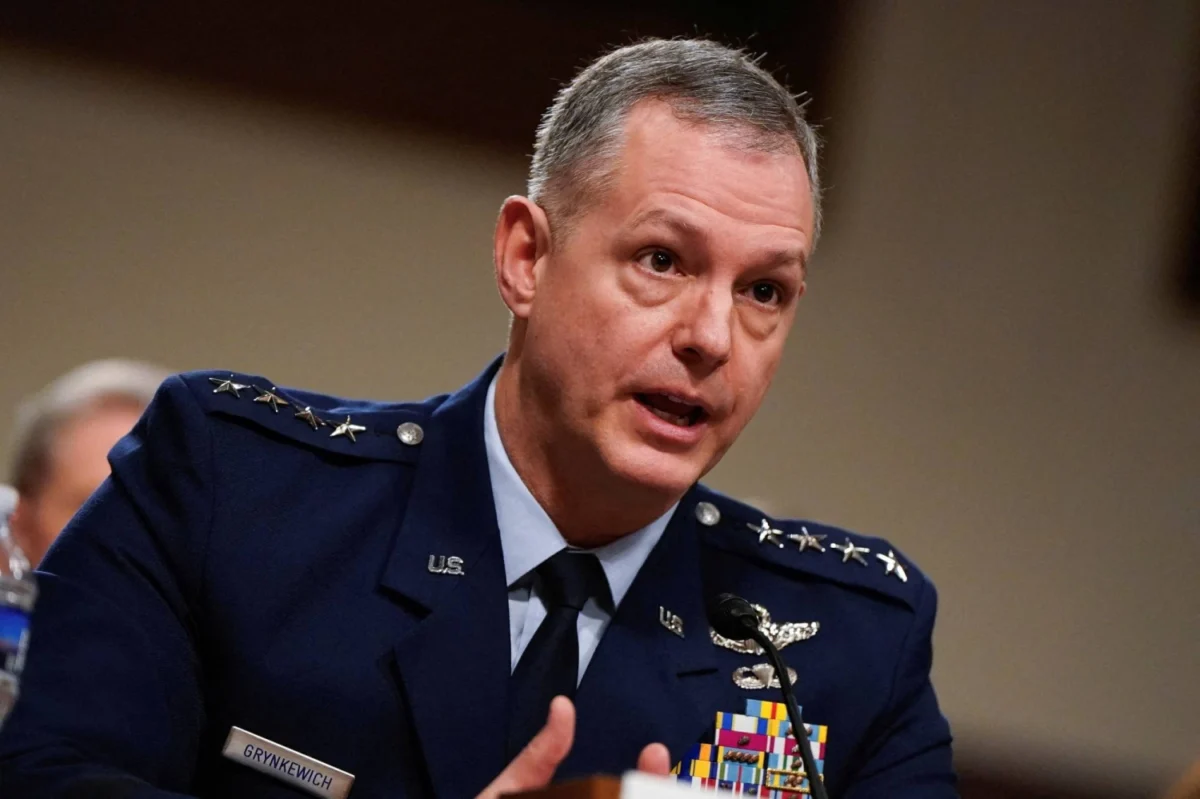
BRUSSELS/BERLIN — A tectonic shift is underway within the Atlantic Alliance. In a stark directive issued this week, the United States has signaled that the era of American-underwritten European security is entering a period of significant contraction. U.S. Air Force General Alexus Grynkewich, commander of the U.S. European Command (USEUCOM) and NATO’s Supreme Allied Commander Europe (SACEUR), has issued a clarion call for European allies and Canada to urgently bolster their contributions of manned and unmanned aircraft, as well as naval assets, to meet the alliance’s collective defense requirements.
The shift, characterized by observers as a pivotal moment in post-Cold War geopolitics, follows a strategic decision by the Trump administration to reduce the specific pool of U.S. military capabilities earmarked for NATO contingencies. This move underscores a fundamental transition: Washington is no longer willing to serve as the primary guarantor of European conventional defense, effectively mandating that the continent take the lead in its own protection.
The Strategic Shift: A New Doctrine of Self-Reliance
General Grynkewich’s remarks, delivered against the backdrop of an increasingly volatile global security environment, represent more than just a logistical request; they constitute a fundamental change in NATO’s operational philosophy. For decades, the U.S. has provided the "enablers"—the sophisticated surveillance drones, aerial refueling tankers, advanced fighter wings, and naval strike groups—that allowed European militaries to operate effectively.
The Trump administration’s decision to limit these assets forces a rapid reassessment of NATO’s Regional Plans. These plans, designed to defend every inch of allied territory, rely on a specific density of military assets. If the U.S. contribution is to be scaled back, the "capability gap" must be filled by Germany, France, Poland, the United Kingdom, and others, or the alliance’s deterrent posture risks degradation.
The Trump Doctrine in Action
President Donald Trump has long maintained a transactional view of the transatlantic security architecture. His rhetoric—consistently demanding that European members meet or exceed their 2% GDP defense spending targets—has now moved from the campaign trail into the halls of the Pentagon and the NATO headquarters in Brussels. The administration argues that the U.S. must prioritize its own domestic defense and competition in the Indo-Pacific, necessitating a pivot away from maintaining an outsized military footprint in Europe.
Chronology: The Road to the New Mandate
The current crisis did not emerge in a vacuum. It is the culmination of years of mounting friction regarding defense spending and strategic focus.
- 2016–2020 (The First Term): President Trump initiates intense pressure on NATO members, publicly questioning the necessity of Article 5 if allies do not contribute their "fair share."
- 2022–2024 (The Conflict in Ukraine): The war in Ukraine galvanizes European defense spending, with countries like Germany announcing Zeitenwende (a historical turning point) in their defense policy. However, procurement lags behind the urgent need for operational hardware.
- January 2025 (The New Administration): Upon re-entering office, the Trump administration initiates a top-to-bottom review of U.S. overseas force posture, identifying "over-extension" in Europe as a strategic liability.
- March 2026 (The Current Pivot): General Grynkewich formalizes the U.S. request, signaling that the "pool" of U.S. assets for NATO defense will be strictly capped.
Supporting Data: Assessing the Capability Gap
The European defense industrial base is currently struggling to match the sheer volume of equipment required to replace U.S. capabilities. According to the International Institute for Strategic Studies (IISS), the gap is most pronounced in three key areas:
1. Aerial Intelligence, Surveillance, and Reconnaissance (ISR)
The U.S. has historically provided the lion’s share of high-altitude drone reconnaissance (such as the Global Hawk). If these are pulled back, European nations must accelerate the development of their own persistent surveillance networks—a process that requires years of procurement and integration.
2. Aerial Refueling and Transport
Power projection relies on the ability to move assets quickly and sustain them in the air. European air forces currently rely heavily on U.S. tankers. Without American support, European air wings would see their operational range significantly constrained.
3. Naval Projection
The U.S. Navy provides a significant portion of the carrier-strike and amphibious capabilities in the Mediterranean and the North Atlantic. A reduction in this footprint forces a rethink of how NATO monitors the "GIUK gap" (Greenland-Iceland-United Kingdom) and secures vital sea lines of communication.
Official Responses and Diplomatic Friction
The reaction from European capitals has been a mix of hurried cooperation and quiet alarm.

Berlin: German officials have signaled an intent to increase their defense budget further, though they emphasize that industrial bottlenecks remain a significant hurdle. "We are committed to the security of the continent," one defense official stated, "but the lead-time for complex platforms like unmanned aircraft means we cannot fill a U.S.-sized gap overnight."
Brussels (NATO HQ): Secretary-General and allied military planners are working overtime to coordinate a "burden-sharing matrix." The objective is to ensure that no single country is left vulnerable during the transition period. There is a palpable sense of urgency, as officials acknowledge that the U.S. decision is not a negotiating tactic, but a firm policy stance.
Paris: France has long advocated for "strategic autonomy," the idea that Europe should be able to act militarily without American support. While this U.S. withdrawal might theoretically prove the French point, many smaller Eastern European nations are deeply anxious, fearing that "strategic autonomy" is simply a synonym for "U.S. abandonment."
Implications: A New Era for the Transatlantic Bond
The implications of this policy are profound and multifaceted.
The End of the "Security Umbrella"
For seventy-five years, the U.S. acted as the ultimate safety net for Europe. That safety net is now being transformed into a "partnership of equals"—a transition that is proving painful. If Europe fails to fill the gap, the credibility of NATO’s deterrence against adversaries—most notably Russia—could weaken.
The European Industrial Awakening
The pressure to replace American hardware is likely to act as a catalyst for a unified European defense market. To date, European defense procurement has been fragmented, with individual nations favoring domestic suppliers. Necessity may now force the consolidation of the European defense industry, potentially leading to a more efficient, albeit slower, acquisition of military assets.
Political Fragmentation
Internally, the move risks deepening divisions within the alliance. Nations closer to the Russian border may feel that they are being forced to choose between an unreliable American ally and an under-prepared European partner. This could lead to a two-tier NATO, where the most threatened states seek bilateral security arrangements with the U.S. outside of the formal NATO structure, further complicating the alliance’s unity.
Conclusion: The Path Forward
General Grynkewich’s announcement serves as a sobering reminder that the international order is in constant flux. The era of the "unconditional" American security guarantee is receding, replaced by a cold-eyed assessment of resources and national interest.
For Canada and the European members of NATO, the mandate is clear: they must either demonstrate the political will to invest in their own security, or accept a diminished role on the global stage. As the alliance moves into the latter half of the 2020s, the resilience of the transatlantic bond will be tested not by words, but by the number of ships, planes, and personnel that European nations can bring to the table. The transition will be fraught with difficulty, but it is a challenge that the alliance, if it is to remain relevant in the 21st century, must overcome.
The question remains: Can Europe mobilize its economic and industrial might fast enough to ensure that the continent remains secure in an age where the American shield is no longer guaranteed? The coming months will be decisive.



 Asro
Asro