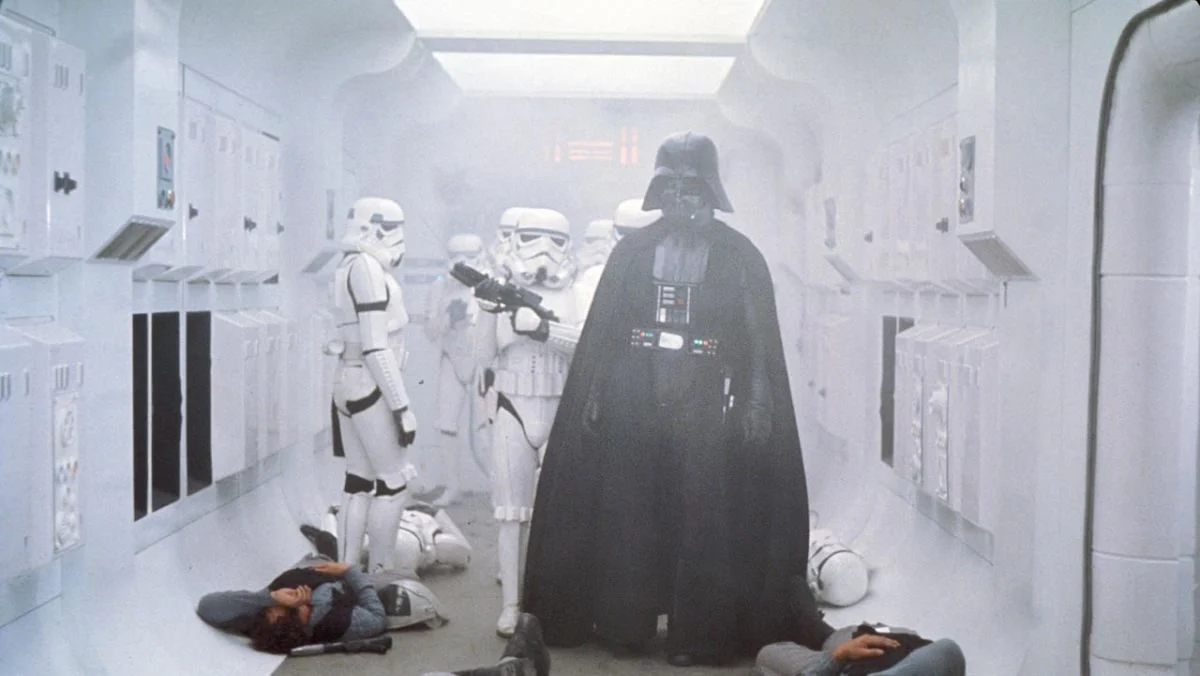
Few figures in the history of cinema have achieved the level of immediate, global recognition as Darth Vader. Since his chilling debut in 1977’s Star Wars: Episode IV – A New Hope, the Sith Lord has transcended the medium of film to become a cornerstone of modern mythology. While James Earl Jones’s voice and the character’s tragic narrative arc define his presence, it is his visual silhouette—a masterclass in minimalist, menacing design—that anchors his status as the ultimate cultural icon.
However, the suit we recognize today was not a product of a single flash of inspiration. It was the result of exhaustive iteration, creative troubleshooting, and evolving production technologies. A recent deep dive by YouTube creator Rocket Riley has shed new light on the meticulous history of this armor, tracing its transformation from a rough, hand-sculpted concept to a high-performance, flexible garment capable of modern stunt choreography.

The Architecture of Fear: Main Facts and Design Philosophy
At its core, the Darth Vader suit is an extension of the character’s tortured existence. Within the diegetic logic of the Star Wars universe, the armor is a portable, agonizing life-support system. It is a technological prison for the remains of Anakin Skywalker, a man broken by fire and betrayal.
The costume’s iconic profile—a curved, dome-like helmet, a face-covering respirator mask, a sweeping cape, and complex electronic chest interfaces—serves both aesthetic and functional purposes. The rigidity of the costume was originally intended to convey a sense of inhuman, machine-like detachment. Yet, as the franchise expanded, the tension between the costume’s "stiff" historical accuracy and the need for modern action sequences became a central focus for designers.
Chronology of the Suit: From 1977 to the Present
The Genesis: A New Hope (Episode IV)
George Lucas’s initial vision for Vader was far less industrial. Early concepts imagined a robe-clad, phantom-like figure. It was legendary concept artist Ralph McQuarrie who realized that, given the character’s need to survive in the vacuum of space, a mask and head-covering were essential.
The resulting mask, with its aggressive, sharp-snouted design and narrowed eyes, was a triumph of industrial design. Because the original mask was hand-sculpted and asymmetrical, it possessed a unique, organic "wrongness" that made it all the more terrifying. The base of the suit was a simple motorcycle garment, hidden beneath layers of fabric and a dramatic cloak, finished with the now-infamous chest control panel that would become a staple of science fiction design.

The Empire Strikes Back (Episode V)
With the financial success of the first film, the production budget for The Empire Strikes Back allowed for a more polished aesthetic. The helmet received a significant upgrade: the finish became glossier, and the once-red lenses were replaced with a deep, obsidian black. Designers also tucked the robes under the upper-body armor, putting the hardware on full display and emphasizing the character’s military authority. Even minute details, such as the color shifting of specific buttons on the chest interface—moving from green to blue—signaled an attention to detail that obsessed fans would track for decades.
Return of the Jedi (Episode VI)
By the time the original trilogy concluded, the costume had become more refined. The most significant narrative inclusion was the interior of the helmet, which was designed with a complex locking mechanism to facilitate the iconic scene where Luke Skywalker unmasks his father. During this film, the glossiness of the armor was pushed to its limit, with the chest plate and boots reflecting the harsh lighting of the Death Star, cementing the image of Vader as a polished, unstoppable killing machine.

The Prequel Era: Revenge of the Sith (Episode III)
When the story returned to the origins of the suit, the design team had to bridge the gap between 2005 CGI technology and 1977 practical effects. The helmet was redesigned to be perfectly symmetrical, a nod to the precision of the Imperial industrial machine. To accommodate actor Hayden Christensen, who stood six inches shorter than the original Vader actor David Prowse, the costume department utilized internal padding and platform lifts, ensuring that the visual stature of the character remained consistent with the original trilogy.
Modern Revivals: Rogue One and Obi-Wan Kenobi
The most recent iterations, particularly for the Obi-Wan Kenobi series, represent the most significant departure in terms of utility. The stiff, restrictive suits of the 1970s made complex lightsaber duels difficult for performers. To modernize the character, the team rebuilt the suit using flexible, modern textiles. This allowed for a full range of motion, enabling a more dynamic, ferocious, and "active" fighting style that felt distinct from the slower, more deliberate movements of the past. Conversely, Rogue One intentionally leaned into the "retro" look, bringing back the asymmetrical helmet and structured, pleated cloaks to perfectly match the aesthetic of the 1977 era.

Supporting Data: The Technical Challenges
The transition from the "stiff" Vader of the 70s to the "agile" Vader of the modern era is backed by clear photographic evidence and performance analysis. In the original trilogy, the action was limited by the bulk of the armor, which often left the character appearing static.
Rocket Riley’s analysis highlights the 5:57 mark of his breakdown, where he juxtaposes the clumsy, stunted lightsaber choreography of the original trilogy with the fluid, aggressive movements seen in the Obi-Wan Kenobi finale. The data suggests that modern fabric technology has been the primary driver of this evolution, proving that a costume is only as effective as the stunt performer’s ability to breathe and move within it.

Official Responses and Creative Direction
Designers and curators from LucasFilm have consistently noted that the challenge of the Vader suit is maintaining the "fear factor" while allowing for the needs of contemporary filmmaking. There is a deep reverence for the original McQuarrie designs; even when the suit is modified for flexibility, the external silhouette remains virtually identical to the 1977 version.
Furthermore, the "Infinity Comics" experiment—which depicted Vader in a stark white suit to signify his potential redemption—serves as a fascinating official exploration of how color psychology affects our perception of the character. While the white suit is non-canon, it confirms that the black armor is not just a uniform; it is a narrative device that defines Vader as a symbol of fear rather than hope.

Implications: The Legacy of a Silhouette
The endurance of Darth Vader’s design has profound implications for character design in pop culture. The suit is a testament to the "less is more" philosophy. By stripping away human facial expressions and replacing them with a fixed, unyielding mask, Lucas and his team created a character whose personality is projected entirely through his physical presence and the audience’s imagination.
The evolution of the suit also speaks to the broader trajectory of the Star Wars franchise. As technology has advanced, our ability to interpret the "myth" of Vader has grown. We no longer just see him as a villain in a static mask; we see him as a character whose physical manifestation changes based on the context of the story—from the stiff, imposing figure of the Galactic Civil War to the agile, desperate warrior seen in his confrontations with Obi-Wan.

Ultimately, the Darth Vader costume remains the gold standard for cinematic character design. It is a visual language that communicates power, loss, and tyranny in a single, unmistakable shape. As the franchise continues to evolve, one thing remains certain: the black helmet, the rhythmic respirator, and the flowing cape will continue to be the standard against which all other cinematic villains are measured. The suit is not just a costume; it is the enduring, cold, and calculated heart of the Star Wars universe.