Nana
Nana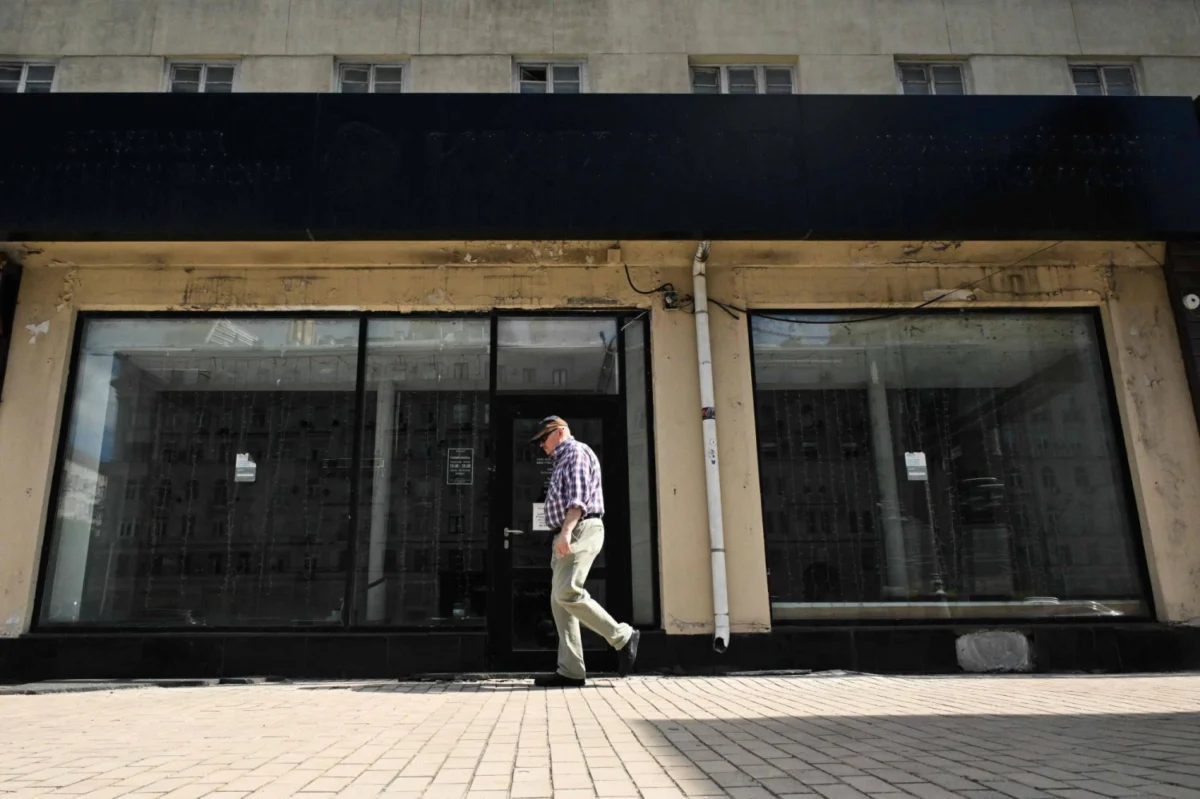
MOSCOW — In the quiet, grey suburbs of Mytishchi, located on the northeastern fringes of the Russian capital, the physical landscape of commerce is undergoing a visible, melancholy transformation. Where once bustling storefronts served the daily needs of local residents, a growing number of vacant display windows now stand as silent sentinels of an economic shift. "For Rent" signs, plastered against dusty glass, have become the new urban wallpaper of the Moscow periphery, signaling a profound and creeping toll on Russia’s small and medium-sized enterprise (SME) sector.
As the Kremlin pours unprecedented capital into its military-industrial complex to sustain the protracted war in Ukraine, the domestic economy is beginning to show signs of structural fatigue. While headline GDP figures have remained surprisingly resilient due to massive government defense spending, the reality for the average shop owner, service provider, or independent entrepreneur is starkly different: a suffocating environment of rising taxes, relentless inflation, and a consumer base gripped by deepening anxiety.
The Anatomy of Decline: A Chronology of Economic Pressure
The current plight of Russian small businesses did not emerge overnight; it is the culmination of a multi-year economic squeeze that began with the onset of the "Special Military Operation" in February 2022.
- Phase I: The Initial Shock (February 2022 – December 2022): The immediate aftermath of the invasion saw a chaotic exodus of Western brands and a sudden tightening of supply chains. Small businesses, heavily reliant on imported goods and international logistics, faced immediate shortages and a collapse in consumer confidence.
- Phase II: The Pivot to Defense (2023): As the Kremlin shifted the national budget toward a "war footing," large state-owned enterprises (SOEs) and defense contractors began siphoning off labor and capital. This created a lopsided economy where military production boomed, but civilian-facing small businesses found themselves competing for increasingly expensive credit and labor.
- Phase III: The Inflationary Squeeze (Early 2024 – Present): With the labor market overheating due to military mobilization and the emigration of skilled workers, wage costs spiked. Concurrently, the Central Bank of Russia was forced to hike interest rates to double digits to combat stubborn inflation, making business loans prohibitively expensive for local shops.
"My business is on its last legs," admits the owner of a pharmacy in Mytishchi. Speaking on the condition of anonymity for fear of bureaucratic repercussions, the owner describes a reality that is increasingly common across the Moscow Oblast. "I’m thinking about shutting down completely. Between the skyrocketing cost of inventory and the fact that my customers have less disposable income every month, the math simply doesn’t work anymore."
Supporting Data: The Hidden Costs of War
While the Kremlin touts a "robust" economic performance, independent analysts point to a "K-shaped" recovery, where the defense sector rises while the consumer-facing sector craters.
The Labor Crisis
The most critical factor affecting small businesses is the acute labor shortage. The mobilization of hundreds of thousands of men, combined with the departure of an estimated 500,000 to 1 million citizens—many of them young, tech-savvy, and entrepreneurial—has created a "demographic hole." Small firms cannot compete with the high salaries offered by defense plants, which are currently flush with government contracts.
Inflationary Pressures
According to recent data, inflation in Russia remains stubbornly above the Central Bank’s target. For small businesses, this manifests as a "double-bind":
- Input Costs: The cost of raw materials and wholesale goods has surged due to the weakened ruble and complex, expensive "parallel import" schemes.
- Consumer Purchasing Power: Households are prioritizing essential goods (food and fuel) over services, dining, or non-essential retail, directly hitting the bottom line of small service providers.
Interest Rate Constraints
The Bank of Russia’s decision to maintain high interest rates to cool the economy has effectively locked small businesses out of the credit market. For a boutique retailer or a local café, a loan interest rate exceeding 15–20% is essentially a death sentence for growth and a significant barrier to maintaining cash flow.
Official Responses and State Rhetoric
The Kremlin’s official narrative remains one of defiance and self-sufficiency. President Vladimir Putin has frequently characterized the economic transition as a "cleansing" of the Russian market, where the departure of Western firms creates "opportunities" for domestic entrepreneurs.

"Our businesses are showing incredible resilience," stated a spokesperson for the Ministry of Economic Development earlier this month. The government has attempted to mitigate the pain through various support packages, including tax holidays for certain sectors and subsidies for domestic manufacturing.
However, critics argue that these measures are heavily skewed toward large-scale manufacturers and companies that support the state’s strategic interests. For the "mom-and-pop" store in a Moscow suburb, these programs are often inaccessible or insufficient. The bureaucracy required to navigate government support often exceeds the capacity of a business with fewer than 50 employees, leaving them to navigate the "wartime economy" without a safety net.
Implications: A Future of Economic Consolidation
The hollowed-out high streets of Moscow suggest a long-term shift in the Russian economy: the consolidation of power and wealth into fewer, state-aligned hands.
1. The Death of Independent Retail
As small, independent businesses fold, they are not being replaced by new, innovative startups. Instead, the market share is being vacuumed up by massive, state-backed retail chains or e-commerce giants that have the scale to survive inflationary periods. This reduces consumer choice and stifles local competition.
2. Social Discontent
While the Russian public has historically been resilient to economic hardship, the closure of neighborhood businesses strikes at the social fabric. These shops are not just commercial entities; they are community hubs. As these spaces disappear, the "wartime economy" becomes more tangible to the average citizen, potentially eroding the quiet compliance that the Kremlin relies upon.
3. Structural Fragility
The reliance on defense spending as the primary engine of growth is fundamentally unsustainable. Economists warn of a "war-induced stagflation"—a scenario where the economy stops growing, but inflation remains high. By neglecting the SME sector, which typically serves as the engine of innovation and employment in healthy economies, Russia is mortgaging its future stability for current military objectives.
Conclusion: The Quiet Crisis
The view from the streets of Mytishchi is a microcosm of a broader national trend. The empty display windows serve as a silent protest against a policy trajectory that favors tanks over shops, and defense contracts over the livelihoods of small-business owners.
For the pharmacy owner in Mytishchi, the decision to lock the doors is not a political statement, but a pragmatic reaction to an environment that has become increasingly hostile to private enterprise. As the war continues to drain the country’s resources, the small business sector—the bedrock of a diverse and stable economy—appears to be the first casualty in a struggle that is being fought as much in the ledgers of Moscow as it is on the front lines of the Donbas.
Unless there is a fundamental shift in economic policy or a resolution to the geopolitical conflict, the trend of boarded-up windows and "for rent" signs is likely to accelerate. For the Russian consumer, this means fewer choices, higher prices, and a stark, daily reminder that the cost of the war is being paid, bit by bit, on every corner of their neighborhood.


 Neng Nana
 Asro
Asro