

In the crowded landscape of language acquisition resources, few projects manage to bridge the gap between educational utility and genuine narrative entertainment as effectively as the Frank and the Obaasan series. What began as a quirky, imaginative premise—an alien intelligence stranded on Earth attempting to decipher the complexities of the Japanese language—has evolved into a comprehensive, multi-tiered learning platform that is currently capturing the attention of beginner students worldwide.
By blending the absurdity of intergalactic travel with the grounded, everyday realities of life in Fukui, Japan, the series provides a unique "hook" for learners who often find traditional textbook dialogues dry or disconnected from reality. With the release of the first five episodes, developers are now offering a rare glimpse into a pedagogical method that prioritizes context, cultural nuance, and, above all, the joy of discovery.

The Narrative Foundation: A Stranger in a Strange Land
The story centers on Frank, an extraterrestrial explorer whose intergalactic reconnaissance mission goes spectacularly wrong. His vessel, having crash-landed in the Japanese prefecture of Fukui, is rendered useless, leaving him stranded without supplies and, more critically, without a functioning grasp of the local tongue.
The brilliance of the narrative lies in the dynamic between Frank and his unlikely companion: Obaasan, a no-nonsense Japanese grandmother whose wisdom—and potential secret superpowers—provide the grounding for Frank’s chaotic attempts to integrate. Through this lens, the reader is not merely memorizing vocabulary; they are witnessing a real-time linguistic struggle. Frank’s quest for natto (fermented soybeans) and his desperate attempts to repair his ship before he triggers an accidental galactic war serve as the primary drivers for the story’s vocabulary and grammar progression.
A Chronological Deep-Dive into the Episodes
The released material tracks Frank’s initial days on Earth, moving from survival to social navigation:
- Episode One: The Encounter. The series opens with the moment of impact. Obaasan finds the disoriented alien in her vicinity, leading to a cautious, halting exchange that forces the reader to confront the most basic, yet essential, Japanese greetings and inquiries about well-being.
- Episode Two: Mizu, the Best Thing in the Universe. As Frank recovers, he experiences one of Earth’s most vital resources: water. The episode serves as a masterclass in introducing basic object identification and expressing simple desires.
- Episode Three: Sushi is Not Human. The narrative takes a turn for the surreal when Frank is introduced to sushi. The confusion between "food" and "person" allows for a humorous exploration of essential grammar structures and polite, yet bewildered, social interaction.
- Episode Four: Sushi is Something to Eat. Frank grapples with the concept of consumption. The episode effectively teaches students how to articulate needs and understand the distinction between living beings and edible items.
- Episode Five: Frank is Not from America. In this pivotal episode, the series expands its scope. While visiting neighbors, Frank is inevitably asked if he is an American. His admission that he is, in fact, an alien from outer space, provides a dramatic climax that tests the reader’s comprehension of complex descriptive sentences and identity-based vocabulary.
Pedagogical Methodology: Beyond the Textbook
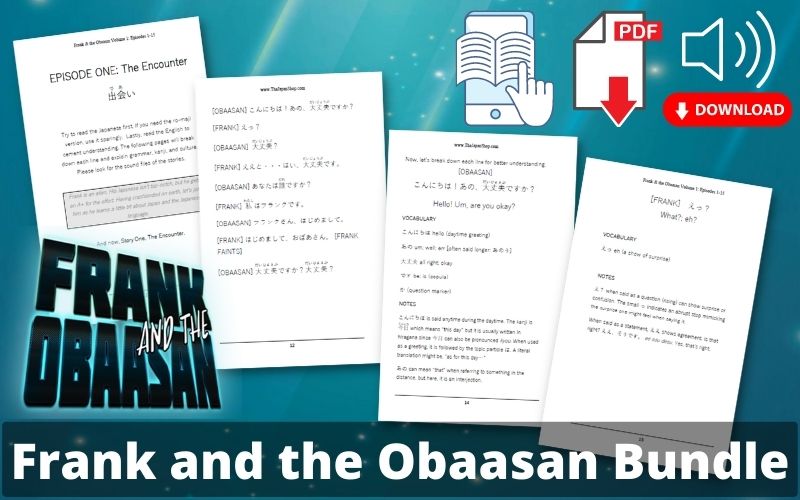
The series is built upon a philosophy of "active immersion." Each chapter is structured to minimize reliance on romaji (the romanized alphabet), encouraging students to engage directly with hiragana. The pedagogical flow is strictly calibrated:
- Direct Exposure: Readers attempt to comprehend the native Japanese text first.
- Contextual Support: English translations are provided to solidify understanding.
- Deconstruction: A line-by-line breakdown examines grammar, kanji, and cultural etiquette.
- Integration: The Makoto+ Sentence Explorer allows students to manipulate the specific sentences learned in each story, transforming passive reading into active sentence construction.
This approach is designed for the "upper-beginner" student—those who have mastered the basics of script but feel intimidated by the transition to full-length prose. By providing a clear, manageable path forward, the series removes the anxiety often associated with the early stages of Japanese acquisition.
Supporting Data and Accessibility
The accessibility of the Frank and the Obaasan project is one of its most significant advantages. The developers have instituted a tiered access model to ensure that resources are available to students at every budget level.
The "Freemium" model allows users to access the first five episodes at no cost. For those seeking a deeper dive, the "Makoto+ Shogun" membership provides comprehensive access to all volumes, coupled with audio files that are crucial for mastering pitch accent and natural intonation. Furthermore, digital bundles offer a cost-effective alternative for students who prefer a one-time purchase over a subscription, including the Beri-Beri-Shoshinsha bundle, which is specifically curated for absolute beginners.
The inclusion of the Sentence Explorer tool represents a significant technological leap for this series. By linking every vocabulary item and grammatical point directly to a searchable database, students can track their own progress, effectively creating a personalized roadmap of their learning journey.
Official Stance and Community Feedback
Educational experts who have reviewed the series emphasize the importance of "comprehensible input." By maintaining a consistent, low-stakes narrative, the Frank series keeps the reader in the "Goldilocks zone"—not so easy that it becomes boring, but not so difficult that it leads to burnout.
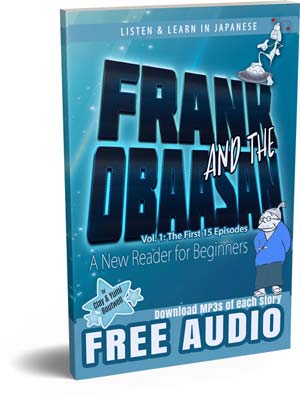
Customer feedback has been overwhelmingly positive, particularly regarding the series’ ability to humanize the language learning process. Florian, a long-time user and customer of The Japan Shop, notes: "This should be the first reader for beginners who already know hiragana and some basic Japanese grammar and vocabulary. It turns a chore into a story."
This sentiment is echoed by the developers, who have made it clear that their goal is to support learners through both the technical difficulties of grammar and the cultural hurdles of etiquette. Their commitment to updating the platform with "future volumes free of charge" for those who purchase the digital bundle indicates a long-term investment in the community’s growth.
Implications for the Future of Language Learning
The success of Frank and the Obaasan signals a shifting trend in language education. Students are increasingly rejecting static, lifeless textbooks in favor of dynamic, content-driven learning. When a learner can laugh at Frank’s confusion about sushi, they are building an emotional connection to the language that a standard grammar exercise simply cannot provide.

This emotional engagement, known as the "affective filter" in linguistics, is significantly lowered by the presence of humor and character. When a student feels less anxious, they are more capable of absorbing complex information. The Frank series, therefore, is not just a reader; it is a carefully calibrated psychological tool designed to keep the learner motivated over the long term.
For anyone currently navigating the labyrinthine path of Japanese studies, the Frank series offers a breath of fresh air. Whether you are struggling to remember the difference between particles, or simply interested in the life and times of a confused extraterrestrial in Fukui, this resource provides the structure, support, and entertainment required to reach the next level of fluency. As the series continues to expand, it stands as a testament to the idea that the best way to learn a new language is to live a new story—even if that story involves a crash-landed alien and a very persistent grandmother.











