

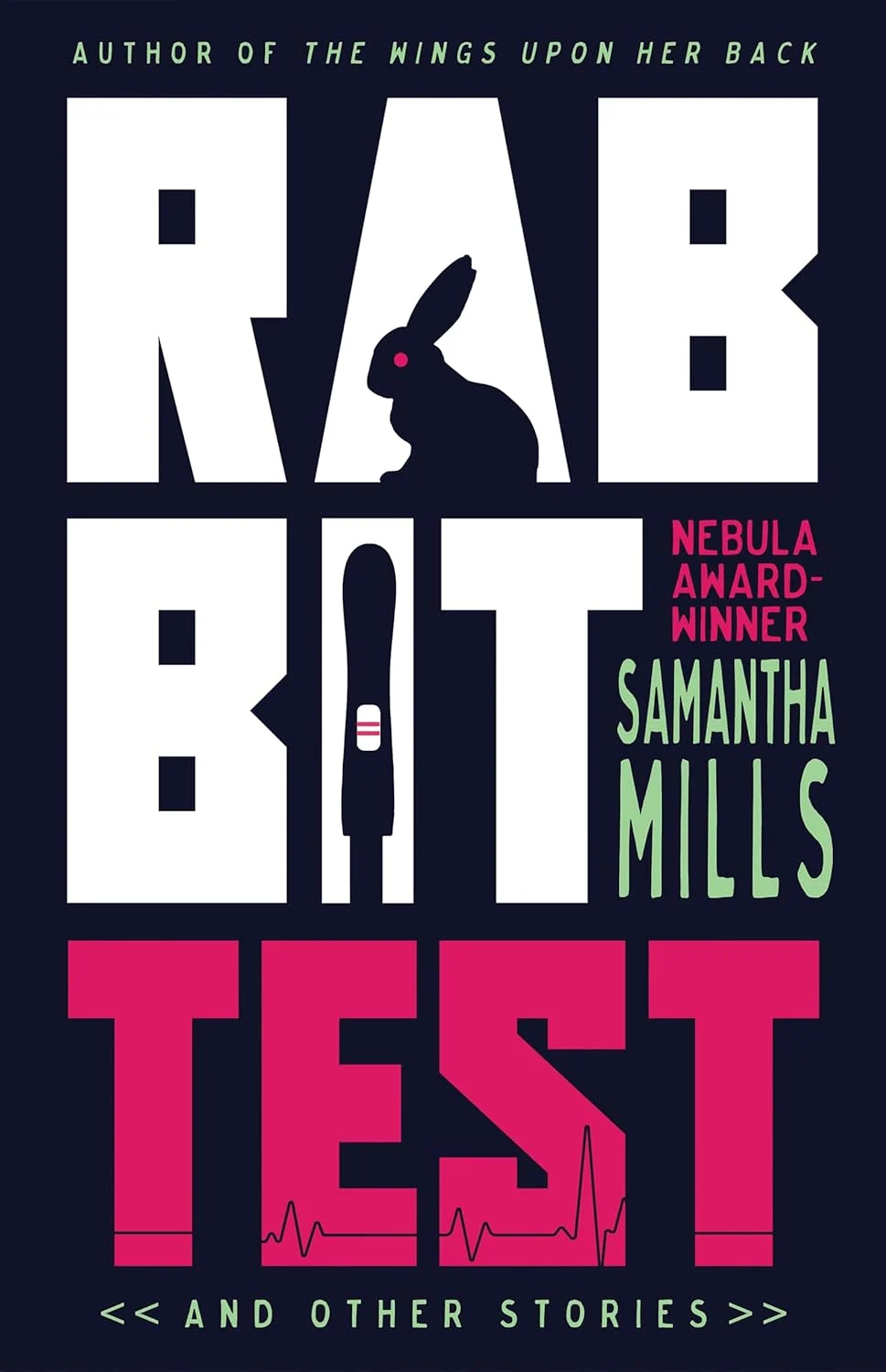
In the landscape of contemporary speculative fiction, few short stories have achieved the cultural and critical velocity of Samantha Mills’ "Rabbit Test." Since its publication in Uncanny Magazine in 2022, the story has become a touchstone of the genre, sweeping the prestigious Nebula, Theodore Sturgeon, and Locus Awards. It stands as a defining piece of 21st-century literature—a searing, lyrical, and structurally daring examination of reproductive rights and bodily autonomy in the wake of the U.S. Supreme Court’s Dobbs v. Jackson decision.
However, the release of Mills’ debut collection, Rabbit Test and Other Stories, presents a complex critical challenge. When a single piece of short fiction attains the status of a landmark, the surrounding work in a collected volume is inevitably measured against it. The question facing readers and critics alike is whether the collection serves as a robust body of work or if it exists merely as a pedestal for its titular masterpiece.
A Legacy Defined: The "Rabbit Test" Phenomenon
To understand the weight this collection carries, one must first recognize the gravity of the titular story. "Rabbit Test" is an extended, intricate fugue that interweaves a terrifyingly plausible future of high-tech surveillance with the historical development of pregnancy testing and the evolution of reproductive healthcare.
Mills utilizes a narrative voice that is simultaneously detached and deeply intimate, capturing the visceral reality of a protagonist living under the gaze of an omnipresent state. The story’s success lies in its craft: the language is sharpened to a point, utilizing metaphors that reflect the crushing weight of systemic misogyny. When the narrator describes monitoring her menstrual cycle "like a surveillance drone over a labor march," or reflects on the "guilt the size of a rich man’s space station," the reader is forced to confront the claustrophobia of the protagonist’s existence.
Beyond its stylistic flair, the story’s political potency is undeniable. It is an act of righteous fury that remains both timely and timeless. The closing line—"It is 2022 and it is never over"—serves as a rallying cry, acknowledging the cyclical nature of historical struggle. By earning its acclaim through both literary ambition and moral clarity, "Rabbit Test" has cemented itself as a vital document of the 2020s.
The Chronology of a Career: A Structural Overview
Rabbit Test and Other Stories gathers thirteen works, nine of which predated the publication of "Rabbit Test." This chronological spread provides an unintentional map of Mills’ development as an author.
Pre-Breakthrough Antecedents
The earlier stories in the collection often explore thematic interests that would eventually find their most potent expression in "Rabbit Test." Themes of state control, the struggle of the individual against the collective, and the ambivalence of family ties permeate these pieces. For example, in "Laugh Lines," the protagonist’s experience with anti-vat marches mirrors the public spectacles surrounding the "miracle child" narrative in "Rabbit Test." Similarly, "Strange Waters," a tale of a fisherwoman navigating the currents of time to return home, echoes the historical scope and temporal fluidity that Mills would later master.
While these stories show a writer finding her voice, they often lack the precise, laser-focused intensity that defined her later, award-winning work. They are effective genre exercises, but they occasionally feel like rehearsals for a performance that has not yet reached its peak.
The Post-Title Trajectory
The stories written after "Rabbit Test" face the most difficult task: maintaining momentum in the shadow of a giant. "The Death of the God-King," which opens the collection, is a case in point. While it offers an intriguing, anti-monarchical take on the trope of the immortal ruler and his romantic entanglements with Death, it struggles to transcend the familiar territory of its genre. The imagery is polished, but it lacks the searing originality that made "Rabbit Test" a sensation.
Similarly, "10 Visions of the Future; or, Self-Care for the End of Days" attempts to capture the anxiety of the "permacrisis" era. While its observations on the absurdity of self-care amidst collapse are empathetic and astute, the piece functions more as a polemic than a narrative revelation, making it difficult for the reader to form a lasting emotional attachment to the work.
Supporting Data: The Risk of the "Crazy Diamond"
The inclusion of an introduction by Meg Elison is a tacit acknowledgment of the collection’s greatest risk. Elison compares the book to a comet, worrying that the "tail" might simply be ice and dust compared to the "fireball" of the title story. This metaphor is apt. In many ways, Rabbit Test and Other Stories suffers from the "nondescript pebble" effect; when placed beside a diamond of such high clarity and brilliance, the surrounding stones appear dim, regardless of their intrinsic quality.
However, it would be reductive to label the rest of the collection as filler. Several stories demonstrate the breadth of Mills’ range, proving that her talent extends far beyond the dystopian horror of her most famous work.
Standout Pieces
- "Anchorage": A compelling exploration of spirituality in the vastness of space. It succeeds by grounding its high-concept premise in genuine human curiosity and emotional stakes.
- "Four of Seven": Perhaps the most heart-wrenching piece in the volume. By using the metaphor of sub-light speed travel—where time moves faster on the colonies than on the ship—Mills captures the profound, often tragic, cost of social mobility for those leaving behind a working-class upbringing. It is a masterful, empathetic look at the isolation of ambition.
- "Kiki Hernández Beats the Devil": A refreshing departure from the darker themes of the collection. This story is an infectious, Classic Rock-fueled romp that proves Mills can handle lighthearted, high-stakes fantasy with the same aplomb as her more serious social commentary.
Official Perspectives and Authorial Intent
In her afterword, Mills provides much-needed context for the collection, framing these thirteen stories as "Phase One of Sam Getting Serious." By labeling this as a developmental stage, Mills invites the reader to view the volume not as a definitive retrospective, but as a progress report.
This transparency is refreshing. Mills does not claim that every story in the book is a masterwork; rather, she presents them as the building blocks of her current identity as a writer. By acknowledging that she will return to short fiction for a "Phase Two," she signals that the best of her work may still be in development. This manages expectations while simultaneously fostering excitement for her future projects.
Implications for the Genre
The publication of Rabbit Test and Other Stories highlights an ongoing trend in the SFF (Science Fiction and Fantasy) community: the pressure on emerging authors to sustain the standard set by their viral hits. The collection serves as a microcosm of the current state of short-form genre fiction, where "literary" speculative fiction is increasingly expected to carry the weight of contemporary political discourse.
The implications of this are twofold. First, it validates the power of short fiction to drive cultural conversation. "Rabbit Test" is proof that a short story can move the needle in ways that longer-form works sometimes cannot. Second, it suggests that the "collection" format remains a tricky proposition for writers whose careers are defined by singular, explosive successes.
Ultimately, Rabbit Test and Other Stories is a testament to the fact that while an author may be best known for a single, defining achievement, their potential is rarely contained by it. Readers who approach the book expecting thirteen versions of "Rabbit Test" will inevitably be disappointed. However, those who engage with it as a chronicle of a talented writer’s evolution will find much to admire.
Samantha Mills has proven she can write the "crazy diamond" of her generation. If this collection shows anything, it is that she has the tools, the empathy, and the craft to continue building a substantial and varied body of work. The "whirlwind" of awards that followed her breakout success was well-earned; the task ahead, as she suggests in her afterword, is to harness that wind to power the next stage of her career. The industry, and the readers who cherish the depth of her insight, will be waiting for Phase Two.











No comments yet. Be the first to join the conversation!