Asro
Asro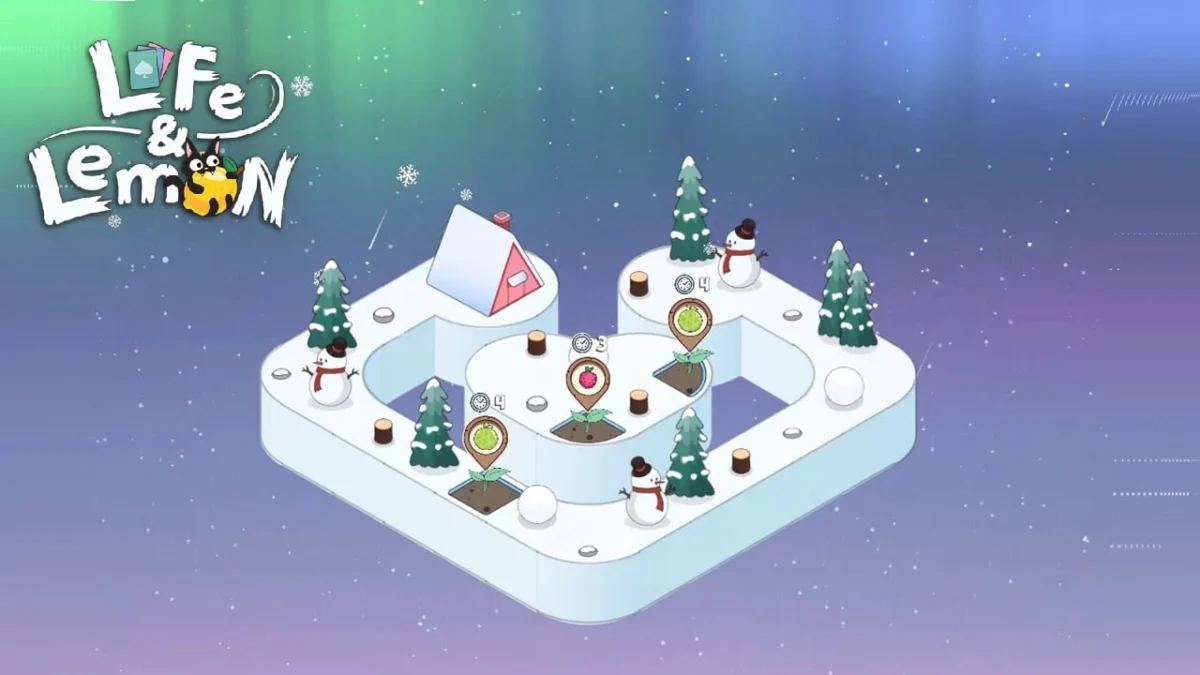
SAN FRANCISCO, CA – [Current Date] – In a significant announcement that has captured the attention of the indie gaming community, solo developer Amberwind Games has officially unveiled "Life and Lemon," an innovative new title poised to redefine the orchard management simulation genre with a compelling card-based strategy twist. The revelation came alongside a vibrant new trailer, offering a tantalizing glimpse into a world where strategic agricultural planning meets the unpredictable charm of a collectible card game. Slated for a full release in the second quarter of 2027, "Life and Lemon" is set to cultivate its unique gameplay experience across multiple platforms, including PC via Steam, Android, and iOS, promising a broad reach for its distinctive blend of genres.
The ambitious project, helmed entirely by a single developer, signals a growing trend of highly specialized and creative independent ventures pushing the boundaries of traditional gaming. "Life and Lemon" is not merely about planting seeds; it’s an intricate dance of resource management, environmental adaptation, and tactical decision-making, all woven into a rich narrative tapestry. Players will embark on a journey to transform a fledgling plot of land into a thriving fruit empire, navigating complex card synergies, diverse ecosystems, and the quirky personalities of a burgeoning community.
The game’s premise revolves around mastering the art of fruit cultivation, but its card-game mechanics elevate it far beyond conventional farming simulators. Every decision, from crop selection to resource allocation, hinges on collecting, combining, and strategically deploying a vast array of cards. This core loop promises a depth of gameplay that encourages experimentation and rewards thoughtful planning, inviting players to expand their agrarian enterprise across a beautifully rendered, colorful world teeming with possibilities.
The Genesis of a Hybrid: Main Facts of "Life and Lemon"
"Life and Lemon" emerges as a testament to the innovative spirit flourishing within the independent game development scene. At its heart, the game is a meticulous fusion of the beloved management simulation genre—often characterized by detailed resource management, progression systems, and a sense of growth—with the strategic depth inherent in card-based gameplay. This genre blending is arguably the most defining feature of Amberwind Games’ upcoming title, setting it apart from a crowded market of both farming simulators and digital card games.
The brainchild of a solo developer operating under the moniker Amberwind Games, "Life and Lemon" represents a monumental undertaking. The commitment required to conceptualize, design, program, and visually articulate such an intricate world and its mechanics is formidable, highlighting the passion and dedication driving this project. This solo development status is not just a logistical detail but an integral part of the game’s identity, often implying a singular, cohesive vision unburdened by corporate directives, allowing for more experimental and personal game design.
The announced target release window of Q2 2027 provides a clear timeline for anticipation, allowing both the developer ample time to refine and polish the experience and prospective players to follow its journey. The choice of platforms—PC (Steam), Android, and iOS—is a strategic one, aiming to capture a diverse audience. PC gamers, often drawn to deeper strategic experiences, will find a home on Steam, while the inclusion of mobile platforms taps into the vast casual and mid-core gaming markets, promising accessibility and on-the-go playability for a complex simulation. This multi-platform approach underscores a desire to make "Life and Lemon" a widely accessible and enduring title.
The game’s core loop, as revealed, centers on the cyclical nature of farming: planting, nurturing, harvesting, and selling. However, the card-based layer injects an entirely new dimension. Players won’t simply choose a crop from a menu; they will acquire, upgrade, and strategically play cards representing various aspects of their orchard. This includes crop cards, tool cards, weather modifier cards, and potentially even character skill cards, transforming every season into a tactical puzzle. The emphasis on "collecting, combining, and experimenting with cards" suggests a robust deck-building or card-drafting element, where players continuously refine their strategies and adapt to evolving challenges.
Crucially, the game promises more than just mechanical depth; it offers a vibrant, evolving world. The notion of expanding one’s farm "across a colourful world" implies exploration and progression beyond a static plot. This expansion is likely tied to the successful management of resources and the strategic use of cards, unlocking new areas with their own unique environmental characteristics and opportunities. "Life and Lemon" is therefore positioned not just as a simulation of agriculture but as an adventure in rural entrepreneurship, guided by the shuffle and draw of a well-played hand.
Cultivating Anticipation: A Chronology of Development and Reveal
While the specific development history of "Life and Lemon" remains largely within the private purview of Amberwind Games, the recent reveal marks a pivotal moment in its journey towards public release. The announcement, spearheaded by a new trailer, serves as the first major chronological milestone for the game’s public-facing narrative, setting the stage for a period of increasing anticipation leading up to Q2 2027.
The very existence of a polished trailer suggests a significant period of prior development. For a solo developer, creating such a demonstrative piece requires not only a foundational game engine and core mechanics but also substantial artistic assets, user interface elements, and a clear vision for the player experience. This implies that "Life and Lemon" has likely been in active development for a considerable period, possibly years, evolving from initial concept to a playable, presentable state. The solo nature of Amberwind Games means that every line of code, every pixel of art, and every design decision rests on a single individual, making the progress demonstrated in the trailer all the more impressive.
The choice of Q2 2027 for a full release is also chronologically significant. It’s a distant target, allowing Amberwind Games ample time to iterate, gather feedback (perhaps through early access or beta programs that might be announced later), and meticulously polish every facet of the game. This extended timeline is often a luxury for solo developers, providing the necessary space to achieve their vision without the intense pressure of a tight corporate schedule. It suggests a commitment to quality and a desire to deliver a truly complete and refined experience, rather than rushing a product to market.
The unveiling via a new trailer serves multiple purposes. Firstly, it generates initial buzz and introduces the core concept to potential players and industry observers. Secondly, it acts as a proof-of-concept, demonstrating the game’s unique mechanics and aesthetic. For "Life and Lemon," the trailer would have focused on showcasing the vibrant art style, the interplay of crop placement with card effects, the visual progression of an orchard, and perhaps glimpses of the diverse characters and environments. This initial impression is crucial for a new IP, especially from a solo developer, to establish credibility and capture imagination.
Following the trailer’s release, the opening of a dedicated Steam page becomes the next chronological marker. This page acts as a central hub for information, screenshots, and future updates, allowing interested players to wishlist the game and receive notifications. The absence of mobile listings at this initial stage is common, as mobile storefronts often have different submission processes and timelines compared to PC platforms. It suggests that while the mobile versions are planned, the primary focus for initial public engagement and information dissemination is currently on the PC platform.
From this point forward, the chronology will likely involve a series of development updates, deeper dives into specific mechanics, perhaps a playable demo at a future gaming event, and eventually, beta testing phases. Each step will build momentum towards the grand culmination in Q2 2027, painting a picture of a carefully managed and passionately developed project. The anticipation will grow as more details emerge, allowing players to track the evolution of "Life and Lemon" from its intriguing reveal to its full-fledged release.
Sowing the Seeds of Strategy: Supporting Data and Mechanics
The core appeal of "Life and Lemon" lies in its meticulously crafted gameplay mechanics and rich feature set, which together form a comprehensive and engaging experience. The supporting data released by Amberwind Games paints a picture of a game designed for strategic depth, emergent gameplay, and long-term player engagement.
The Orchard Management Core: Beyond Simple Planting
At its foundation, "Life and Lemon" is an orchard management simulator, but one that demands acute spatial reasoning and forward planning. The description emphasizes "thinking carefully about crop placement to get the best possible harvests." This isn’t just about aesthetics; it implies environmental factors, adjacency bonuses, and potentially even negative interactions that players must master. Factors like soil fertility, water accessibility, sunlight exposure, and wind patterns could all play a role, making each plot of land a micro-puzzle.
Furthermore, the concept of "learning the hidden traits of different crops" adds a layer of discovery and scientific experimentation. Crops might have innate properties that affect growth rate, yield quality, disease resistance, or even their interaction with other plants. These traits are crucial because they can "interact with one another, creating powerful synergies that improve production." This suggests a combinatorial explosion of possibilities, where discovering optimal crop pairings and arrangements becomes a key strategic element. Players will likely need to keep detailed records or develop an intuitive understanding of their plant ecosystem to maximize efficiency and profit. The cycle culminates in the "harvest and turn those crops into profit before expanding the orchard even further," a classic management loop, but one infused with card-driven strategic choices.
The Card-Based Strategy: A Deep Dive into Deck Building
The card game aspect is where "Life and Lemon" truly distinguishes itself. It moves "way beyond simply planting crops," transforming every action into a strategic decision dictated by the cards in hand. This suggests elements of deck-building, where players curate a collection of cards to suit their strategy, and card-drawing, where the luck of the draw introduces an element of adaptability.
The most intriguing mechanic described is "card fusion." With "more than 80 unique cards" promised, the potential combinations for fusion are vast. Fusing cards is not just about combining existing elements; it’s a transformative process that can:
- Reveal new cards: This acts as a discovery mechanism, encouraging experimentation to unlock new strategic options.
- Unlock special traits: Further enhancing the depth of crop interaction and synergy, allowing players to customize and specialize their produce.
- Improve crop quality to dramatically increase yields: A direct path to greater profitability and efficiency, rewarding successful fusion strategies.
- Cross-breed crops into completely new fruit species: This is perhaps the most ambitious aspect, suggesting a dynamic genetic system where players can create unique hybrid fruits, each with its own set of traits, benefits, and market value. This offers immense replayability and a sense of genuine creation.
The 80+ unique cards likely encompass various categories:
- Crop Cards: Representing different fruits, vegetables, and possibly trees or bushes.
- Tool/Action Cards: Cards that provide temporary buffs, automate tasks, or offer special abilities.
- Environment/Event Cards: Cards that modify weather, introduce challenges (pests, droughts), or provide unexpected opportunities.
- Character Skill Cards: Cards linked to befriended NPCs, granting unique advantages.
The strategic depth here is immense, requiring players to balance immediate gains with long-term investment in their card collection and fusion experiments.
A World to Explore: Dynamic Environments and Seasons
"Life and Lemon" rejects the notion of a static farm, instead inviting players to "explore a variety of lush locations." This implies a world map with distinct biomes, each offering unique challenges and opportunities. These locations are characterized by:
- Different weather conditions: Affecting crop growth, resource availability, and potentially requiring specific card plays to mitigate negative effects or capitalize on positive ones.
- Seasonal changes: A classic farming sim element, but likely integrated with the card system, where certain cards are only playable in specific seasons, or where seasonal events trigger unique card interactions.
- Challenges and opportunities: Each location might present its own set of problems (e.g., arid desert, rocky terrain, dense forest) that require specific strategies and card combinations to overcome, alongside unique rewards (rare crops, special resources).
- Native crops and perks: Encouraging players to adapt their farming strategies to the local flora and fauna, and to leverage regional advantages.
This dynamic environment ensures that gameplay remains fresh and challenging, preventing monotony and encouraging exploration and adaptation.
Building a Community: Characters with Depth
Beyond the mechanics of farming and cards, "Life and Lemon" integrates a compelling social simulation aspect through its cast of "more than 15 unique characters." These NPCs are not mere quest givers; they are described with distinct personalities, ranging from "oddballs, rejects, delinquents, and sweethearts," each possessing "their own stories."
Building friendships with these characters is presented as a vital part of the game’s progression, unlocking:
- Story events: Providing narrative depth and context to the world and its inhabitants.
- Special items: Unique tools, rare seeds, or powerful cards that can significantly aid the player’s orchard.
- New skills: Characters might teach the player new abilities or unlock new card categories, expanding strategic options.
- Helping grow a larger community of fruit farmers: This suggests that relationships with NPCs can lead to broader community development, perhaps through collaborative projects, shared resources, or even attracting new residents to the player’s growing agricultural hub.
This social layer adds emotional resonance and narrative purpose to the strategic gameplay, appealing to players who enjoy character interaction and world-building in their simulation games. The blend of mechanical depth with social engagement positions "Life and Lemon" as a holistic and immersive experience.
The Steam page, which is currently live, serves as the primary informational hub for interested players, offering a deeper look at the game’s features and visuals. While mobile listings are yet to be activated, their eventual presence will ensure that this rich experience is accessible to an even broader audience.
The Architect’s Vision: Official Responses and Developer Philosophy
While Amberwind Games has yet to release direct quotes or an in-depth developer diary following the initial announcement, the detailed description of "Life and Lemon" offers a profound insight into the solo developer’s philosophy and vision for the game. The ambition inherent in combining complex genres and features points towards a clear artistic and design intent that prioritizes depth, creativity, and player empowerment.
The very choice to undertake "Life and Lemon" as a solo project speaks volumes. It suggests a strong, singular vision that the developer believes can be best realized without external creative interference. This often translates into games that feel deeply personal, cohesive, and driven by passion rather than market trends alone. The solo developer journey is notoriously challenging, requiring mastery across multiple disciplines—game design, programming, art, sound, and project management. The fact that Amberwind Games has reached the stage of a public reveal with a detailed feature set and a compelling trailer indicates a high level of dedication and technical proficiency.
The emphasis on "learning how to run a successful fruit orchard, but with a new twist" is indicative of a desire to innovate within established genres. The "twist" being the card game aspect is not just a superficial addition; it appears to be deeply integrated into the core mechanics. This suggests a philosophy of enhancing familiar experiences through novel interactive systems, creating a fresh challenge even for veterans of farming sims or card games. The developer seems to be aiming for a game that is easy to understand on the surface but offers surprising strategic depth upon closer inspection.
The inclusion of over 80 unique cards and the complex "card fusion" system highlights a commitment to emergent gameplay and player agency. Rather than a linear progression, "Life and Lemon" appears to encourage experimentation and discovery. The ability to "reveal new cards, unlock special traits, improve crop quality… and even cross-breed crops into completely new fruit species" speaks to a design philosophy that values player-driven creation and the satisfaction of building something truly unique within the game world. This kind of system often implies a high degree of replayability, as players can continually explore new strategies and hybrid creations.
Furthermore, the detailed world-building, with "a variety of lush locations," "different weather conditions," "seasonal changes," and "native crops," showcases a dedication to creating an immersive and dynamic environment. This is not a static backdrop but an active participant in the gameplay, demanding adaptation and strategic thinking. It reflects a developer who understands that a compelling game world is as crucial as its mechanics.
The integration of "more than 15 unique characters" with "their own stories" and the system of "building friendships" to unlock rewards suggests a belief in the power of narrative and social interaction to enrich a gameplay experience. It indicates a desire to create not just a simulation, but a living, breathing world populated by memorable personalities, fostering a sense of community and belonging for the player. This human element grounds the strategic gameplay in relatable motivations and emotional connections.
In essence, Amberwind Games’ vision for "Life and Lemon" appears to be one of blending deep strategic mechanics with engaging narrative elements and a dynamic world, all while pushing the boundaries of genre conventions. The prolonged development timeline leading to Q2 2027 further reinforces this commitment to delivering a polished, innovative, and deeply satisfying experience, a hallmark of passionate solo development.
Harvesting the Future: Implications and Market Impact
The unveiling of "Life and Lemon" carries several significant implications, not just for Amberwind Games but for the broader independent gaming landscape, the evolution of simulation genres, and player expectations. Its unique blend of mechanics positions it to potentially carve out a distinct niche in an increasingly competitive market.
Implications for the Indie Game Landscape
"Life and Lemon" stands as a prime example of the ambition and creativity flourishing within the indie game development scene. In an era dominated by large studio releases, solo developers like Amberwind Games are increasingly proving that innovative concepts and deep gameplay can originate from singular visions. This project could inspire other aspiring solo developers, showcasing that complex, genre-bending ideas are achievable with dedication and a clear roadmap. Its potential success would further validate the indie model, where passion often trumps massive budgets, allowing for more experimental and niche experiences to thrive.
Redefining Simulation and Strategy Genres
The most profound implication of "Life and Lemon" lies in its genre fusion. By combining orchard management with card-based strategy, it challenges the traditional boundaries of both. For fans of farming simulations, it introduces a level of strategic depth and unpredictability typically absent from the genre, moving beyond routine task management. For enthusiasts of card games, it provides a thematic context and a tangible world progression that goes beyond abstract battles or puzzles.
If executed successfully, this hybrid approach could set a new benchmark, influencing future game design by demonstrating how seemingly disparate genres can be harmoniously integrated to create novel gameplay loops. It encourages other developers to think outside the box, fostering innovation across the industry. The "card fusion" system, in particular, could have significant implications for how progression and item creation are handled in future simulation and RPG titles, offering a more dynamic and player-driven approach to unlocking content.
Market Position and Competition
"Life and Lemon" enters a market populated by beloved and highly successful titles in both its constituent genres. Farming simulators boast giants like "Stardew Valley," "Animal Crossing," and "Harvest Moon," known for their cozy aesthetics and deep progression. Card games range from strategic titans like "Slay the Spire" and "Hearthstone" to narrative-driven experiences like "Inscryption."
"Life and Lemon" differentiates itself by actively merging these experiences rather than simply borrowing elements. Its challenge will be to appeal to both demographics without alienating either. The depth promised by its card mechanics could attract strategy enthusiasts looking for a fresh context, while its charming visuals and management aspects could draw in fans of cozy sims seeking more tactical engagement. Its success will depend on how effectively it communicates its unique selling proposition and how well it balances the strategic demands with the relaxing pace often associated with farming games.
Player Experience and Long-Term Engagement
The combination of dynamic environments, seasonal changes, and over 15 unique characters with their own stories suggests a game designed for long-term engagement and replayability. The card fusion system, especially the ability to cross-breed new fruit species, implies a vast sandbox for players to explore and experiment within. This kind of emergent content can significantly extend the lifespan of a game, fostering a dedicated community around discovery and optimization.
The social aspect, with characters influencing gameplay through skills and items, adds another layer of depth, appealing to players who value narrative and relationship building in their games. This holistic approach aims to create a world that feels alive and responsive to player actions, fostering a deeper connection than purely mechanical simulators.
Anticipation and Expectations for Q2 2027
The Q2 2027 release window generates a prolonged period of anticipation. This extended lead time allows Amberwind Games to build a strong community around the game, gather feedback, and potentially refine mechanics through early access or beta programs. Players can expect a highly polished and content-rich experience upon launch, given the luxury of time afforded to a solo developer.
However, the distant release date also means managing expectations and maintaining visibility in a fast-paced industry. Consistent updates, transparent communication, and perhaps a staggered release of more in-depth gameplay showcases will be crucial to sustain interest.
Ultimately, "Life and Lemon" is poised to be more than just another game; it’s a statement on the potential of indie development and the exciting possibilities of genre fusion. Its journey to Q2 2027 will be one to watch, as Amberwind Games cultivates not just virtual orchards, but also the future of innovative gaming.
The "Life and Lemon" Steam page is currently active for those eager to learn more and wishlist the game: https://store.steampowered.com/app/4687430/Life_and_Lemon/
Further Reading:
- Explore other innovative indie titles, such as "Roguelike Match2 Memory Deckbuilder Replicat," for more unique gaming experiences.


 Lina Irawan
 Sagoh
Sagoh