

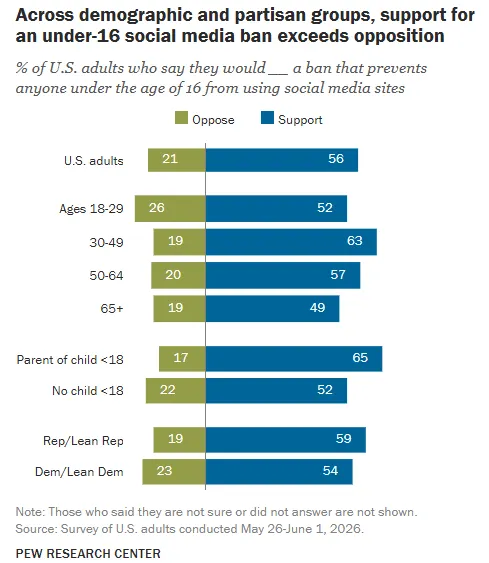
The debate over the digital well-being of the next generation has reached a fever pitch. As parents, educators, and policymakers grapple with the long-term effects of constant connectivity, a new consensus is emerging among the American public: the era of unrestricted access for minors may be coming to a close. A recent, large-scale survey conducted by Pew Research, polling over 9,000 U.S. adults, reveals a definitive shift in sentiment, with a clear majority favoring government intervention to restrict social media usage for children under the age of 16.
This push represents one of the most significant cultural and legislative battles of the 21st century. As governments worldwide scramble to implement protective measures, the central question remains: is a legislative ban the panacea that will reclaim childhood, or is it a futile gesture in a world where the internet is the primary medium for human connection?
The Pulse of Public Opinion: A Shift in Sentiment
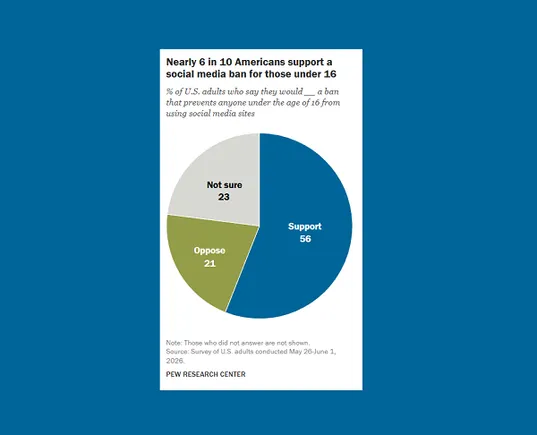
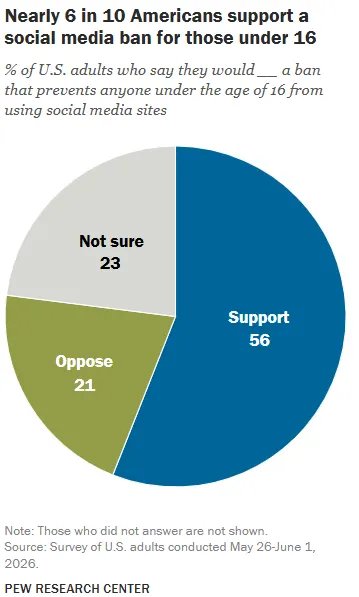
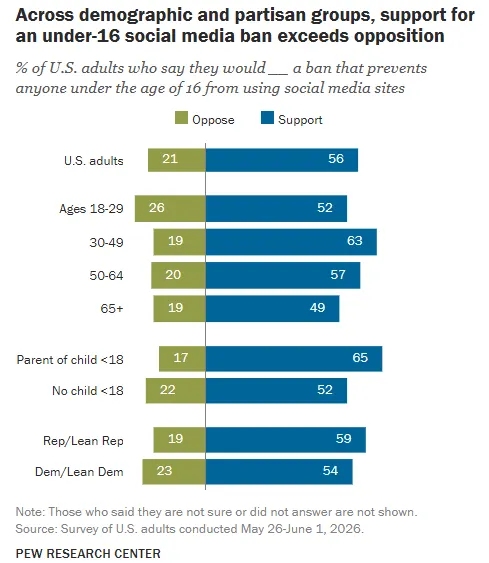
The Pew Research data paints a stark picture of the American mindset. Sixty percent of respondents expressed support for legal restrictions on teen social media usage, while only one-fifth of those surveyed voiced definitive opposition. This lopsided support is not merely a statistical anomaly; it represents a marked hardening of attitudes compared to the organization’s 2023 survey results.
This surge in support is likely driven by growing parental anxiety regarding the mental health impacts of algorithmic feeds, cyberbullying, and the pervasive nature of digital peer pressure. For many, the perceived "wild west" nature of platforms like TikTok, Instagram, and Snapchat has become a source of profound alarm. However, this support also underscores a deeper societal tension: the desire to "turn back the clock" to a time of physical, non-digital social interaction.
A Global Chronology of Legislative Action
The movement to regulate youth social media is not confined to the United States. It is a global phenomenon, fueled by a domino effect of legislative initiatives across diverse political landscapes.
- December 2024: Australia took the global lead by implementing a landmark ban on social media access for children under 16. The move was widely watched as the first "test case" for large-scale enforcement of age-gating at a national level.
- Early 2025: Following the Australian model, various jurisdictions began to accelerate their own efforts. In the United Kingdom, government officials outlined a comprehensive strategy to restrict teenagers from accessing livestreaming social media apps, citing concerns over radicalization and harmful content.
- Mid-2025: Turkey, Canada, and several other nations joined the fray, announcing their own versions of age-restricted access. These initiatives vary in scope, with some targeting specific app features—such as algorithms or infinite scrolls—while others aim for blanket bans.
- Ongoing (U.S. State Level): Within the United States, the federal government has been slower to act, leading individual states to take the initiative. California and Florida have pioneered legislation aimed at restricting teen access, setting a precedent that many other states are now looking to replicate.
The Reality Check: Why Bans Are Failing to Stick
Despite the overwhelming public support for these measures, the practical reality on the ground has been sobering. Australia’s implementation of its under-16 ban has provided an early, uncomfortable lesson for policymakers worldwide: legislation does not always translate into behavioral change.
Initial reports from Australia suggest that up to 70% of teenagers are still accessing social media platforms despite the ban. The persistence of these users highlights a fundamental flaw in the "ban-first" approach. Modern adolescents are, by and large, more tech-savvy than the regulatory frameworks designed to contain them. VPNs, shared accounts, and the inherent difficulty of age verification on decentralized, global platforms make the enforcement of such bans an administrative nightmare.
Furthermore, these bans often fail to account for the "ecosystem" of digital interaction. A teenager may be blocked from a social media feed, but they remain active on gaming consoles, encrypted messaging apps, and private servers. By focusing exclusively on "social media" as a monolith, regulators are missing the broader, more complex ways in which youth communicate.
The Socio-Digital Evolution: Why We Can’t Simply Go Back
The primary driver behind the failure of these bans—and the reason they are so popular among the public—is a misunderstanding of how the current generation views social interaction.
The COVID-19 pandemic acted as a permanent catalyst for this shift. For years, schools, social clubs, and families relied on digital platforms as the only means of maintaining social continuity. For the "digital native" generation, these apps are not just entertainment; they are the primary infrastructure for making friends, finding support groups, and establishing identity.
Attempting to remove these tools is akin to removing the telephone or the town square from the social lives of previous generations. Because the internet is now the default "place" where life happens, children will inevitably find a way back to it. Pushing them off mainstream platforms often forces them toward less moderated, more dangerous, or more obscure corners of the web, where safeguards are nonexistent and parental oversight is even harder to maintain.
Implications: The Path Toward Meaningful Safety
If blanket bans are not the solution, what is? The current landscape suggests that the focus must shift from "prohibition" to "accountability."
The Need for Uniform Standards
The current regulatory environment is fragmented. A patchwork of state and national laws creates loopholes that global tech companies are expert at exploiting. Experts argue that the real solution lies in international, uniform standards that hold platforms accountable for their algorithms. Instead of banning the user, the focus should be on the design of the app. This includes:
- Algorithmic Transparency: Forcing platforms to explain why certain content is served to minors and eliminating the "rabbit hole" effect of engagement-driven recommendations.
- Safety-by-Design: Requiring platforms to integrate robust, privacy-preserving age-assurance technologies that do not rely on invasive data collection.
- Liability Shifts: Moving away from the "platform immunity" that has allowed companies to ignore the secondary effects of their software on youth mental health.
Addressing the Root Causes
Beyond the technology itself, policymakers must address the incentives that drive addictive design. Much of the concern around youth social media is actually a concern about the business model of the internet—one built on capturing attention at any cost. By regulating the data-mining and behavioral-targeting practices that underlie these apps, governments could mitigate the most harmful aspects of the digital experience without resorting to draconian, and largely unenforceable, age bans.
Conclusion: A New Strategy for a Digital Future
The overwhelming support for social media bans, as evidenced by the Pew Research survey, is a clear signal that the public is tired of the status quo. Parents and citizens are demanding a safer digital environment, and they are willing to support radical measures to get it.
However, the disconnect between public desire and technical reality is dangerous. If governments continue to chase the mirage of a complete ban, they risk wasting precious political capital on measures that will fail to protect the very people they are intended to help.
The future of youth digital safety lies not in the futile effort to wall off the internet, but in the difficult, necessary work of reforming it. We must move toward a model where platforms are forced to operate with the same duty of care as any other essential service provider. The digital world is here to stay; our task is not to remove it from our children’s lives, but to ensure that the environment they inhabit is one that fosters growth, connection, and safety, rather than exploitation.











