Lina Hope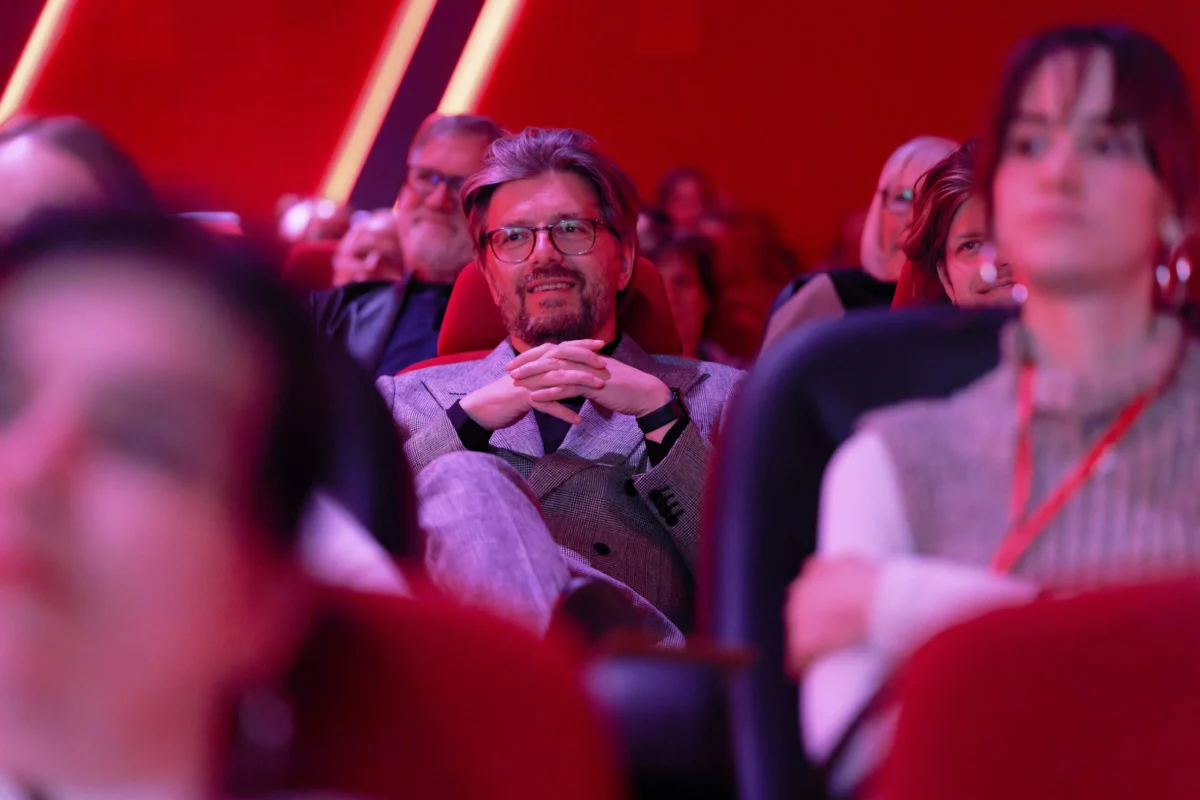
In the high-stakes world of global film production, where budgets reach into the hundreds of millions and technological shifts threaten to redefine the medium, few figures command as much respect as cinematographer Florian Hoffmeister. Fresh off the set of Edward Berger’s highly anticipated The Riders—a production backed by A24, Scott Free, Plan B, and Nine Hours—Hoffmeister recently traded the frenetic pace of a Brad Pitt-led film set for the scholarly quiet of Marburg, Germany. There, he was honored with the Marburg Camera Prize, a recognition that serves as a profound testament to a career defined by visual innovation and a deep, intellectual commitment to the image.
A Legacy of Excellence: The Marburg Camera Prize
Established in 2001 by the academic community at Marburg University, the Marburg Camera Prize is not your typical industry gala. It is a prestigious, three-day symposium that eschews the red carpet flash for the rigorous analysis of a cinematographer’s life work. With a cash prize of 5,000 euros and a roster of past recipients that includes luminaries like Ed Lachman, Hélène Louvart, and Agnès Godard, the award celebrates the cinematographer as an essential author of cinema.
For Hoffmeister, the timing of the award—marking his 25th year in the industry—offered a poignant moment for reflection. "The beautiful thing about the entire process is that it is purely about the work," Hoffmeister remarked. "There is no industry networking, no agents looking for gear deals. It is a space for dialogue."
His arrival in Marburg was nothing short of cinematic. Having wrapped his final day on The Riders at 3:30 AM, he boarded a flight to Germany, arriving just in time to watch a screening of his very first film. The emotional weight of seeing his earliest experiments projected alongside his later, Oscar-nominated triumphs was, by his own admission, "mind-blowing."
A Career in Focus: From ‘Great Expectations’ to ‘Tár’
Florian Hoffmeister’s trajectory is a masterclass in versatility. He is perhaps best known internationally for his work on Todd Field’s Tár, starring Cate Blanchett—a film that earned him an Oscar nomination, an Independent Spirit Award, and the top prize at the prestigious Camerimage festival.
However, his influence spans decades and genres. He made history with his work on the 2012 BBC adaptation of Great Expectations, becoming the first cinematographer to win an Emmy, a BAFTA, and an American Society of Cinematographers (ASC) award for a single project. His resume reads like a roadmap of modern prestige television and cinema: HBO’s True Detective: Night Country, Apple TV+’s Pachinko, and films such as The Deep Blue Sea, A Quiet Passion, and Official Secrets.
His ability to adapt his visual language to the needs of the narrative—whether the stark, chilling landscapes of Antlers or the precise, psychological framing of Tár—has made him one of the most sought-after directors of photography (DoP) in the business.
Chronology of a Craftsman: The Dual Path
Hoffmeister’s artistic life has always been bifurcated. Trained at a holistic film school where students were required to rotate through every department—sound, editing, directing, and cinematography—he developed a foundational understanding of film as a collective, multidisciplinary art form.

While his career as a DoP took off rapidly, he never abandoned his directorial ambitions. His 2005 directorial debut, 3° Colder, won the Silver Leopard at the Locarno Film Festival, signaling a distinct talent for atmospheric drama. His second feature, The Have-Nots (2016), proved that he could maintain a consistent, singular vision even on shoestring budgets.
"I’ve kind of divided my artistic life," Hoffmeister explains. "I have my little arthouse life here in Germany, and then I work internationally." He describes his directorial work as a space of pure creative liberty, often operating under the radar of corporate oversight, which allows for bold, experimental choices like deciding to shoot in black and white on a moment’s notice.
The Cinematographer as Author: Challenging the Industry
The Marburg event also served as a platform to discuss the historical and legal recognition of the cinematographer. Hoffmeister highlighted the case of Jost Vacano, the legendary cinematographer of Das Boot (1981), who fought a 14-year legal battle to be recognized as an "author" of his film.
Vacano’s victory in the German courts, which secured him significant financial compensation, was about more than money—it was a landmark ruling for the craft. "The courts had to recognize the cinematographer as an author," Hoffmeister notes. "We are as much authors of the film as the writer."
This struggle for recognition is particularly relevant in the era of social media. Hoffmeister credits platforms like Instagram—where dedicated accounts dissect lighting setups and color palettes—with fostering a new, sophisticated appreciation for the cinematographer’s role. This increased visibility is, he believes, a necessary defense against the encroaching shadow of corporate commodification and artificial intelligence.
The ‘Resonance’ Philosophy and the AI Challenge
As the industry grapples with the rise of AI, Hoffmeister remains focused on the "theory of resonance," a concept derived from German sociologist Hartmut Rosa. For Hoffmeister, cinematography is the pursuit of moments that "wow" the audience—the unexpected beauty of a sunrise or the perfect, unplanned alignment of light and shadow.
"In the age of AI, the interesting question is whether this resonance will still be possible on bigger productions," he says. "If somebody sits on a computer and asks AI to make a picture, that’s a singular experience. But if 200 people are on a set together creating something… that is a human experience. That communal effort is the backbone of what I love about filmmaking."
He worries that if the industry moves toward a model of purely algorithmic execution, the "element of resonance" will disappear. He advocates for maintaining the human, collaborative spirit that has defined cinema since its inception, regardless of how much the "mammoth" of the film industry continues to shift.

Reunited: Edward Berger and ‘The Riders’
The conversation inevitably turns to his latest project, The Riders, which marks a reunion with long-time friend and collaborator Edward Berger. Their relationship spans over three decades, having grown up in the same region of Germany.
Working with Berger on The Riders provided a sense of creative closure. "It was a beautiful experience," Hoffmeister recalls. During the production, which faced strict budget constraints, Hoffmeister occasionally stepped back into an operational role, working the B-camera. This allowed him a unique proximity to the performance of Brad Pitt.
"He’s such an icon; you really have to pinch yourself," Hoffmeister says of the star. "He has a particular aura in front of the camera. And he’s a super nice guy and very easy to work with."
Implications for the Future of Cinema
As Hoffmeister looks toward his next directorial project, Her Story, he remains a man of two worlds. He is a high-profile technician for global blockbusters and a quiet, contemplative auteur of German independent cinema. His dual perspective offers a unique vantage point on the current state of the industry: he sees the volatility, the corporate pressure, and the technological disruption, yet he remains deeply optimistic about the enduring power of the craft.
The Marburg Camera Prize, therefore, is not merely a retrospective look at a successful career; it is an affirmation of the values Hoffmeister holds dear: the importance of the human hand in the image, the necessity of the cinematographer as a co-author, and the vital, communal nature of storytelling.
Whether he is lighting a scene for an A24 production or editing his own feature film, Hoffmeister continues to search for that elusive spark of resonance. As the film industry continues to evolve, his career serves as a guiding light—a reminder that despite the rise of technology, the most profound cinematic moments are those that connect, on a deeply human level, with the audience.
For the next generation of cinematographers, Hoffmeister’s advice is clear: stay curious, defend the authorship of your work, and never stop looking for the beauty in the unexpected. As for the "mammoth" of the film industry? Hoffmeister is watching, camera in hand, ready to capture whatever comes next.

 Evan Lee Salim
 Asro
Asro