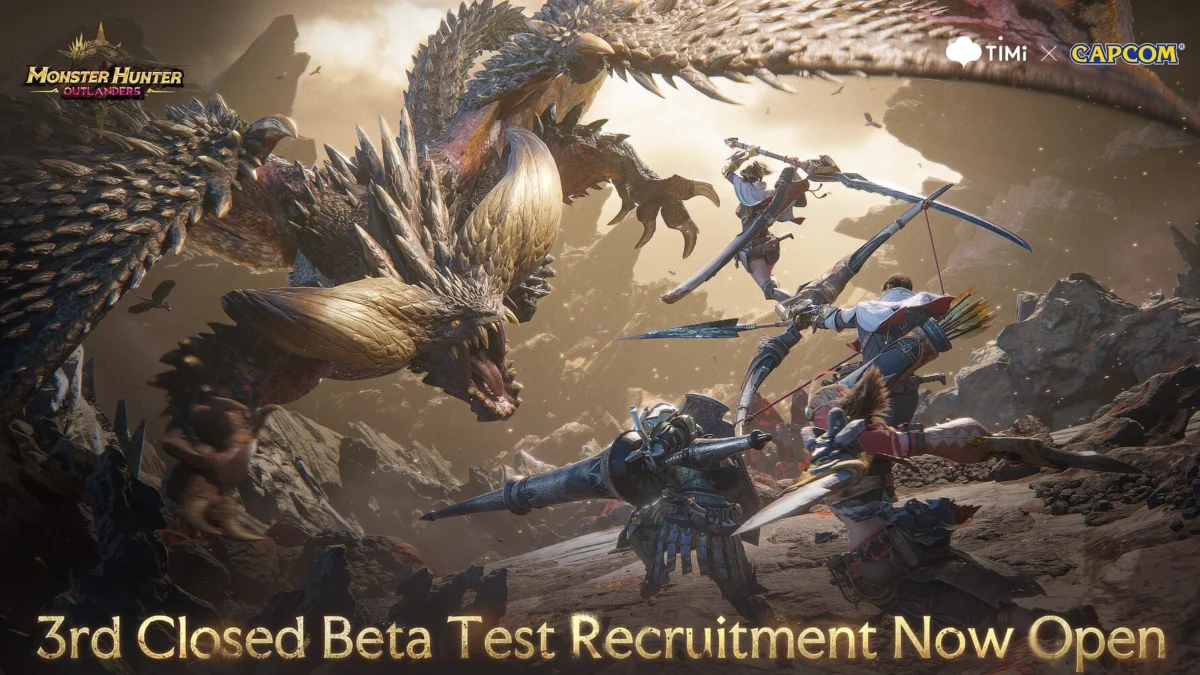
TOKYO & SHENZHEN – July 15, 2026 – The highly anticipated open-world survival game, Monster Hunter Outlanders, is once again opening its doors to prospective hunters, with sign-ups for its third closed beta test (CBT3) now officially underway. Jointly developed by industry titans TiMi Studio Group, a subsidiary of Tencent Games, and Capcom, the latest testing phase promises an enriched experience featuring novel challenges and significant gameplay enhancements. Aspiring participants can register via the official website until July 24, 2026, with the test itself slated to commence on August 7, 2026. The beta will be accessible on both iOS and Android platforms, signaling a concerted effort to deliver a polished and immersive mobile Monster Hunter adventure.
This announcement marks a critical juncture in the development of Monster Hunter Outlanders, as the teams at TiMi Studio Group and Capcom continue their iterative process of refinement based on invaluable community feedback. The third closed beta is poised to introduce players to an expanded bestiary, additional hunter functionalities, and a suite of optimizations designed to elevate the mobile hunting experience.
The Journey So Far: A Chronology of Monster Hunter Outlanders’ Development
The genesis of Monster Hunter Outlanders can be traced back to the burgeoning desire to bring the iconic Monster Hunter experience to a broader, mobile-centric audience, without compromising the depth and challenge that defines the franchise. While specific initial announcement dates are often shrouded in the early stages of project secrecy, the collaboration between Capcom, the venerable creator of the Monster Hunter series, and TiMi Studio Group, renowned for its expertise in developing high-fidelity mobile titles such as Honor of Kings and Call of Duty: Mobile, was met with considerable excitement and speculation within the gaming community. The partnership itself signified a strategic move by Capcom to leverage TiMi’s technical prowess in mobile optimization and live-service game operations, ensuring that Outlanders could stand as a robust, authentic entry in the Monster Hunter canon.
The First Closed Beta Test (CBT1): Laying the Foundation
The initial closed beta test for Monster Hunter Outlanders was primarily focused on stress-testing core mechanics, server stability, and gathering preliminary feedback on the game’s fundamental loop. Participants were introduced to the basic exploration, resource gathering, crafting, and, most crucially, the combat system tailored for touch devices. Feedback from CBT1 was instrumental in identifying areas for improvement in user interface (UI), control responsiveness, and overall game performance. It also provided valuable insights into player expectations regarding content pacing and the translation of complex Monster Hunter systems to a mobile format. The developers utilized this data to solidify the game’s foundational structure, ensuring a stable platform for future iterations.
The Second Closed Beta Test (CBT2): Expanding Horizons and Refining Mechanics
Held in May 2026, the second closed beta test built upon the groundwork laid by CBT1, introducing a wider array of monsters, more diverse environments, and additional weapon types or hunter abilities. This phase focused on testing the scalability of the open-world survival elements, the efficacy of the multiplayer experience, and the depth of the progression systems. Players experienced the first significant content updates, including new biomes and a glimpse into the game’s narrative direction, however nascent. Crucially, CBT2 was followed by a comprehensive "optimization plan" that directly addressed player feedback. This plan likely detailed improvements to graphical fidelity, frame rate stability, network latency, and specific adjustments to combat mechanics and monster AI that were deemed necessary after extensive player interaction. The transparency of this post-CBT2 communication was well-received, demonstrating the developers’ commitment to an iterative, player-driven development cycle. The experience from CBT2 directly informed the current state of the game, setting the stage for the significant refinements promised in CBT3.
Supporting Data: What to Expect in the 3rd Closed Beta Test
The upcoming third closed beta test for Monster Hunter Outlanders is designed to be the most comprehensive and refined testing phase yet, offering participants a deeper dive into the game’s evolving world and mechanics. Developers TiMi Studio Group and Capcom have outlined several key areas of focus and new content that will be featured.
Dual-Category Application Process: General Participants and Content Creators
Mirroring the successful approach of the previous round, CBT3 applications are divided into two distinct categories:
-
General Participant Category: This category is open to any eligible player interested in experiencing Monster Hunter Outlanders and providing direct feedback. Selection is typically based on a combination of factors, which may include device specifications, geographical location, and a random draw from the pool of applicants. The primary goal for general participants is to test game stability, balance, and general user experience under varied conditions. Their collective feedback through surveys and bug reports is crucial for identifying widespread issues and validating design choices.
-
Content Creator Category: Recognizing the immense value of community engagement and organic reach, a dedicated category has been established for content creators. This includes streamers, YouTubers, and social media influencers who regularly produce gaming-related content. To be eligible, creators must demonstrate a genuine interest in Monster Hunter Outlanders, possess a consistent track record of content production, and express a keenness to share their adventures with their respective communities. Video streaming and social media posts showcasing gameplay experiences are not just encouraged but actively facilitated, allowing for a broader dissemination of gameplay footage and first impressions. This strategy serves a dual purpose: it generates significant pre-release hype and provides a more diverse range of perspectives on the game’s features, often highlighting aspects that might not emerge from traditional bug reports. Specific eligibility requirements and selection criteria for both categories are detailed in the official application guidelines, emphasizing fair and transparent participation.
New Content and Enhancements in CBT3:
-
New Radiant Monsters: One of the most exciting additions teased for CBT3 is the introduction of "new radiant monsters." In the Monster Hunter lore, monsters often exhibit unique adaptations or variations based on their environment or particular energy sources. "Radiant" could imply several things:
- Elemental Variants: Monsters imbued with a strong, glowing elemental energy (e.g., a "Radiant Rathalos" with intensified fire attacks and visual effects).
- Elder Dragon Influence: Perhaps monsters affected by the aura or energy of an Elder Dragon, granting them unique abilities or visual luminescence.
- Unique Subspecies: Completely new subspecies that glow due to biological adaptations or unique physiological processes, offering fresh combat challenges and material drops.
- Environmental Interaction: Monsters whose radiance changes based on their environment, making them harder to track or indicating specific attack patterns.
These new monsters will undoubtedly require novel strategies and gear combinations from hunters, maintaining the series’ signature depth in combat.
-
Additional Hunters: The phrase "additional hunters" could refer to several potential expansions:
- New Weapon Types: The Monster Hunter series boasts a wide array of weapon classes, each offering a distinct playstyle. CBT3 might introduce new weapon categories, such as the Charge Blade, Insect Glaive, or Hunting Horn, significantly expanding tactical options.
- Expanded Customization Options: More extensive character customization features, allowing players to create more unique avatars that reflect their hunting style.
- New Hunter Skills/Abilities: Introduction of new active or passive skills that can be equipped, allowing for greater build diversity and strategic combat approaches.
- NPC Companions: While less likely in a core "hunter" context, it could potentially hint at new Palico/Palamute variations or specialized NPC allies that assist in hunts.
These additions will enhance player agency and foster a more personalized hunting experience.
-
Implementation of Optimization Plan Improvements: Following CBT2, the development teams compiled an "optimization plan" based on player feedback. CBT3 will showcase the fruits of these efforts. This likely includes:
- Performance Enhancements: Improved frame rates, reduced loading times, and better overall stability across a wider range of iOS and Android devices.
- UI/UX Overhauls: Refinements to the user interface for more intuitive navigation, clearer information display, and a smoother user experience, particularly crucial for mobile.
- Network Stability: Enhanced server infrastructure and net code optimizations to minimize lag, disconnections, and ensure a seamless multiplayer experience.
- Balance Adjustments: Tweaks to weapon damage, monster health and attack patterns, skill efficacy, and resource drop rates to ensure a fair yet challenging gameplay loop.
- Bug Fixes: A myriad of bug fixes addressing issues reported in previous tests, ranging from minor graphical glitches to critical gameplay blockers.
The commitment to an optimization plan underscores the developers’ dedication to delivering a high-quality product that addresses player concerns head-on.
The Open-World Survival Loop on Mobile:
Monster Hunter Outlanders is billed as an open-world survival game. This typically implies:
- Exploration and Discovery: Venturing into vast, interconnected environments filled with diverse flora, fauna, and hidden secrets.
- Resource Gathering and Crafting: Collecting materials from the environment and fallen monsters to craft weapons, armor, potions, and other essential items.
- Base Building/Hub Management: Potentially a customizable hunter’s camp or a central hub where players can prepare for hunts, manage inventory, and interact with NPCs.
- Dynamic Ecosystems: Monsters interacting with each other and the environment, creating unpredictable hunting scenarios.
- Multiplayer Co-op: The core of Monster Hunter, allowing players to team up with friends to tackle formidable beasts, a feature expected to be a cornerstone of Outlanders.
The challenge for TiMi and Capcom lies in translating this complex loop into an engaging mobile format that respects player time while retaining the strategic depth of the franchise.
Official Responses: Developers’ Vision and Community Commitment
While specific new quotes from TiMi Studio Group and Capcom regarding CBT3 were not provided in the original announcement, the overarching tone of their collaboration and previous communications suggests a clear vision and commitment.
From TiMi Studio Group: The studio’s involvement signifies a dedication to pushing the boundaries of mobile gaming technology. Their response would likely emphasize the technical achievements in adapting the complex Monster Hunter engine and mechanics to mobile devices, ensuring a smooth and visually appealing experience. They would highlight their expertise in creating engaging live-service games, focusing on server stability, continuous content updates, and robust anti-cheat measures. A statement might articulate their excitement in bringing a "AAA console-quality experience" to the palms of players’ hands, showcasing the fidelity and performance they’ve managed to achieve.
From Capcom: As the stewards of the Monster Hunter legacy, Capcom’s statements would invariably underscore the preservation of the franchise’s core identity. They would likely express their satisfaction with how TiMi Studio Group has managed to capture the essence of Monster Hunter – the thrill of the hunt, the strategic combat, the intricate crafting, and the camaraderie of cooperative play. Their response would reiterate their ambition to expand the Monster Hunter universe to new demographics and territories, leveraging the accessibility of mobile platforms while maintaining the high standards fans expect. They might also touch upon the meticulous design of the new "radiant monsters" and how they integrate into the existing Monster Hunter ecosystem.
Joint Commitment to Community: Both developers would undoubtedly express profound gratitude for the passionate community feedback received during previous beta tests. They would reaffirm their commitment to an iterative development process, emphasizing that player input is not just welcomed but actively shapes the game’s evolution. Statements would likely reassure players that Monster Hunter Outlanders is being crafted with their desires at heart, striving to deliver a mobile experience that is both authentic to the series and innovative in its execution. The content creator program itself is a testament to this commitment, actively seeking to foster a vibrant community even before launch. The overall message would be one of excitement, transparency, and a shared vision for the future of the Monster Hunter franchise on mobile.
Implications: Broader Impact and Future Outlook
The third closed beta test for Monster Hunter Outlanders carries significant implications not just for the game itself, but for the wider mobile gaming market, the Monster Hunter franchise, and the strategic direction of both TiMi Studio Group and Capcom.
Impact on the Mobile Gaming Market:
The mobile gaming sector continues its aggressive expansion, with a growing demand for high-fidelity, deep gameplay experiences traditionally associated with consoles and PCs. Monster Hunter Outlanders, a collaboration between two industry giants, is poised to be a major contender in this space. Its success or even its performance in beta tests will be closely watched by competitors. Should it deliver a truly "console-quality" open-world survival experience on mobile, it could set new benchmarks for graphical fidelity, gameplay complexity, and live-service operations within the mobile sphere. It also reinforces the trend of major IPs migrating to mobile, further blurring the lines between traditional and mobile gaming platforms. The game will inevitably be compared to other successful mobile Monster Hunter titles, such as Monster Hunter Now, and its unique "open-world survival" angle will be a key differentiator.
Expansion of the Monster Hunter Franchise:
For Capcom, Monster Hunter Outlanders represents a crucial pillar in its strategy to broaden the franchise’s global appeal. While titles like Monster Hunter: World and Monster Hunter Rise have achieved monumental success on consoles and PC, mobile platforms offer unparalleled reach, particularly in emerging markets with high smartphone penetration. A successful Outlanders could introduce millions of new players to the Monster Hunter universe, potentially converting them into fans of the mainline series. It diversifies Capcom’s portfolio and demonstrates their adaptability to evolving market demands. The iterative beta process also helps ensure that the game maintains the core Monster Hunter DNA, safeguarding the integrity of the beloved franchise.
TiMi Studio Group’s Strategic Position:
For TiMi Studio Group, this project further solidifies their reputation as a premier developer of AAA mobile titles. Partnering with Capcom on such a globally recognized IP underscores their technical capabilities, design prowess, and operational expertise in handling large-scale, live-service games. A successful launch of Outlanders would enhance TiMi’s standing within Tencent Games and the broader international gaming community, making them an even more attractive partner for other major IP holders looking to enter the mobile space. It also demonstrates their ability to work effectively within established brand guidelines while innovating for a new platform.
Player Expectations and Future Development:
Player expectations for Monster Hunter Outlanders are incredibly high. Fans of the franchise anticipate a faithful adaptation that captures the thrill of hunting, the depth of customization, and the satisfaction of cooperative play. Concerns often revolve around monetization models (as is common for free-to-play mobile games), the potential for pay-to-win elements, and the overall longevity and content roadmap. The transparency of the beta process and the focus on player feedback are critical in building trust and managing these expectations. The success of CBT3 will heavily influence the subsequent development phases, potentially leading to further beta tests, a soft launch in select regions, and ultimately, a global release. The data gathered from this test will be instrumental in making crucial decisions regarding game balance, content rollout, and community management strategies post-launch.
Overall Industry Trends:
Monster Hunter Outlanders also fits into several broader industry trends:
- Cross-Platform Convergence: While Outlanders is mobile-exclusive, its development benefits from insights gleaned from console/PC Monster Hunter titles, and its success could inspire more integrated cross-platform strategies.
- Live-Service Dominance: The game is clearly designed as a live-service title, with continuous updates, seasonal content, and community events expected to sustain player engagement for years.
- Importance of Beta Testing: The multi-phase closed beta strategy highlights the critical role of player-driven development in refining complex games before a wide release, especially for titles with significant investment and brand recognition.
As the July 24 deadline for sign-ups approaches, the anticipation for Monster Hunter Outlanders’ third closed beta test continues to mount. With new "radiant monsters," additional hunter options, and a host of performance and gameplay optimizations, this test promises to be a pivotal moment in the game’s journey towards a global launch. The collaboration between TiMi Studio Group and Capcom is poised to deliver a definitive mobile Monster Hunter experience that could redefine expectations for open-world survival games on handheld devices.
3rd Closed Beta Test Trailer
To give prospective hunters a glimpse into the action and the new content awaiting them, TiMi Studio Group and Capcom have released compelling trailers showcasing the upcoming beta. These trailers provide visual confirmation of the game’s graphical fidelity, highlight some of the new monsters, and tease the refined gameplay mechanics.
English Trailer:
Japanese Trailer: