Iffa Jayyana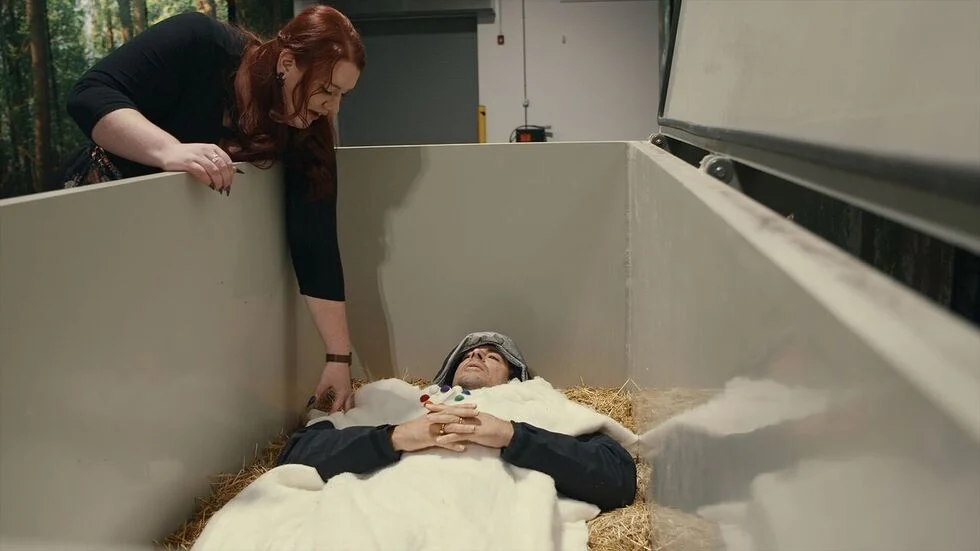
When the lineup for last month’s Tribeca Film Festival was unveiled, one title stood out with a morbid, unavoidable gravity: Death Boom. At first glance, the title sounds like a quintessential entry in the horror genre—a fitting moniker for a project helmed by Eli Roth, the man behind Hostel and Thanksgiving. However, as the film unfolds, it becomes clear that Death Boom is not a work of fiction designed to elicit screams; it is a sobering, necessary, and surprisingly redemptive documentary that peers into the abyss of our own mortality.
For the 76 million Americans born between 1946 and 1964—the Baby Boomer cohort currently approaching their twilight years—this film serves as both a wake-up call and a roadmap. Directed by Jessica Chandler and produced in collaboration with Roth and Leonardo DiCaprio’s Appian Way, the documentary examines the logistics, economics, and environmental impact of the "death industry." As the first wave of Boomers begins to face the inevitable, the world is confronted with a logistical reality: we are simply not prepared for the volume of departures coming our way.
The Looming Demographic Cliff: Main Facts
The premise of Death Boom is grounded in cold, hard demographic data. Within the next 15 years, the United States will witness a unprecedented surge in mortality rates as the Boomer generation reaches life expectancy milestones. The film frames this not merely as a biological inevitability, but as a systemic crisis.
The current funeral industry, a sprawling web of private enterprises and legacy practices, is already struggling to maintain capacity. When the sheer volume of 76 million people begins to transition, the infrastructure of cemeteries, crematoriums, and mortuaries will be pushed to a breaking point. Roth, serving as both narrator and on-camera guide, takes the audience on a journey through the "business of death." It is an unflinching look at an industry that operates largely in the shadows, hidden behind the euphemisms of "final arrangements" and "memorial services."
The Mechanics of Mortality: A Chronology of the Industry
To understand why Death Boom is so effective, one must look at how the documentary constructs its narrative. The film opens with a visceral, and perhaps intentionally jarring, sequence featuring interviews with undertakers and embalmers. These professionals provide a transparent look at the technical aspects of preserving a body for burial.
By pulling back the curtain on the embalming process—a practice that many modern consumers view as standard without understanding the chemical or physical reality—Chandler and Roth force the viewer to confront the "gross" reality of the trade. This is the "horror" element of the film, not because it is supernatural, but because it is biological.
As the film progresses, it shifts from the visceral to the industrial. It examines the evolution of the funeral home as a commercial entity, the rise of the cremation movement, and the modern-day "death economy." This chronology highlights how the funeral industry transitioned from a community-based, pastoral service to a profit-driven, high-volume corporate machine. The documentary effectively argues that the convenience of modern disposal methods—specifically mass cremation—has come at a high price: the loss of dignity and the environmental degradation of our atmosphere.
Environmental and Economic Implications
One of the most striking segments of the film explores the environmental cost of cremation. This is where the partnership with Leonardo DiCaprio—a long-standing advocate for environmental conservation—becomes central to the film’s mission. The documentary highlights the massive carbon footprint of traditional crematoriums, which release significant pollutants into the air.
Furthermore, the film reveals the logistical shortcuts inherent in the high-volume cremation model. It features uncomfortable admissions from industry insiders regarding the impossibility of ensuring that remains returned to families are purely those of their loved ones. In a system designed for speed and volume, "leftovers" from previous cremations are often intermingled with the current ashes. It is a revelation that challenges the sanctity of the cremation process and underscores the need for more ethical, transparent alternatives.
Beyond the environmental impact, the economic burden is staggering. The "cost of dying" is a recurring theme. The funeral industry is one of the few markets where the consumer is almost always in a state of grief-induced vulnerability, making it prime territory for price gouging and unnecessary upselling. Death Boom asks: Is it possible to die with dignity without bankrupting one’s heirs?
Exploring Alternatives: A Path Toward Hope
If the first half of Death Boom is a descent into the dark realities of the current system, the second half serves as an ascent into innovation. The film pivots to explore "green" alternatives that are gaining traction globally, offering a more ecological and psychologically comforting path forward.

Among these are:
- Water Cremation (Alkaline Hydrolysis): A process that uses water and potassium hydroxide to accelerate natural decomposition, resulting in a cleaner, more energy-efficient outcome than flame-based cremation.
- Natural Decomposition Farms: Designated plots where bodies are allowed to return to the earth without the use of chemical preservatives or metal caskets, effectively becoming nutrients for the soil.
- Human Composting: Perhaps the most radical and poetic of the alternatives, this involves placing a body in a specialized vessel with organic materials, allowing it to transform into soil over several weeks. Families are invited to participate in the process, adding flowers, notes, or items that reflect the deceased’s life.
These methods, while initially shocking to those accustomed to traditional burials, are presented with such care that they move from being "weird" to being profoundly beautiful. They represent a shift in philosophy: from viewing death as a problem to be disposed of, to viewing death as a final act of environmental stewardship.
Official Perspectives and Industry Response
The film features a diverse array of voices, ranging from mortuary scientists and environmental researchers to bereaved families and policy experts. By giving a platform to those who are actively working to reform the death industry, Death Boom avoids being a purely nihilistic exercise.
The industry response, as depicted in the film, is a mixture of resistance and resignation. While some legacy funeral homes are wary of "green" trends that might threaten their profit margins on traditional caskets and burial plots, others are beginning to realize that the Baby Boomer generation—known for its history of questioning the status quo—will demand better options. The generation that challenged the political establishment of the 1960s and 70s is now, in the final act, challenging the funeral establishment.
Implications: A New Era of End-of-Life Planning
The broader implication of Death Boom is that we are on the precipice of a cultural shift. As the Boomer generation reaches this "death boom," they are likely to bring their lifelong habit of activism and questioning into the way they leave the world.
The documentary suggests that if we don’t fix the systems now, we will be left with a catastrophic failure of logistics and a massive environmental scar. However, by embracing these new, greener technologies, we can turn the "death boom" into a "life cycle." Instead of being a burden on the planet, the process of dying can become a way of giving back.
For viewers like myself—a Baby Boomer sitting in the audience, watching the credits roll—the film is ultimately comforting. It strips away the fear of the unknown by providing information. It turns the finality of death into a manageable, even meaningful, transition.
Conclusion
Death Boom is a masterclass in documentary filmmaking. It balances the horror-adjacent, visceral reality of our physical end with a hopeful, forward-thinking vision of how we might return to the earth. Through the creative collaboration of Eli Roth and Jessica Chandler, the film transforms a subject we are conditioned to avoid into something we must face with urgency and grace.
In a time when we are obsessed with how we live, Death Boom reminds us that how we die matters just as much. It is a call to action for the Boomer generation to take control of their final footprint, and for society to rethink the infrastructure of our departure. Ultimately, it is a reminder that we can, even in our final moments, choose to be part of the solution.
Film Details:
- Death Boom
- Festival: Tribeca Film Festival
- Director: Jessica Chandler
- Key Figures: Eli Roth, Leonardo DiCaprio
- Running Time: 82 minutes
- Sales Agent: WME

 Rifan Muazin
 Nila Kartika Wati