

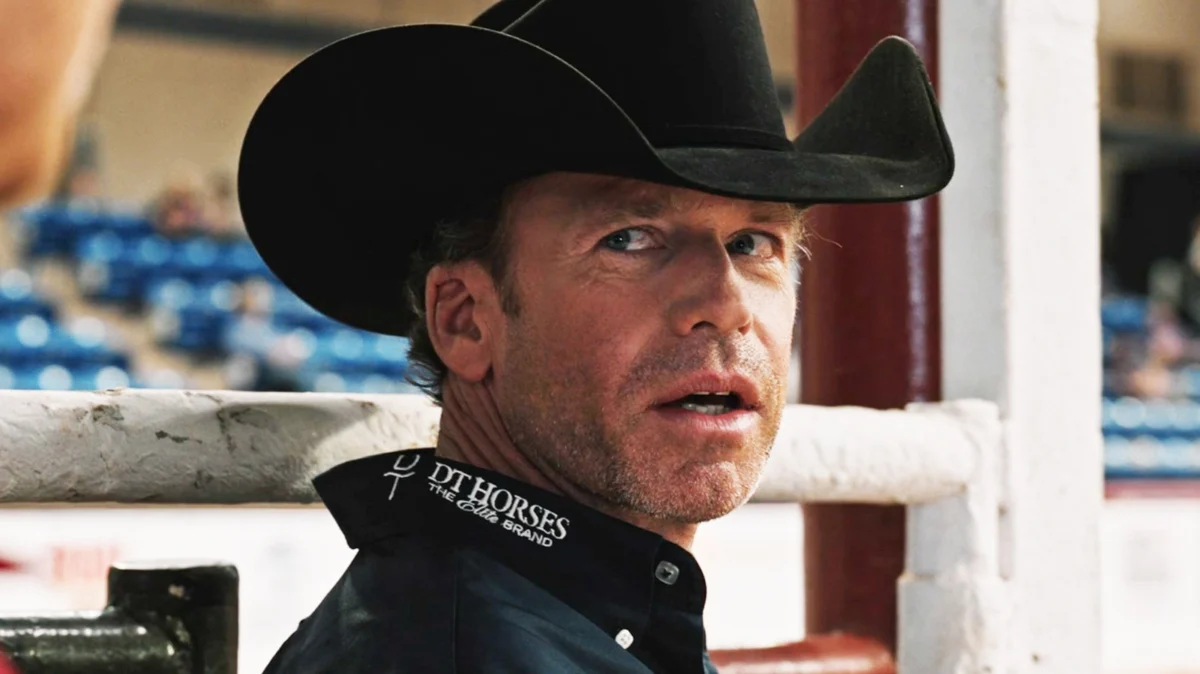
For decades, industry pundits and box-office analysts have attempted to draft the obituary of the Western. From the perceived commercial failure of Michael Cimino’s Heaven’s Gate in 1980 to the scathing critiques leveled at various "revisionist" flops, the consensus in Hollywood boardrooms has long been that the cowboy hat is a relic of the past. Yet, sitting atop the modern television landscape is Taylor Sheridan, the visionary behind the Yellowstone universe, who argues that the genre never truly died—it was simply waiting for the right storyteller to remind audiences why it remains the bedrock of the American mythos.
The Myth of the "Dead" Genre
The narrative that the Western went extinct is a persistent one, often tied to a shifting cultural appetite that saw the rise of sci-fi epics and urban dramas in the late 20th century. While it is true that the saturation of "Oaters" in the mid-century gave way to more experimental filmmaking, the genre’s supposed demise is a narrative of convenience rather than reality.
Historically, the Western has always been cyclical. Even during the 1970s, a decade often cited as the genre’s "dark age," audiences were treated to seminal works like Clint Eastwood’s High Plains Drifter (1973) and The Outlaw Josey Wales (1976). These films proved that the frontier spirit was alive and well, provided the narrative evolved alongside its audience. The misconception stems from the industry’s tendency to confuse a lack of oversaturation with a lack of relevance.
Chronology of a Resurgence: From "Heaven’s Gate" to "Yellowstone"
To understand the current state of the Western, one must look at the timeline of its perceived decline and unexpected revival.
- The 1980s Stigma: The commercial catastrophe of Heaven’s Gate created a chilling effect in Hollywood. Executives became wary of investing in period Westerns, fearing they were out of touch with the modern, globalized audience.
- The 1990s Rebound: Clint Eastwood’s Unforgiven (1992) served as a critical and commercial corrective, proving that a deconstructionist approach to the genre could resonate with contemporary sensibilities.
- The 2000s Uncertainty: The turn of the millennium was marked by experimental hybrids. While films like 3:10 to Yuma (2008) were praised, they were outliers in a market dominated by superhero franchises and high-concept sci-fi.
- The "Yellowstone" Era: Starting in 2018, Taylor Sheridan’s Yellowstone shattered the industry’s glass ceiling. By blending the neo-Western aesthetic with the serialized intensity of a high-stakes drama, Sheridan proved that the appetite for the American West was not just alive—it was insatiable.
The "Cowboys & Aliens" Fallacy
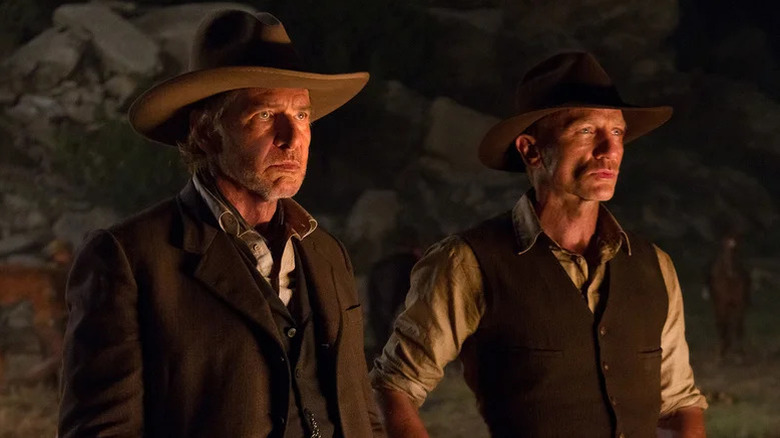
Central to the industry’s resistance against Westerns was the 2011 box-office disappointment Cowboys & Aliens. The film, which combined the rugged aesthetic of the frontier with high-concept science fiction, grossed $174.8 million against a massive $163 million budget. To studio executives, the film’s lackluster performance was the definitive proof that the public had moved on.
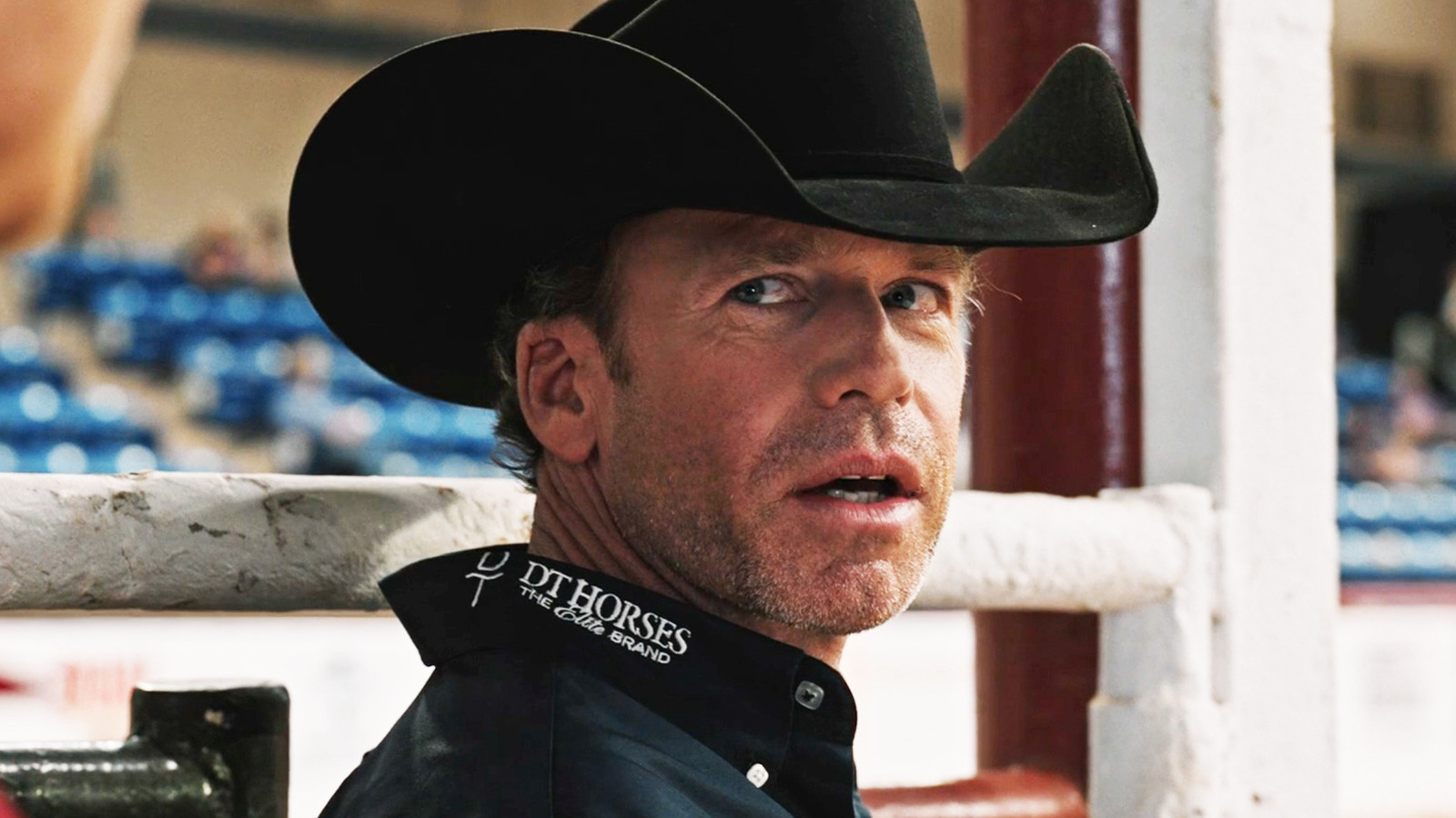
Taylor Sheridan views this logic as deeply flawed. During a recent appearance on the Bill Simmons Podcast, the creator addressed the pushback he faced while pitching Yellowstone. He recalled meeting after meeting with executives who cited Cowboys & Aliens as evidence that the "cowboy genre is dead."
Sheridan’s rebuttal was blunt and characteristically confident: "The cowboy genre’s not dead. What’s dead is dumb movies about cowboys and aliens. That’s a bad genre, maybe don’t do that."
For Sheridan, the failure of such projects wasn’t a rejection of the setting or the archetypes; it was a failure of quality and narrative integrity. When the story is grounded, authentic, and explores the complexities of human morality, audiences flock to the Western.
The American Middle Ages
Perhaps the most compelling argument Sheridan offers for the endurance of the Western is its sociological function. He posits that the Western is, for the United States, the equivalent of "medieval times" for Europe.
"It’s a very uniquely American thing to explore; that period’s fascinating to us," Sheridan noted. "It’s the closest thing we had to a medieval times. Our dark ages, our medieval period, was the post-Civil War 1800s."
This perspective shifts the Western from a mere "action" genre to a foundational exploration of law, land, justice, and the birth of a nation. It is the crucible in which the American identity was forged—a time of lawlessness, rapid expansion, and the brutal collision of cultures. By framing the genre this way, Sheridan elevates the "cowboy" from a pop-culture trope to an archetype of the human condition, grappling with the same questions of honor and survival that define the knights of Arthurian legend or the warriors of ancient epics.
Supporting Data: The Commercial Reality
The commercial success of Sheridan’s projects serves as the ultimate validation of his philosophy. Despite the early rejection by major networks like HBO, who viewed the high production costs and the "cowboy" theme as a financial liability, Yellowstone and its spin-offs (1883, 1923) have become juggernauts of the streaming era.
When analyzing the success of films like Silverado (1985), 3:10 to Yuma (2008), and Unforgiven (1992), a clear pattern emerges: when the genre is handled with respect for its history and its stakes, it performs. The "hit rate" for high-quality Westerns is, statistically, significantly higher than that of generic, low-effort action films. The Western possesses a built-in gravity—a resonance that speaks to the American psyche’s obsession with its own origins.
Implications for Future Filmmaking
What does this mean for the future of the genre? The success of the "Sheridanverse" suggests that the audience is not tired of the Western; they are tired of the dilution of the Western.
The implications are twofold:
- Genre Authenticity: Creators are now incentivized to lean into the gritty, foundational elements of the frontier rather than trying to "gimmick" the genre with supernatural or sci-fi elements to make it "appealing" to modern audiences.
- The Rise of the Neo-Western: Sheridan has successfully demonstrated that the themes of the Old West—land rights, generational legacy, and the struggle between tradition and progress—are just as potent in the 21st century as they were in the 19th. By setting his stories in the modern day, he has bridged the gap between the historical epic and the contemporary drama.
Conclusion
Taylor Sheridan’s belief that the Western will never die is rooted in the conviction that the genre is not a static set of costumes and props, but a mirror reflecting the American soul. As long as there is a struggle for land, a question of morality, and the tension between individual liberty and societal law, the Western will persist.
The "death" of the Western was never a reality; it was merely a temporary absence of vision. By stripping away the "aliens" and focusing on the humanity inherent in the frontier, Sheridan has not only revived a genre—he has reclaimed a heritage. The frontier, it seems, remains as vast and unexplored as it ever was, waiting for the next generation of storytellers to stake their claim.










