

The conversation surrounding video game preservation has shifted from a niche concern of hobbyists to a central debate in the gaming industry. With Sony recently announcing its intent to cease the production of physical discs for new PlayStation games by 2028, the fragility of our digital library has never been more apparent. As publishers pivot toward "games as a service" (GaaS) models and exclusive digital distribution, the question of what happens to these titles when servers shutter or storefronts close has become urgent.
This tension reached a boiling point during a recent Square Enix shareholders’ meeting. Faced with inquiries regarding the company’s extensive catalog—much of which remains trapped on legacy hardware or lost to the history of defunct live-service mobile titles—executives were forced to address their internal philosophy on keeping media accessible. Their response, however, has ignited a firestorm of criticism, as it underscores a fundamental disconnect between corporate policy and the preservationist desires of the player base.
The Chronology of Digital Erosion
The issue of software accessibility is not a new phenomenon, but it has accelerated with the rise of the digital storefront. In the 1990s and early 2000s, software was largely static; if you owned a cartridge or a CD-ROM, the game was yours. Today, the "game" is often merely a license to access a server-side experience.
Square Enix, a titan of the JRPG genre, has a particularly complex history with this evolution. Throughout the 2010s, the company leaned heavily into mobile gaming and experimental live-service titles. While some, like Final Fantasy Brave Exvius, have seen longevity, many others—such as Dissidia Final Fantasy: Opera Omnia—have been unceremoniously taken offline. When these servers go dark, the game effectively ceases to exist, leaving nothing behind but memories and, occasionally, a YouTube archive of cutscenes.
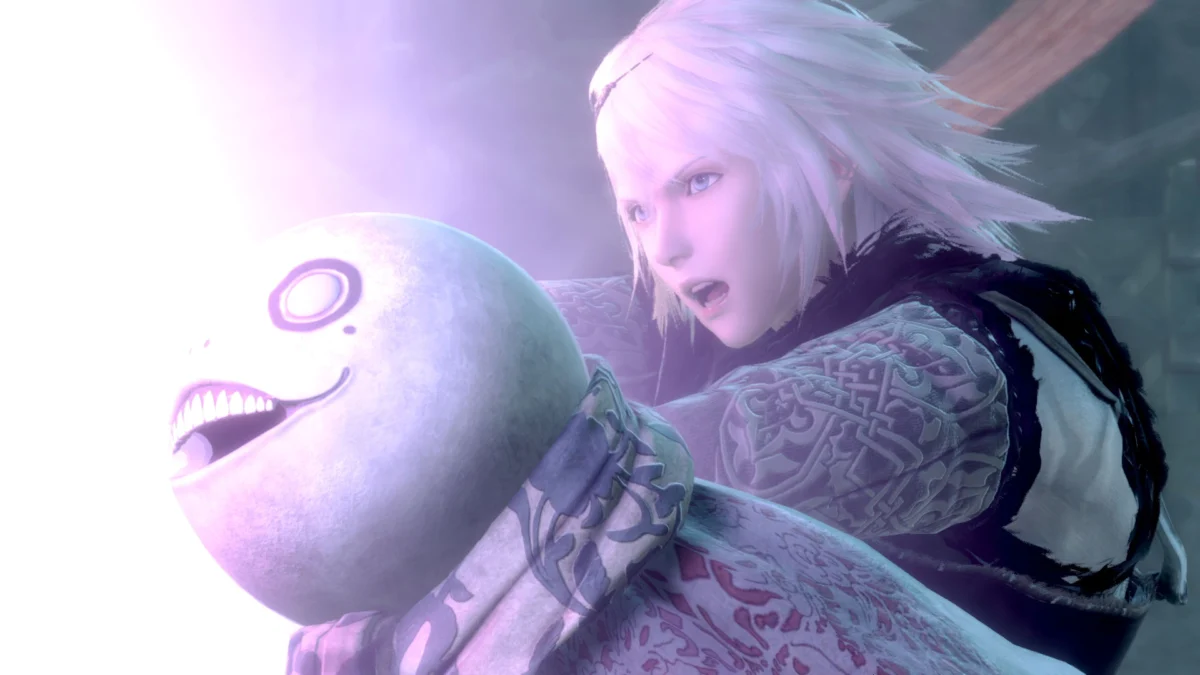
This trend is mirrored in their approach to legacy titles. While Square Enix has been diligent about remaking and remastering its flagship properties, these efforts often replace the original experience rather than archiving it. The NieR series stands as a primary example. The remastered NieR Replicant ver.1.22474487139… is widely celebrated, yet the original 2010 version remains locked to the PlayStation 3 and Xbox 360, inaccessible on modern systems without original hardware.
Official Responses: A Philosophy of "Pathways"
During the recent Q&A session with shareholders, the company was asked directly about its policy toward software longevity. The inquiry highlighted that while remakes are frequent, the original software versions are often left behind. The questioner pushed for clarity: What is the official corporate policy for ensuring that software remains playable after its lifecycle ends?
Square Enix’s response was characteristically corporate, focusing on "nature-dependent" solutions:
"How we enable customers to enjoy a game after service has ended depends on the nature of a title. For instance, for the NieR series, we share information through official livestreams. For other titles, we preserve cutscenes on video streaming platforms."
The company concluded with a broad commitment: "We will continue to create pathways befitting each title to ensure that players are able to enjoy them even after service has ended or the story has reached its end."
To many in the preservationist community, this response is insufficient. Watching a YouTube video of a game’s narrative—the "cinematic" approach to preservation—strips away the agency, mechanics, and emergent gameplay that define the medium of video games. It treats the game as a film, ignoring that the player’s input is the defining characteristic of the art form.
The Kingdom Hearts Dilemma
The Kingdom Hearts franchise serves as the most prominent case study for this issue. The series, known for its convoluted lore spanning multiple platforms, has become a "Frankenstein’s monster" of preservation efforts.
The original Game Boy Advance version of Chain of Memories is essentially a ghost; it is not available on any modern console. Instead, players are directed to Re:Chain of Memories, the 3D PlayStation 2 remake. While the remake is high-quality, it is a fundamentally different game from its 2D pixel-art predecessor.
Even more controversial is the status of 358/2 Days and the mobile-only title Kingdom Hearts X. In the modern Kingdom Hearts collections, these games are not playable. Instead, they are presented as "extended films"—hours-long montages of cutscenes stitched together. While this allows fans to grasp the story, it ignores the unique DS-based gameplay mechanics of 358/2 Days and the social, interactive elements of the mobile X.
This is particularly egregious when one considers that the trailer for Kingdom Hearts 4 features a character who originated in the now-defunct Kingdom Hearts X. Square Enix is forcing fans to engage with lore from games that are no longer playable, essentially asking them to study the history of a product they can no longer experience.
Supporting Data: The Impact of Digital-Only Distribution
The industry’s push toward digital-only distribution is supported by the data of convenience, but undermined by the reality of obsolescence. Sony’s decision to move away from physical discs by 2028 is driven by the fact that digital sales now significantly outpace physical ones. However, this creates a "single point of failure."
If a publisher decides to delist a game from a digital store—whether due to licensing issues (such as music or IP rights) or simply to save on server costs—the game is effectively erased from the ecosystem. A 2023 study by the Video Game History Foundation estimated that 87% of classic video games are critically endangered, meaning they are not available for purchase or legally accessible to the public.
When publishers like Square Enix offer "cutscene archiving" as a substitute for playable software, they are attempting to solve a technical problem with a cosmetic solution. The storage costs for a video file are negligible compared to the maintenance of game servers or the porting of legacy code, making the "film" approach an attractive cost-cutting measure for corporations—but a massive loss for cultural heritage.
Implications: The Moral Obligation of Publishers
The implications of this strategy extend far beyond the frustration of individual players. Video games are a dominant cultural medium of the 21st century. If we allow companies to dictate that their works can simply disappear once they stop being profitable, we are effectively allowing the erasure of cultural history.
- The Loss of Interactivity: As mentioned, reducing a game to its narrative cutscenes ignores the player’s role. It is akin to summarizing a novel by listing its plot points rather than reading the prose.
- The Licensing Trap: Many games are lost because of expired licenses (music, cars, actors). While legal hurdles are real, companies often prioritize the ease of deletion over the effort of renegotiating rights to keep their works alive.
- The Consumer-Publisher Contract: There is an unspoken contract when a player buys a game. They expect a certain level of permanence. When a service is shut down without an offline patch or a legacy port, that contract is broken.
Conclusion: A Call for Action
As the industry marches toward a future where physical media is an afterthought, the burden of preservation will likely fall to third parties and dedicated fans—the very people currently using emulators and fan-made patches to keep "endangered" games alive.
However, this is not a sustainable model. Corporations like Square Enix possess the source code, the assets, and the legal right to preserve their history properly. They have the capability to release "legacy editions" that include original, unaltered versions of their software. They have the capability to ensure that mobile titles are ported to standalone offline experiences rather than left to rot on decommissioned servers.
The message to the gaming community is clear: digital convenience comes at the cost of ownership. Until companies prioritize true preservation over temporary "pathways" like YouTube cutscene galleries, the history of our favorite medium will remain precarious. We must continue to demand that publishers value their own creations enough to ensure they survive the transition to the next generation. If we don’t, the games we love today may become nothing more than pixels in an old video, lost to the digital ether.










