Neng Nana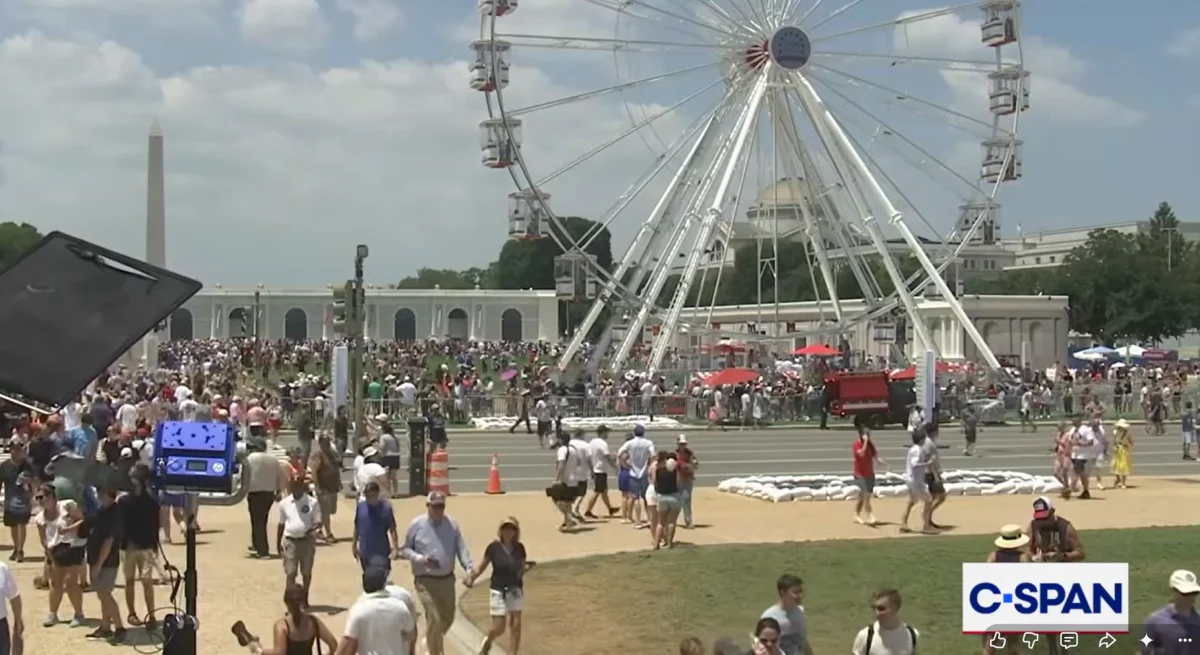
WASHINGTON, D.C. — The sweltering summer heatwave gripping the nation’s capital reached a breaking point on Friday, forcing organizers of the Great American State Fair to abruptly shutter the event’s grounds on the National Mall. As ground temperatures soared to a staggering 135 degrees and the heat index—the “feels-like” temperature factoring in stifling humidity—hit 111 degrees, authorities deemed the outdoor environment dangerous for both attendees and staff.
The mid-day closure serves as the latest complication for an event that has faced a turbulent reception since its grand opening on June 25. With air conditioning units reportedly failing under the strain of the record-breaking temperatures and public attendance remaining sparse, the fair has become a flashpoint for logistical and political controversy.
The Shutdown: A Mid-Day Departure
At approximately midday on Friday, the atmosphere on the National Mall shifted from a public celebration to a scene of urgent evacuation. A public address (PA) announcement echoed across the grounds, cutting through the thick, humid air to inform fairgoers that the event was being postponed until at least 5:00 p.m.
“Attention fair-goers,” the announcement stated. “The event has been postponed. We open at 5 p.m. Please go to Freedom 250 for the latest updates. Please proceed to the nearest exit.”
The directive was swift and clear, prompting a steady stream of attendees to vacate the area as the National Weather Service warned of an extreme heat watch. The decision to evacuate was not merely a precaution but a necessary measure to prevent heat-related illnesses among the public. The ground temperatures, which reached 135 degrees, made the asphalt and concrete surfaces of the Mall hazardous for pedestrians, particularly children and the elderly.
Chronology of the Heatwave’s Impact
The disruption on Friday was not an isolated incident but the culmination of a week-long battle against extreme weather conditions.
- Wednesday: As temperatures began to climb, the fair’s infrastructure began to show signs of strain. Reports surfaced that the climate control systems intended to provide relief in the event’s various structures were struggling to keep pace with the ambient heat.
- Thursday Morning: Organizers attempted to push forward with scheduled programming, but the intensity of the heat forced the cancellation of a high-profile rodeo demonstration. The cancellation was a significant blow to the event’s promotional schedule.
- Thursday Night: The impact of the heat moved beyond the fairgrounds and into the broader preparations for the nation’s 250th birthday celebrations. The U.S. Capitol Police, acting on the advice of the Office of the Attending Physician, restricted the rehearsal for the “A Capitol Fourth Concert” to essential personnel only.
- Friday Morning/Afternoon: As the heat index pushed past 110 degrees, the environment on the National Mall became untenable. The decision was finalized to halt all fair activities until the early evening, when meteorologists anticipated a slight dip in the intensity of the sun’s reach.
Supporting Data: A Capital Under Siege
The meteorological data from the National Weather Service painted a grim picture for those attempting to enjoy the festivities. The combination of high dew points and record-high air temperatures created a “heat dome” effect over the District of Columbia.
According to reports verified by CNN, the ground temperature at the National Mall—a location dominated by vast stretches of paved pathways and open, sun-exposed turf—hit 135 degrees. Such temperatures are capable of causing second-degree burns upon contact with skin and can lead to the rapid degradation of rubber and plastic components in heavy machinery, including the air conditioning units that have reportedly failed throughout the week.
The “feels-like” temperature of 111 degrees is classified by the National Weather Service as “Extreme Caution” or “Danger,” depending on the duration of exposure. Under these conditions, the body’s natural cooling mechanisms—sweating and blood vessel dilation—become less effective, drastically increasing the risk of heat exhaustion and heat stroke.
Official Responses and Public Communication
In the wake of the closures, officials have been quick to prioritize public safety. The U.S. Capitol Police issued a statement on X (formerly Twitter) regarding the restricted access to the “A Capitol Fourth” rehearsal, emphasizing the necessity of the measure.
“For safety reasons, the public will not be able to attend tonight’s rehearsal concert,” the statement read. “Everyone is sorry for any inconvenience this may have caused. The National Weather Service is forecasting an extreme heat watch with temperatures exceeding 100 degrees.”
Fair organizers have utilized their digital platform, “Freedom 250,” to communicate real-time updates to the public. However, the reliance on digital updates has been criticized by some attendees who found themselves on the Mall without immediate access to reliable information during the sudden evacuation. The disparity between the scale of the event—intended to be a massive celebration of the American spirit—and the reality of the failing infrastructure has led to widespread frustration among those who traveled to the capital to participate.
The Broader Implications: Politics, Infrastructure, and Legacy
The Great American State Fair was envisioned as a centerpiece for the nation’s 250th birthday. However, the event has been shadowed by controversy since its inception. Critics, including various political figures and members of the public, have questioned the wisdom of tying such a milestone anniversary to the political brand of President Donald Trump.
The politicization of the event has arguably contributed to the “sparse crowds” reported by local media. When coupled with the current logistical failures, the fair has faced a “perfect storm” of negative publicity.
Infrastructure Vulnerabilities
The failure of the AC units raises broader questions regarding the planning of large-scale events in the era of climate change. As heatwaves become more frequent and more intense in the mid-Atlantic region, the ability of temporary event infrastructure to sustain comfortable conditions is under scrutiny. Critics argue that the event planners failed to account for the “Urban Heat Island” effect, which causes the concrete-heavy environment of the National Mall to retain significantly more heat than surrounding suburban or rural areas.
The Symbolic Cost
Beyond the technical and weather-related failures, there is a symbolic cost to the current situation. The 250th birthday of the United States is a moment of significant national pride. The imagery of an evacuated National Mall, struggling air conditioning units, and cancelled rodeo demonstrations creates a stark contrast to the intended image of a triumphant, unified celebration.
The reliance on the Office of the Attending Physician to make decisions regarding public attendance at concerts highlights the seriousness with which authorities are taking the current environmental risks. It serves as a reminder that even the most meticulously planned national celebrations are subject to the volatile nature of the environment.
Looking Ahead
As of Friday afternoon, the status of the weekend’s events remains fluid. Organizers are reportedly working to repair the damaged cooling systems and are coordinating closely with the National Weather Service to determine if further closures will be necessary.
For the public, the guidance remains clear: follow the official channels on the “Freedom 250” platform, stay hydrated, and limit time spent outdoors during the peak heat hours of 12:00 p.m. to 6:00 p.m.
The failure of the Great American State Fair to maintain a consistent schedule serves as a microcosm of the challenges facing large-scale public events in the modern era. Between the heat, the technical failures, and the lingering political tensions, the road to the nation’s 250th birthday has proven to be far more arduous than organizers likely anticipated. Whether the event can regain its momentum in the coming days remains to be seen, but for now, the primary goal of the authorities is simple: ensuring that the residents and visitors of Washington, D.C. survive the heat with their health intact.


 Iffa Jayyana
 Nila Kartika Wati