Rifan Muazin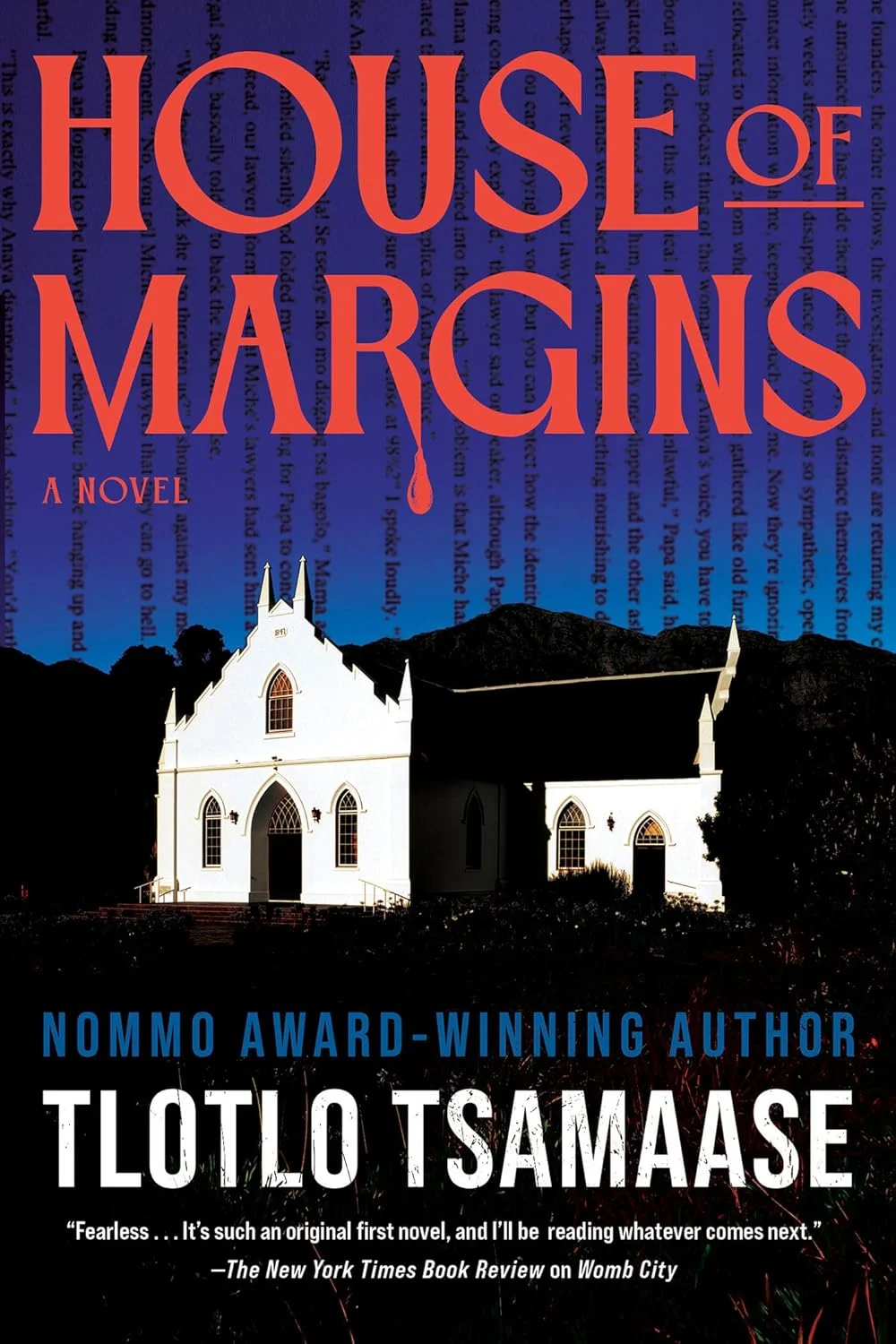
In her second novel, House of Margins, Motswana author Tlotlo Tsamaase does more than write a thriller; she constructs a digital labyrinth that interrogates the very ethics of storytelling. Blending the visceral dread of folkloric horror with the cold, pixelated detachment of cyberspace, Tsamaase has delivered a work that is as much a technical marvel as it is a social critique. The novel follows the disappearance of Anaya Sebeya, an emerging Motswana writer, during a prestigious residency in Cape Town, South Africa. As the narrative unravels, it exposes the parasitic relationship between true-crime media, the publishing industry, and the commodification of Black trauma.
A Chronology of a Disappearance
The narrative structure of House of Margins is deliberately fragmented, mirroring the erratic nature of the digital age. The story oscillates between two primary timelines:
- The Past: Through Anaya’s perspective, we witness her arrival at a South African writing residency—a house referred to as "Huis." Anaya, desperate for the fellowship award to validate her career, finds herself trapped in a space that is physically and spiritually predatory.
- The Present: Anaya’s sister, Ranewa, begins an arduous search for the truth. Her investigation is aided—and arguably manipulated—by a haunted cell phone that provides cryptic clues, forcing her to confront the same forces that consumed her sister.
Layered over this is a third dimension: a narrative podcast hosted by an unreliable narrator who is actively retelling Anaya’s life and disappearance for public consumption. This structure forces the reader to constantly question the "voice" of the protagonist, as her story is filtered through the sensationalism of a true-crime industry that prioritizes entertainment over empathy.
The Architecture of Exploitation: Supporting Data and Form
Tsamaase’s most daring innovation is the inclusion of "interludes" that break the traditional prose format. By embedding text messages, news headlines, and social media comment threads between chapters, the author transforms the act of reading into a digital archeological dig.
These elements are not mere aesthetic choices; they are functional components of the mystery. The comment sections are intentionally toxic, reflecting the real-world vitriol found in online spaces, while the journalistic excerpts demonstrate the inherent bias of media outlets covering the disappearance of Black women. Through this multimodal approach, Tsamaase forces the reader to confront their own role as a consumer of tragedy. The "truth" is not found in a single monologue, but in the glimmers of knowledge hidden within these disparate, digital artifacts.
The Metanarrative of the Publishing World
For writers, House of Margins serves as both a mirror and a cautionary tale. Tsamaase meticulously documents the microaggressions and systemic hurdles faced by Black authors navigating Western-dominated literary spaces.
Anaya’s experiences at the residency provide a stinging critique of the industry’s performative diversity:
- The Commercialization of Trauma: Anaya is consistently pressured by mentors to sanitize her work. Her usage of her native language and her refusal to shy away from the graphic realities of anti-Black violence are met with rejection. She is told her writing is "brilliant," yet is constantly steered toward more "palatable" and commercial narratives.
- Internal Industry Friction: The character of Michele, a white South African fellow, serves as a focal point for the frustration regarding performative victimhood. Michele’s insistence that she is a "minority" in an industry supposedly favoring Black voices captures the absurdity of the current discourse surrounding equity in publishing.
- The Myth of Authenticity: The book poses a difficult question: Does the industry actually want "authentic" stories, or does it merely want the aesthetics of diversity without the discomfort of historical and systemic truth?
The "Huis": Colonialism as a Haunted House
At the center of the mystery is the residency itself. "Huis" is not just a setting; it is a malevolent entity that embodies the lingering trauma of white colonialism and anti-Black violence in South Africa and Botswana.
Tsamaase treats the house as a physical manifestation of historical atrocities. The horror is not supernatural in the traditional sense; it is grounded in the reality of the land. The author does not flinch from depicting the brutality of the past, yet she refuses to let the narrative succumb to despair. Instead, the novel weaves in themes of hope and renewal, suggesting that faith and love are the only weapons capable of countering the entrenched violence of the house.
Critical Perspectives and Narrative Choices
While House of Margins is widely lauded for its ambition, it is not without moments of intense scrutiny regarding its internal logic. A notable point of contention for some readers is the arc of the supporting character, Ogone.
Ogone, who befriends Anaya early in the novel, presents a complex case of religious and identity-based shifts. A conversation between the two women regarding faith reveals that Ogone, previously identifying as a lesbian, has "converted" to Christianity and is subsequently shown to be in a heterosexual relationship. In a narrative that addresses the protagonist’s own bisexuality, this plot point has sparked debate. Critics argue that the narrative missed an opportunity to interrogate the specific brand of homophobia present in these environments, opting instead to let the "conversion" stand without sufficient critical weight. For a novel so deeply invested in the complexities of identity, this choice remains a point of divergence among readers.
Implications: The Ethics of True Crime
The overarching implication of House of Margins is a searing indictment of the true-crime genre. Tsamaase demonstrates how the transition from a human life to a "content piece" involves an inherent act of violence. When we consume stories about missing people through podcasts and social media threads, we are often participating in a digital exploitation that echoes the very trauma we claim to be "raising awareness" about.
Tsamaase’s work is a mature, masterful exploration of the "metanarrative." She embodies the medium she critiques, making the reader laugh at the absurdity of the internet buzz while simultaneously feeling the weight of the tragedy. The line between profit and advocacy is erased, leaving the reader to wonder if any story can truly be told without being compromised.
Final Assessment
House of Margins is an essential addition to the canon of contemporary horror and speculative fiction. By deconstructing the form of the novel through podcasts, social media, and traditional prose, Tlotlo Tsamaase has created a work that is as much about the process of telling stories as it is about the story itself.
It is a demanding read, one that asks the audience to look past the surface of a mystery and into the rot of the systems that define our culture. For those seeking a novel that challenges the conventions of genre, offers a biting critique of the literary industrial complex, and provides a haunting, visceral experience, House of Margins is an unparalleled achievement. Tsamaase has solidified her reputation as an innovator who is unafraid to challenge her readers to rethink their relationship with the stories they consume, the voices they champion, and the history they choose to remember.


 Nana Wu