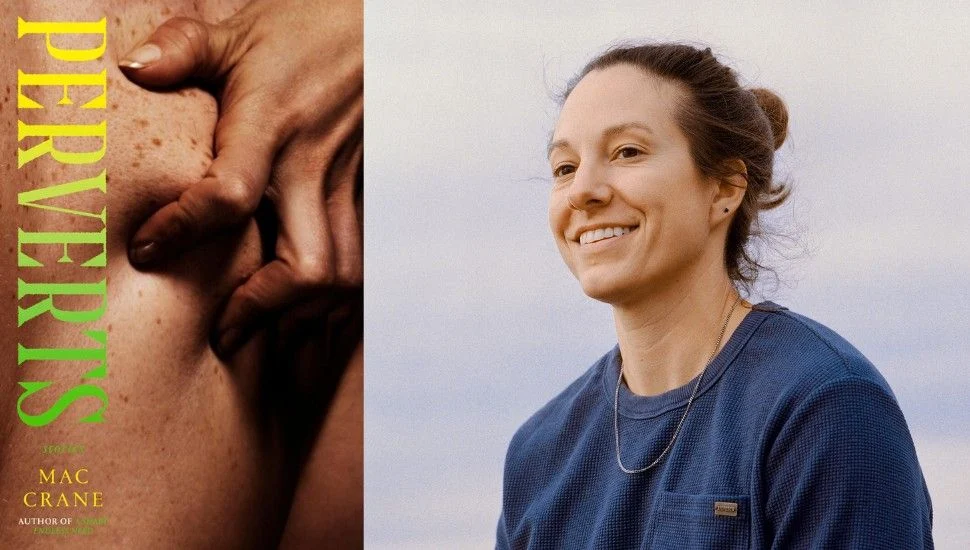
In the landscape of contemporary fiction, few terms are as frequently weaponized—or as ripe for reclamation—as "pervert." For author Mac Crane, whose highly anticipated short story collection Perverts arrives via The Dial Press on July 7, 2026, the term is not a pejorative. Instead, it serves as a banner for a specific, unflinching brand of storytelling: one that prioritizes emotional honesty over polite convention.
Crane, already established as a formidable voice in queer literature through works like I Keep My Exoskeletons to Myself and the 2026 novel A Sharp Endless Need, views the "perverted" story as a work of art that refuses to blink. As they prepare for the launch of their latest collection, Crane has curated a list of essential reading that challenges the boundaries of the page, drawing heavily from the experimental legacy of the New Narrative movement.
Defining the "Pervert" Aesthetic: Fearlessness as Form
At the heart of Crane’s philosophy is the assertion that a story does not need to be explicitly sexual to satisfy the criteria of a "pervert’s" reading list. Rather, the classification is tonal. "They have to be audacious and fearless; they have to be self-assured and big-hearted," Crane explains. "They are unconcerned with what you think. They are fearless in their pursuit of emotional truths, an energy which is, admittedly, highly erotic."
This ethos is deeply rooted in the New Narrative movement of the late 1970s and 80s—a literary wave that rejected the sterile, institutionalized constraints of the MFA "program era." Editors Dodie Bellamy and Kevin Killian, in their anthology Writers Who Love Too Much: New Narrative Writing 1977-1997, defined the movement as a collective rejection of consensus. They championed a style unafraid of kitsch, gossip, political debate, and the visceral realities of sex. It is this lineage of radical vulnerability that informs Crane’s own creative output and their curation of literary recommendations.

Chronology of a Movement: From New Narrative to Modern Transgression
The trajectory of the literature Crane admires reflects a broader shift in American letters toward the subjective and the subversive.
- 1977–1997 (The Foundation): The rise of the New Narrative movement in the San Francisco Bay Area. Writers like Robert Glück and Camille Roy began synthesizing autobiography, theory, and fiction to dismantle the "authoritative" narrative voice.
- 2021 (The Contemporary Explosion): Authors like Brontez Purnell gained critical acclaim for bringing the raw, bodily realities of queer life to the forefront of literary fiction, effectively bridging the gap between underground zine culture and mainstream publishing.
- 2026 (The Current Moment): With the release of Perverts: Stories, Mac Crane signals a new iteration of this movement—one that continues to interrogate the relationship between the body, the state, and the act of storytelling itself.
Supporting Data: Why Radical Vulnerability Resonates
The enduring appeal of these authors lies in their ability to translate the messy, contradictory nature of human desire into a cohesive aesthetic. When we analyze the works recommended by Crane, a pattern emerges: they all center on the "distortion of truth" as a necessary tool for survival.
In Camille Roy’s Honey Mine, the experimental narrative structure serves a dual purpose: it mirrors the fragmented nature of identity while simultaneously inviting the reader into a space of erotic insight. Similarly, the work of Brontez Purnell succeeds by refusing to sanitize the "fact of the body." His stories—often characterized by a blend of humor, rage, and profound longing—serve as a critical counterpoint to the sanitized versions of queer life often found in broader media.
The Authors: A Curated Reading List
To understand the scope of this literary movement, one must engage with the specific texts that have shaped it.

1. Camille Roy: Honey Mine
Roy, a cornerstone of the New Narrative movement, excels at the destabilization of the narrator. In the story "Agatha Letters," she posits a provocative question: "Is it all point of view? Pleasure, I mean—the surprise in the dark." Crane notes that the brilliance of Roy’s writing lies in her ability to shift between first and third-person perspectives to capture the inherent "emptiness and freshness" of the human experience.
2. Robert Glück: "On the Boardwalk"
As a foundational figure, Glück’s work remains essential for any reader interested in the intersection of philosophy and desire. In "On the Boardwalk," he probes the very nature of human connection, asking, "What is the desire to penetrate? It takes shape as an empty shell." The story functions as a recursive loop of inquiry, stripping away the pretenses of interpersonal trust and betrayal.
3. Brontez Purnell: "Boyfriend #666 / The Satanist" and "This Day and Many More"
Purnell’s work is a masterclass in the "ugly and beautiful." By documenting the raw reality of body fluids, desperation, and the sheer volume of human connections (the "sluts, sluts, and more sluts" of his prose), Purnell provides a stark, unapologetic look at the queer experience. His work proves that one can be both intellectually rigorous and hilariously profane.
4. Max Delsohn: "Moon Over Denny-Blaine"
Delsohn offers a lighter, though no less incisive, take on queer reclamation. Through the backdrop of a nude beach, Delsohn explores the concept of space—both physical and psychological. The inclusion of the dialogue, "You can’t moon me. This is a nude beach!" followed by the retort, "Yes, I can. Mooning is a construct," highlights the intellectual playfulness that characterizes this corner of modern literature.

Implications for the Literary Industry
The rising interest in these authors and the "pervert" aesthetic suggests a significant shift in reader demand. As the publishing industry moves further away from the homogenized "prestige" fiction of the 2010s, there is a clear appetite for voices that are unvarnished, politically charged, and deeply personal.
This trend has several implications:
- De-institutionalization: The success of these writers suggests that readers are looking for literature that feels "prompted by community" rather than "prompted by fiat" or the constraints of MFA programs.
- The Re-valuation of the Body: There is a renewed focus on the physical body as a site of political and personal inquiry. This is not merely about sexuality, but about the body as a vessel for history, trauma, and joy.
- Market Viability: The commercial success of collections like 100 Boyfriends and the anticipation surrounding Perverts demonstrate that "niche" queer, experimental, and transgressive writing is not just a cultural necessity—it is a viable, high-demand sector of the book market.
Conclusion: The Future of the "Perverted" Text
As Mac Crane’s Perverts hits bookshelves this July, it joins a growing body of work that refuses to apologize for its existence. By celebrating the "pervert" as a figure of liberation rather than shame, Crane and their peers are carving out a space where literature can finally be as messy, complicated, and contradictory as the people reading it.
The movement is not just about breaking rules; it is about rewriting them entirely. It is a call to action for readers to seek out work that doesn’t ask for permission, that isn’t afraid of the "surprise in the dark," and that ultimately embraces the radical act of telling the truth, however distorted that truth may be. Whether through the experimental prose of the New Narrative pioneers or the modern, rhythmic honesty of Purnell and Delsohn, the message remains clear: the most interesting stories are the ones that dare to be exactly what they are.