

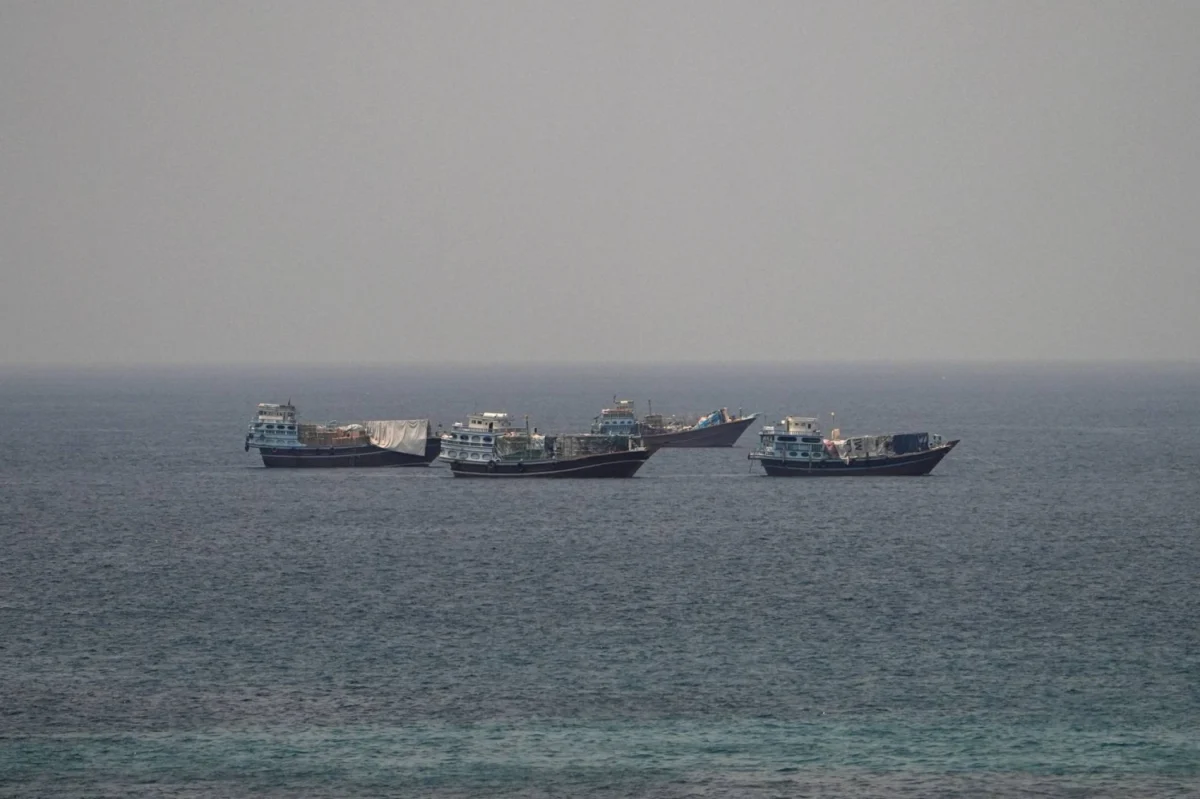
LONDON — The global energy landscape has undergone a seismic shift since the onset of the Iran conflict on February 28. While initial market projections predicted an immediate and total collapse of the international supply chain, the world has—with a surprising and perhaps deceptive ease—absorbed the loss of over a billion barrels of oil. However, as the conflict enters its fifth month, analysts warn that this period of "market resilience" may be reaching its terminal point. With buffer reserves depleted and a durable peace proving elusive, the global economy remains tethered to a knife-edge, facing the persistent, looming risk of catastrophic price spikes.
The Catalyst: A Chokepoint Under Siege
The current energy crisis finds its epicenter at the Strait of Hormuz, the world’s most critical maritime oil chokepoint. Through this narrow passage, which separates the Persian Gulf from the Gulf of Oman, nearly a third of the world’s seaborne oil passes daily.
On February 28, in direct response to coordinated military strikes by U.S. and Israeli forces against key Iranian military infrastructure, Tehran initiated a blockade of the Strait. The move was calculated to exert maximum pressure on the global economy, effectively turning the maritime passage into a theater of kinetic warfare. The immediate aftermath saw oil futures soar to unprecedented levels, as markets grappled with the reality that the primary artery of the global energy flow had been severed.
Chronology of the Disruption
The four-month trajectory of this conflict has been defined by extreme volatility and tactical maneuvering.
- February 28: U.S. and Israeli forces launch wide-scale strikes on Iranian radar installations and command centers. Tehran responds by closing the Strait of Hormuz to all commercial traffic.
- March 2026: The International Energy Agency (IEA) designates the blockade the largest single energy disruption in modern history. At its peak, the loss of throughput reaches 14 million barrels per day (mbpd).
- April – May 2026: Global stockpiles are aggressively liquidated. Major economies, led by the U.S. and China, initiate emergency release protocols from Strategic Petroleum Reserves (SPR).
- June 2026: A tenuous "shadow transit" emerges, involving smaller, non-aligned tanker fleets attempting to navigate the periphery of the Strait under high-risk insurance premiums.
- July 2026 (Current Status): Hostilities remain localized but persistent. The Strait remains officially closed, though limited, sporadic passage has been negotiated through third-party intermediaries, providing only a fraction of the pre-war volume.
Supporting Data: The Anatomy of a Supply Shock
The IEA’s assessment that this conflict represents the "biggest energy disruption in history" is supported by staggering metrics. Pre-crisis, the Strait of Hormuz facilitated the transit of approximately 17 to 20 million barrels of oil per day. The sudden removal of 14 million barrels per day at the conflict’s peak created a supply vacuum that neither domestic production increases in the Americas nor the rapid depletion of strategic reserves could fully reconcile.
The Depletion of Safety Nets
Historically, the global economy has relied on buffer stocks—the SPRs maintained by OECD nations—to dampen price shocks. In the first 120 days of the conflict, these buffers were drained at an unprecedented rate. Data indicates that current reserve levels in the United States and Europe are hovering near 20-year lows.
The "ease" with which the world has absorbed the loss is, in fact, a result of the aggressive cannibalization of these emergency reserves. By consuming the safety net, the world has effectively removed its primary insurance policy against further escalation or prolonged conflict.
Official Responses and Geopolitical Posturing
Washington and Tel Aviv
The U.S. and Israeli governments maintain that the strikes were a necessary defensive measure to curb regional destabilization. Washington has consistently pushed for a multinational maritime task force to secure the Strait, though efforts to achieve a broad coalition have been hindered by the reluctance of European and Asian nations to risk direct confrontation with the Iranian military.
The Tehran Perspective
Tehran remains defiant, characterizing the blockade as a "sovereign defensive act" necessitated by foreign aggression. Iranian officials have explicitly linked the reopening of the Strait to a total cessation of military operations against their territory and the lifting of economic sanctions. This stance has created a diplomatic stalemate, as Western powers are unwilling to concede on sanctions while the Strait remains closed.

The OPEC+ Dilemma
The OPEC+ bloc, currently caught between the interests of its members and the demands of its primary consumers, has remained largely paralyzed. Internal fractures regarding production quotas have prevented a unified strategy, leaving the market to fluctuate based on speculative trading and geopolitical news cycles rather than fundamental supply-demand balance.
Implications: The Long-Term Economic Outlook
The Spectre of Inflation
The persistence of the crisis has begun to bleed into the broader macroeconomic environment. The energy component of the Consumer Price Index (CPI) has spiked across all major economies. While central banks have attempted to curb inflationary pressure through interest rate adjustments, the "cost-push" inflation driven by high energy prices is increasingly difficult to contain.
Industrial Stagnation
Energy-intensive sectors—notably chemical manufacturing, steel production, and large-scale logistics—are facing existential threats. The increased cost of shipping, compounded by astronomical insurance premiums for vessels operating in the broader Middle East, has forced a restructuring of global supply chains. Some industries are moving toward "near-shoring," though the transition is capital-intensive and slow to yield results.
The Energy Transition Paradox
Ironically, the crisis has accelerated the discourse around energy security and the transition to renewables. Governments that were previously hesitant to commit to massive green-energy infrastructure are now viewing domestic power generation—whether through nuclear, wind, or solar—not just as an environmental imperative, but as a fundamental pillar of national security. However, these transitions take years to implement, offering no immediate relief to the current, acute supply shortage.
The Path Forward: A Precarious Peace?
As we look toward the remainder of the year, the primary concern for economists is the "exhaustion phase." With buffer reserves at record lows, any further escalation—such as a direct strike on oil infrastructure or an expansion of the maritime conflict to the Bab el-Mandeb Strait—would likely trigger an uncontrollable price spike.
The markets are currently operating on a fragile equilibrium. Traders have priced in the conflict, but they have not priced in a "long-term, indefinite closure." Should the diplomatic deadlock persist into the autumn, the global economy will be forced to transition from a state of emergency management to a state of permanent scarcity.
"We have been living on borrowed time and borrowed oil," says Dr. Elena Vance, a senior energy analyst at the Global Policy Institute. "The ease with which we have weathered the initial shock is a testament to the effectiveness of the Strategic Petroleum Reserve. But that reserve is not infinite. We are currently playing a game of chicken with the global supply chain, and the stakes could not be higher."
The situation at the Strait of Hormuz remains the single most significant variable in the global economy. As long as the waters remain contested and the diplomatic channels remain frozen, the world will continue to live in the shadow of a potential energy catastrophe, waiting for a resolution that remains, for now, nowhere in sight.
Key Takeaways for Investors and Policy Makers:
- Monitor SPR Levels: Any further drawdowns of strategic reserves will signal a lack of confidence in diplomatic resolutions.
- Insurance Premiums: The cost of maritime insurance in the Persian Gulf remains the leading indicator of perceived conflict intensity.
- Diplomatic Breakthroughs: Watch for any movement on back-channel negotiations between Tehran and regional mediators; this will be the first signal of a potential reopening of the Strait.
- Energy Security Stocks: The volatility in oil markets is likely to drive continued interest in domestic energy production companies and renewable energy infrastructure as nations prioritize security over traditional cost-minimization models.
In the final analysis, the "easy" absorption of the last four months has been a period of grace. Whether that grace period is coming to an end depends less on market mechanics and more on the political will of the nations involved to step back from the brink of a larger, more destructive conflict.











