In the intricate, dark tapestry of Anne Rice’s The Vampire Chronicles, few elements are as pivotal—or as debated—as the hierarchy of strength among the undead. As AMC’s adaptation of The Vampire Lestat progresses, viewers are finally witnessing the full, terrifying scope of the "Brat Prince’s" abilities. Central to this evolution is a single, transformative factor: the blood of Akasha.
While the second season of Interview with the Vampire hinted at the weight of this connection, episode five of The Vampire Lestat, titled "New York," serves as a definitive exploration of how Lestat de Lioncourt, a vampire of relatively modest age, eclipsed his ancient peers to become the most formidable creature of the night.
The Architecture of Power: Age, Lineage, and the Dilution of Essence
To understand why Lestat is an anomaly, one must first understand the "rules" governing vampiric strength in the Ricean mythos. Traditionally, power is a function of time. The older a vampire, the more their essence matures, granting them near-invulnerability and a suite of supernatural gifts—the "Mind Gift" (telepathy), the "Fire Gift" (pyrokinesis), and the "Cloud Gift" (flight).
However, there is a biological—or rather, metaphysical—limitation: the dilution of blood. When a vampire creates a fledgling, they transfer a portion of their own power. The more progeny a maker creates, the more the potency of that "Old Blood" is spread thin. Consequently, a vampire born from a lineage of hundreds is significantly weaker than one born from a progenitor who has rarely, if ever, shared their gift.
Lestat’s initial turning was an outlier. He was transformed by the alchemist Magnus, an ancient entity of roughly 300 years, who chose to end his own existence immediately after the act. Because Magnus had never created another vampire, the entirety of his accumulated power was poured into Lestat. This granted the young Frenchman a head start over his contemporaries, but it did not make him a god. To reach the summit of power, Lestat required a catalyst far older and more potent than a 300-year-old alchemist. He required the Queen.

Chronology of an Ascension: From Fledgling to Godhood
Lestat’s path to supremacy is marked by specific, deliberate encounters with the foundational figures of his species.
- The Magnus Era: Lestat’s entry into the fold was violent and singular. Unlike the coven-based hierarchies of his time, he was a "solo" act, inheriting the full weight of his maker’s alchemical knowledge and raw strength.
- The Sanctuary of Marius: In the late 18th century, the ancient Roman vampire Marius de Romanus introduced Lestat to the "Those Who Must Be Kept"—the original progenitors, Akasha and Enkil. This encounter fundamentally altered Lestat’s trajectory. Akasha, dormant for centuries, was moved to action by Lestat’s music and his rebellious spirit. By sharing her blood with him, she bypassed the standard chain of descent, injecting the oldest blood in existence directly into the veins of a modern vampire.
- The Modern Infusion: As seen in the lore established in The Queen of the Damned, Lestat’s relationship with Akasha’s blood does not end in the 18th century. In the modern era, he consumes significantly more of her essence, which acts as a "force multiplier," effectively tripling his pre-existing capabilities.
- The Gobi Desert Test: As chronicled in The Tale of the Body Thief, the true implications of this infusion were revealed. When exposed to the brutal sunlight of the Gobi Desert, a traditional death sentence for even powerful immortals, Lestat’s blood proved so saturated with the Queen’s ancient essence that he did not burn. He merely tanned. This marked the transition from "powerful vampire" to a being that defied the fundamental laws of his kind.
Supporting Data: The Biological Resilience of the "Brat Prince"
The most compelling evidence of Lestat’s power lies in his survival record. In the first season of Interview with the Vampire, the attempts by Louis de Pointe du Lac and Claudia to execute Lestat were meticulous. They slit his throat and left him to rot in the Louisiana swamps. By all standard metrics of vampiric mortality, this should have been the "True Death."
Yet, Lestat returned. This was not a fluke; it was a testament to the regenerative properties of Akasha’s blood. Dr. Fareed, in his analytical, scientific approach to the undead in The Vampire Lestat, provides the necessary context to debunk the assumption that decapitation is an instant end for all vampires.
"You assume death at decapitation," Fareed notes. "A study done in Budapest had two Class B vampires surviving separation for nearly two hours. A vampire of Lestat’s breeding could last four to five times that."
This ten-hour window of survival while dismembered places Lestat in a tier of durability that makes him effectively unkillable by conventional means. When combined with his ability to fly—a trait granted specifically by the Queen’s blood—it becomes clear why he is viewed as a threat by the "ancients" like Armand and Pandora.

The Friction of Hierarchy: Implications for the Ancients
The rise of the Brat Prince has not been met with universal acclaim. In the upper echelons of the vampire world, there is a palpable sense of resentment. Vampires who have spent millennia cultivating their power, such as the twins Maharet and Mekare, view Lestat as an unworthy recipient of the Queen’s favor.
This tension creates a volatile political landscape. The ancients operate on a system of tradition, caution, and long-term planning. Lestat, by contrast, is a disruptor. His refusal to adhere to the "silence of the ages" and his decision to publicly reveal himself as a rock star in the 20th century were actions only an immortal of his specific caliber could survive.
The implications for the narrative are clear: Lestat is the inevitable end-point of vampiric evolution in the Ricean universe. By the time of Blood Communion (2018), he has consolidated his position. He is not merely a survivor; he is the architect of a new order, a "Prince" who has outpaced the monarchs of antiquity.
Reflections on the Adaptation
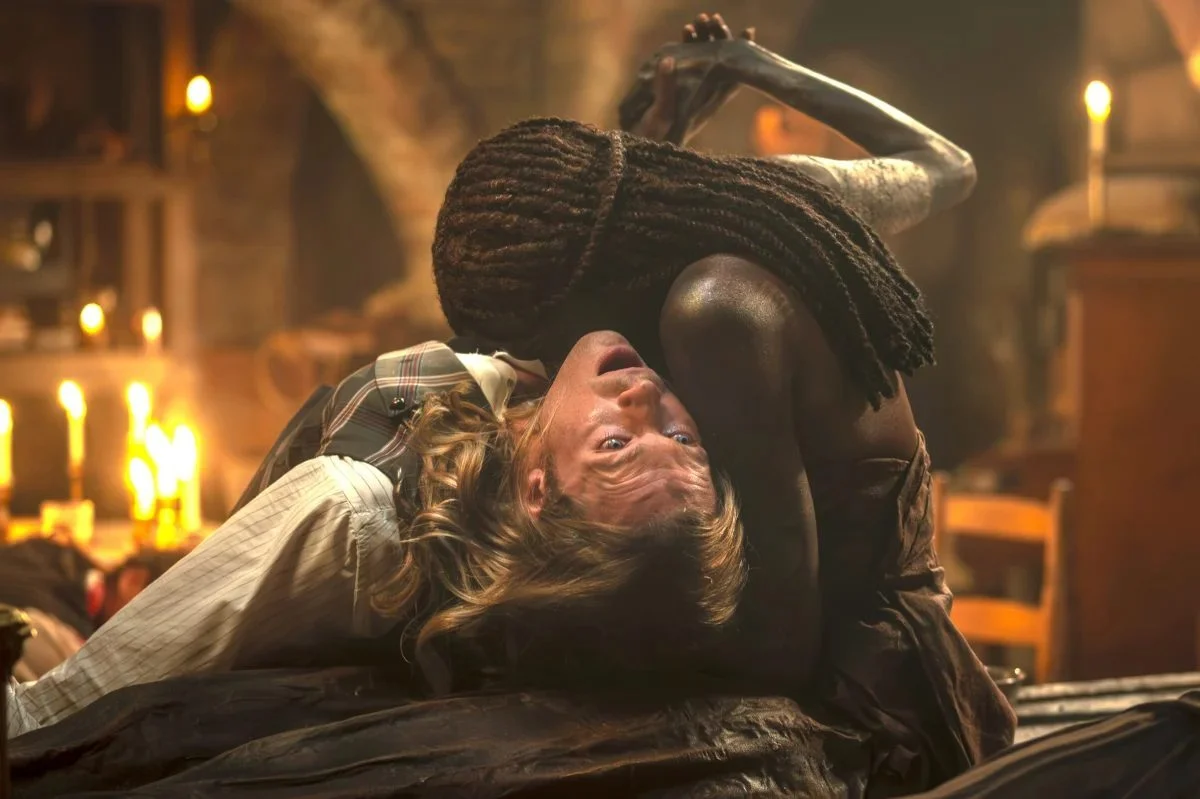
The AMC series, in its portrayal of these events, adds a layer of psychological complexity. By centering the perspective on the "New York" episode and the interactions within Marius’s lair, the show captures the seductive, terrifying nature of Akasha’s blood. It is not merely a "power-up" in a video game sense; it is a fundamental rewriting of Lestat’s soul.
As we look toward the future of The Vampire Lestat on screen, the transformation of Sam Reid’s character into a god-like figure among the undead will likely serve as the primary engine for the series’ conflict. While his power makes him the most dangerous entity in the room, it also makes him the most isolated.

Ultimately, the blood of Akasha is a double-edged sword. It grants Lestat the strength to survive the wrath of his peers, the heat of the sun, and the betrayal of his lovers, but it also strips him of the anonymity that keeps other vampires safe. He is the Brat Prince of the world, destined to stand alone at the pinnacle of a pyramid he never intended to build, forever haunted by the ancient, silent Queen whose blood continues to flow through his veins.
As the series continues, fans can expect to see more of the "unbearable" confidence that comes with such absolute power. If the books are any indication, the most chaotic, earth-shattering chapters of Lestat’s life are yet to come, and they will be fueled entirely by the red, ancient essence of the Mother of All Vampires.