Introduction: The Echoes of the Dutch Golden Age
In the quietude of a Dutch Golden Age still-life painting, one encounters a sensory feast: tables groaning under the weight of exotic fruits, glistening fish, and meticulously arranged bouquets. These canvases were not merely displays of wealth or artistic prowess; they were profound meditations on the memento mori—the inevitability of death and the transient nature of beauty. While the paint preserved the freshness of a lemon peel or the dew on a petal, the viewer understood that decay was already waiting in the wings.
Today, this dialogue between the eternal and the ephemeral finds a contemporary voice in the work of artist Veks Van Hillik. By transposing the aesthetic language of 17th-century masters into the realm of modern surrealism, Van Hillik creates murals and studio works that challenge our perception of the natural world, our history of storytelling, and the delicate balance of our ecosystems.

The Evolution of an Aesthetic: A Chronology of Influence
To understand the depth of Van Hillik’s practice, one must trace the trajectory from the technical rigor of his predecessors to the eccentric, hybrid creations he produces today.
Early Foundations and Technical Mastery
Van Hillik’s fascination with the aquatic world was sparked in childhood, under the tutelage of an older brother who taught him the fundamentals of draftsmanship. "Fish were among the first things I learned to draw," he recalls. This early exposure to the anatomy of marine life planted the seeds for his lifelong obsession with the variety of forms, patterns, and scales found beneath the water’s surface.

Transition to Large-Scale Murals
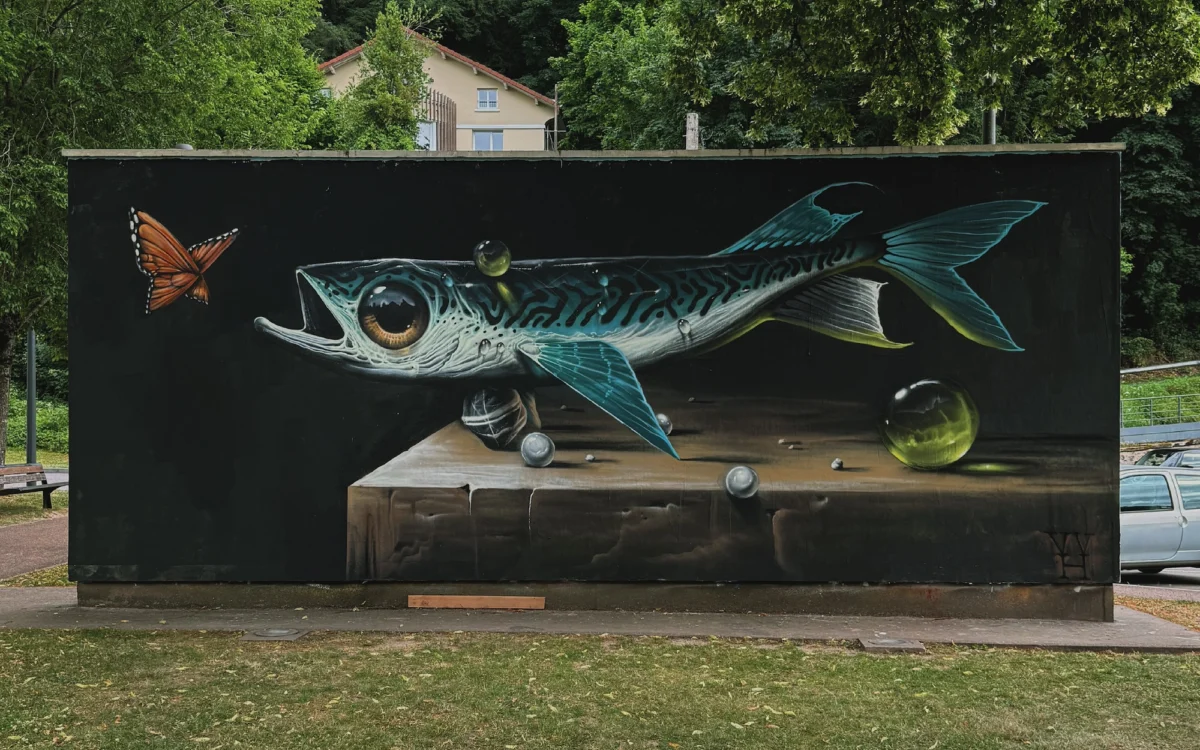
In recent years, Van Hillik moved from the canvas to the city street. His transition to large-scale murals allowed him to experiment with "architectural niches"—a direct nod to the framing devices used by historical painters. By situating his surreal creatures within the physical architecture of urban landscapes, he bridges the gap between the hermetic world of the museum and the public sphere of the modern city.
Recent Exhibitions and Recognition
His artistic journey has recently culminated in significant critical recognition. Most notably, his inclusion in the Common Waters exhibition at Arch Enemy Arts underscored his shift toward thematic works centered on ocean conservation. As he prepares for a solo exhibition later this year, the art world watches to see how his synthesis of historical technique and modern ecological anxiety will continue to evolve.

Supporting Data: The Ocean and the Unseen
Van Hillik’s focus on marine life is not merely an aesthetic choice; it is a commentary on the vast, unexplored mysteries of our planet. The data regarding our relationship with the sea provides a stark backdrop for his work:
- The Unmapped Abyss: According to the National Oceanic and Atmospheric Administration (NOAA), humanity has mapped only about 25% of the entire sea floor. This lack of data represents a massive "blind spot" in human knowledge.
- Biodiversity Estimates: Scientists estimate that there are millions of marine species, yet we have cataloged only a fraction of them. Van Hillik’s "monstrous or grotesque" fish imagery taps into this reality—that the ocean remains a space where the "surreal" is actually biologically standard.
- Ecological Anxiety: The shift toward conservation-themed art in contemporary galleries reflects a growing trend. Artists are increasingly using their platforms to address the Anthropocene, the current geological age where human activity is the dominant influence on climate and the environment.
Official Responses and Artist Perspectives: The Philosophy of the Brush
In discussions regarding his creative process, Van Hillik emphasizes the role of the viewer’s subconscious in decoding his work.

The Power of Anthropomorphism
"There is something almost systematic in the way humans tend to personify animals," Van Hillik observes. He intentionally plays with these "unspoken codes" inherited from fables and folklore. By imbuing a goldfish with human-like limbs or placing a nautilus on a delicate bubble, he forces the viewer to confront their own tendencies to project human narratives onto the natural world.
The Ecological Subtext
When asked about the environmental implications of his work, Van Hillik is deliberate. "Whether intentionally or not, an ecological subtext—or at the very least a reflection on our ecosystems—often emerges in my work," he states. For him, the painting is a space of preservation and contemplation, a way to memorialize species and habitats that are becoming increasingly fragile in the modern era.

Implications: The Intersection of History and Ecology
The implications of Van Hillik’s art extend beyond the visual. By reviving the "sturdy surfaces and dark backgrounds" of Dutch masters, he invokes a period of history characterized by maritime exploration and colonial expansion. However, where the Dutch painters focused on the consumption of nature, Van Hillik focuses on the hybridity and the mystery of it.
The Suspension of Disbelief
His recurring motif of "levitation"—seen in his floating water droplets, suspended plant stems, and gravity-defying creatures—serves a specific purpose. It creates an "uncanny" feeling that prevents the viewer from becoming too comfortable with the image. When a heron’s beak transforms into a physical key, the viewer is forced to ask: What is this unlocking? The key could represent the hidden secrets of the ocean, the keys to ecological restoration, or perhaps the limitations of human understanding.

Reimagining the Still Life
Van Hillik’s work acts as a bridge. He is not merely copying the Dutch masters; he is updating their moral framework. Where the 17th-century painters used fish and flowers to warn of the soul’s mortality, Van Hillik uses them to warn of the environment’s mortality. His butterflies with missing bodies and his tortoiseshell-backed hares are not just surrealist tropes—they are symbols of a broken nature, reconstructed in the studio to demand our attention.
Synthesis: A Call to Contemplation
As we move further into the 21st century, the role of the artist in documenting our changing relationship with the natural world becomes increasingly vital. Veks Van Hillik does not offer simple answers or didactic slogans. Instead, he provides a visual space for the "fascinating and peculiar."

His work is a testament to the fact that we are still, in many ways, living in a Golden Age—not of wealth and accumulation, but of realization. We are realizing that the creatures we once took for granted, from the fish in our markets to the birds in our gardens, are part of a complex, fragile web that we are only just beginning to map.
By looking back at the Dutch masters, Van Hillik reminds us that art has always been a way to process our fears and our awe. His murals, which stand as sentinels on the sides of urban buildings, serve as constant reminders of the life that exists beyond our concrete walls. Whether through the grace of a floating nautilus or the grotesque beauty of a fish with legs, Van Hillik invites us to slow down, to observe, and to reconsider our place in an ecosystem that is as mysterious as it is fleeting.

As the artist prepares for his upcoming solo exhibition, the broader public is invited to engage with these questions. In a world defined by the rapid pace of digital consumption, Van Hillik’s slow, deliberate, and deeply layered paintings offer a necessary pause—a moment to reflect on the beauty we have inherited and the responsibility we bear to preserve it for those who follow.
Ultimately, the work of Veks Van Hillik is an invitation to look closer. To see the key in the beak of the bird; to notice the missing body of the butterfly; to acknowledge the weight of the fish. In these details, we find not just the artist’s hand, but the urgent, beating heart of our own environmental reality.