

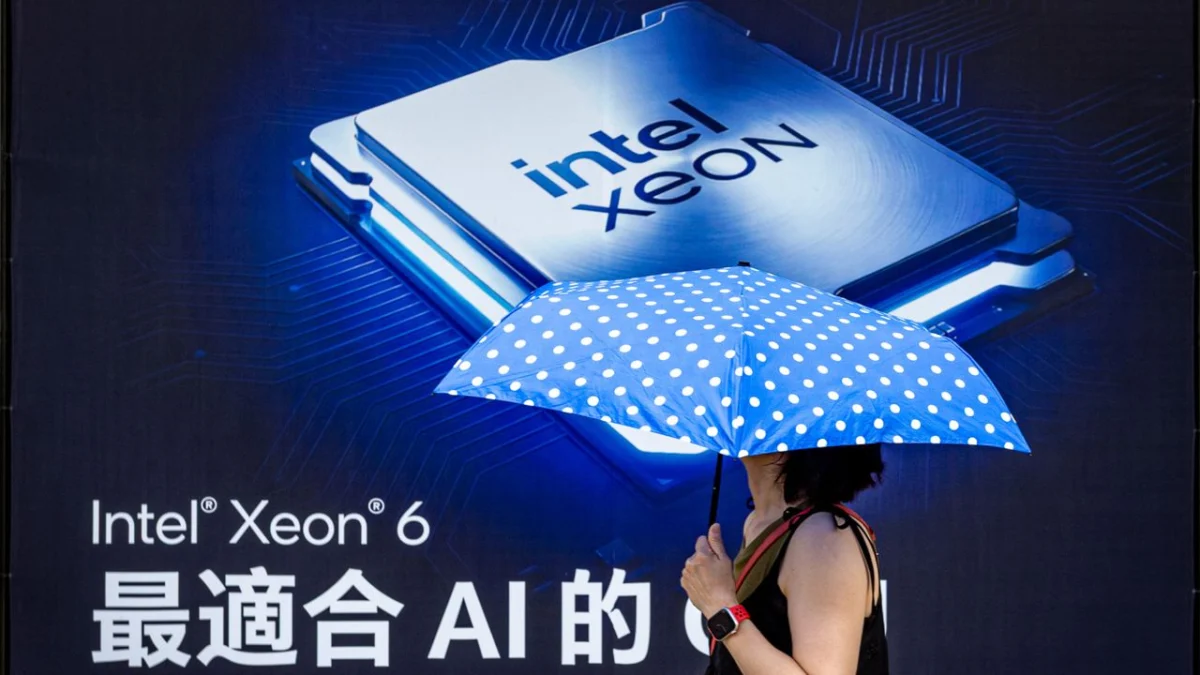
At COMPUTEX 2026, Intel took a definitive step toward redefining the architecture of the modern data center. The headline announcement—the introduction of the Xeon 6+ “Clearwater Forest” processors—marks a critical milestone for the chipmaker. By utilizing its advanced 18A process node, Intel is not merely updating its hardware; it is responding to a seismic shift in computing demands driven by the rise of agentic AI and the critical need for power-efficient, high-density server infrastructure.
Following the unveiling, Kira Boyko, Product Line Director for E-Core Xeon Products, and Tim Wilson, Vice President and General Manager of Intel’s Data Center Silicon Engineering, sat down with the press to navigate the complexities of the company’s current roadmap, the technical nuances of their latest silicon, and the intense market pressures governing chip allocation in an era of unprecedented AI demand.
Main Facts: The Clearwater Forest Architecture
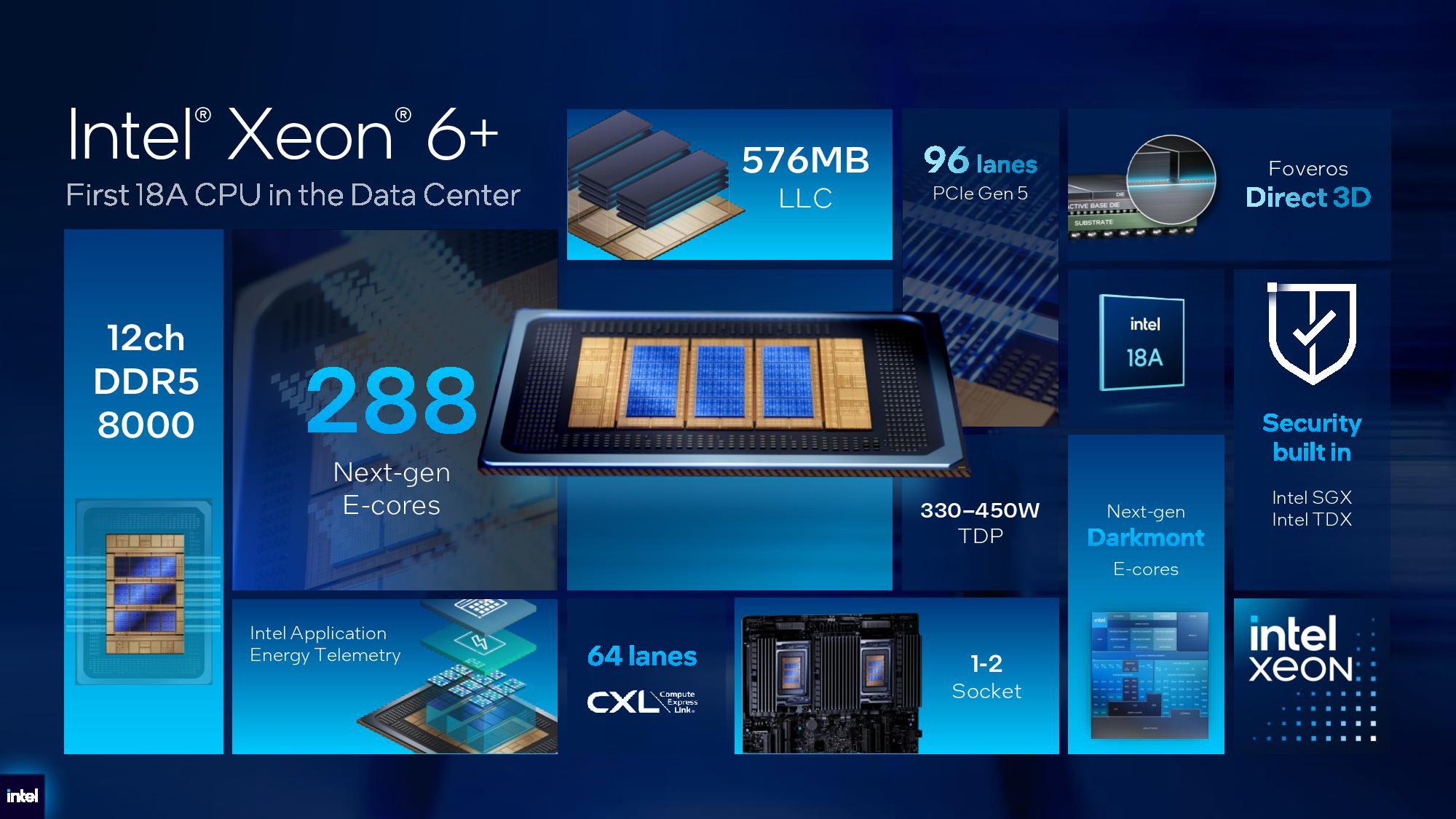
The Xeon 6+ “Clearwater Forest” represents a significant leap in core density and efficiency. Built upon Intel’s 18A process, the chip features up to 288 “Darkmont” E-cores per socket. This massive increase in core count is supported by 576MB of L3 cache, providing a substantial buffer for the data-intensive tasks common in modern cloud environments.
Unlike the P-core (Performance-core) variants of the Xeon line, the E-core-focused Clearwater Forest prioritizes throughput and efficiency, making it the ideal engine for scale-out workloads. Intel has deliberately designed this chip to be socket-compatible with previous platform designs, specifically the Granite Rapids-AP ecosystem. This strategic alignment allows data center operators to transition to higher core densities without a complete overhaul of their existing infrastructure.
Chronology of Development and Future Roadmap
Intel’s journey to this point has been characterized by a transition toward modular, chiplet-based designs. The company’s roadmap, as teased during the press session, suggests a bifurcated strategy:
- Sierra Forest (Current): Established the foundation for E-core-based Xeon processors, emphasizing efficiency and high-density computing.
- Clearwater Forest (Launch): The first data center CPU on Intel’s 18A process, doubling core counts and significantly expanding L3 cache to meet modern demands.
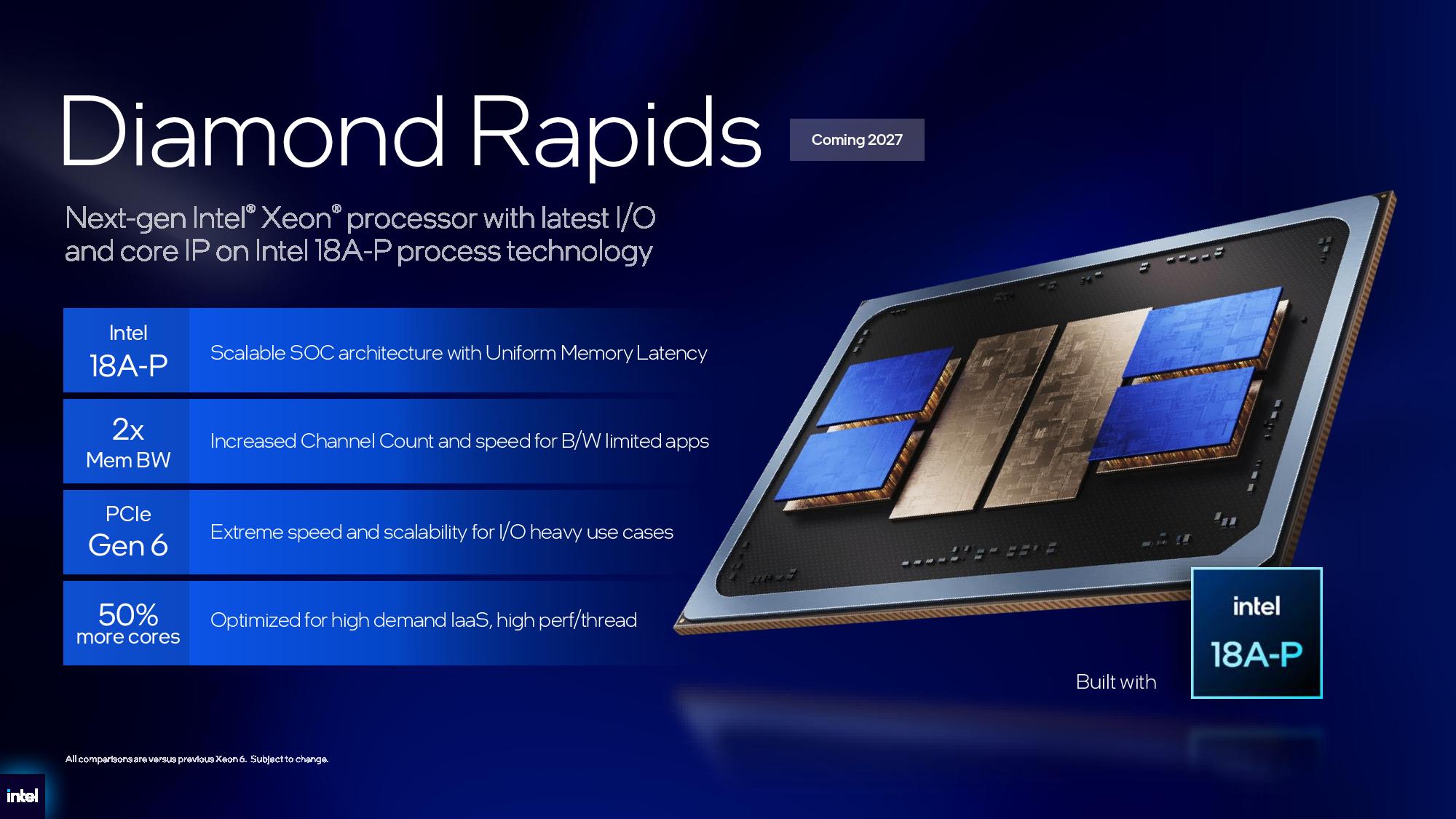
- Diamond Rapids (Future): The highly anticipated next-gen P-core Xeon, expected to be discussed in greater detail at the upcoming Hot Chips conference in roughly two months.
- Coral Rapids (Future): Intel has confirmed that this generation will mark the reintroduction of simultaneous multi-threading (SMT) for P-core Xeons, addressing concerns raised by stakeholders regarding thread-level performance in virtualized environments.
Supporting Data: Why "More" is the Answer
The decision to push toward 288 cores per socket is not arbitrary. According to Kira Boyko, customer demand is increasingly favoring higher TDP (Thermal Design Power) envelopes in exchange for greater density.
"Our customers were mostly targeting higher-TDP spaces anyway for the core density they were after," Boyko noted. By aligning the Clearwater Forest platform with the power profiles of the Granite Rapids-AP designs, Intel has effectively captured the segment of the market that prioritizes absolute compute throughput over low-power idle states.
Furthermore, the integration of Application Energy Telemetry (AET) provides a new layer of transparency for operators. By allowing for energy monitoring at the application level, Intel enables its customers to move from estimated energy billing to precise, hardware-verified consumption tracking. This feature is not just a value-add; it is a response to the increasingly granular requirements of cloud service providers and hyperscalers who must optimize every watt in their sprawling data centers.
Official Responses: The AI Bottleneck
Perhaps the most pressing topic of the session was the "agentic AI" phenomenon. As organizations shift from simple, chatbot-style LLM queries to complex, multi-tasking AI agents, the role of the CPU has evolved from a passive orchestrator to a primary bottleneck.
Tim Wilson provided a blunt assessment of the current state of the industry: "They have a massive GPU fleet that costs billions of dollars sitting idle, waiting for the CPU to respond."
Wilson explained that the modern AI workload is not just about raw inference—it is about complex execution-driven queries. When an AI system must decompose a task, manage memory across subcomponents, and handle I/O calls to APIs, it is the CPU that carries the load. Intel’s message is clear: the explosion in AI demand is actually highlighting the historical strengths of the CPU. As these AI agents become more sophisticated, the need for a robust control plane becomes the limiting factor, making the high-performance, high-core-count Xeon 6+ a mandatory upgrade for any serious AI infrastructure.
Implications: A Market Under Pressure
The most sobering aspect of the press session was the acknowledgment of supply chain constraints. When asked how Intel decides which customers receive chips in a "sold-out" market, Wilson emphasized that these are complex business decisions rather than purely engineering ones.
"We give as many CPUs to as many people as we can," Wilson said. "The biggest problem is not demand… the biggest problem is how we satisfy demand across every single product."
This "matching" problem has created a unique dynamic where customers are struggling to pair GPUs with the necessary CPUs and memory to build functional racks. Consequently, Intel’s allocation process has become a daily, fluid negotiation involving long-term contracts and strategic relationships.
The shift of wafer allocation toward the data center—a strategy previously detailed in Intel’s earnings calls—remains the primary focus. However, as the entire ecosystem (from automotive to client computing) competes for the same capacity, Intel faces a delicate balancing act. While the company expects the current supply constraints to eventually "lighten up," there is no expectation of a near-term resolution.
Conclusion: The Path Forward
The launch of the Xeon 6+ “Clearwater Forest” is a testament to Intel’s commitment to reclaiming leadership in the data center. By doubling down on core density and integrating hardware-level telemetry, the company is positioning itself to be the bedrock of the next phase of the AI revolution.
However, the path forward is fraught with challenges. The industry is currently in a state of hyper-growth, where the demand for compute power outstrips the physical capacity of the manufacturing ecosystem. Intel’s success will not only depend on the performance of its 18A nodes or the architectural prowess of its "Darkmont" cores, but also on its ability to navigate the complex, daily task of allocating silicon to a market that is, for the moment, insatiable.
As the industry looks toward the upcoming Hot Chips conference and the eventual arrival of Diamond Rapids and Coral Rapids, the narrative remains clear: the CPU is far from obsolete. In the era of agentic AI, the CPU is the conductor of the orchestra, and Intel is betting everything on the idea that it can build the most powerful baton in the world.












No comments yet. Be the first to join the conversation!