Suro Senen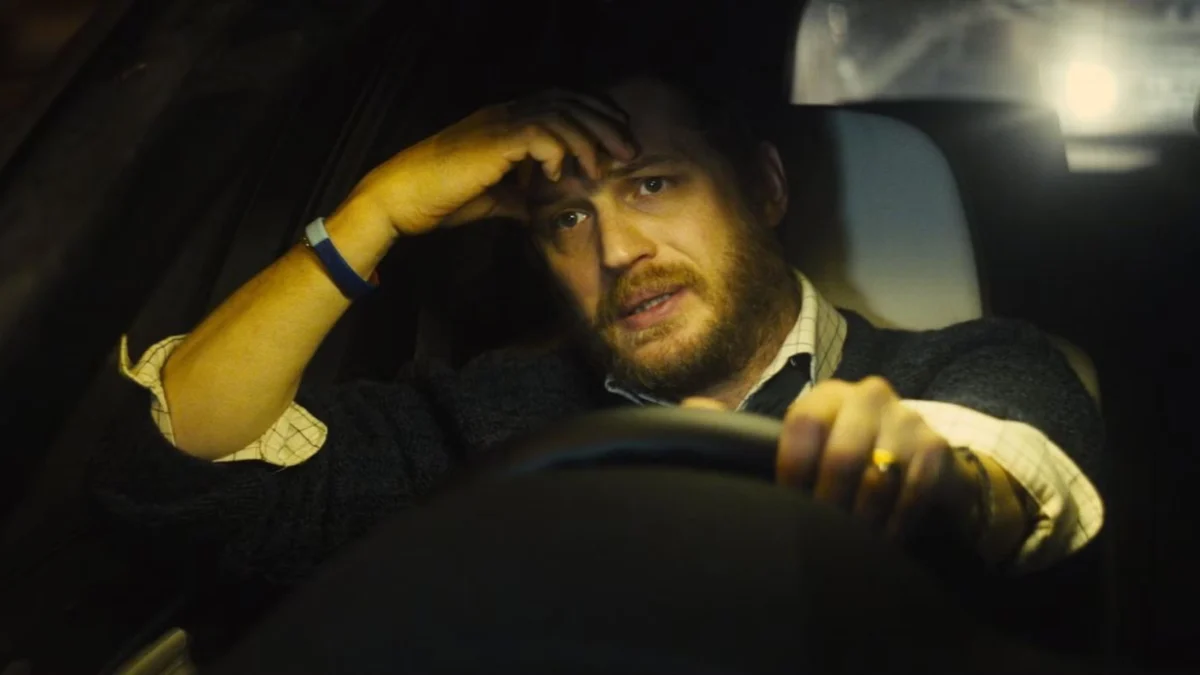
In the landscape of modern cinema, where bloated budgets and CGI-heavy spectacles often dominate the conversation, the 2013 psychological drama Locke remains a stark, brilliant outlier. Directed by Steven Knight, the visionary mind behind Peaky Blinders, the film is a masterclass in narrative economy. Featuring only one actor on screen for its entire 85-minute duration, Locke has found a new lease on life as it streams on Netflix, inviting a fresh generation of viewers to witness a high-stakes drama that unfolds entirely within the confines of a moving BMW.
The Premise: A Logistical Nightmare on Wheels
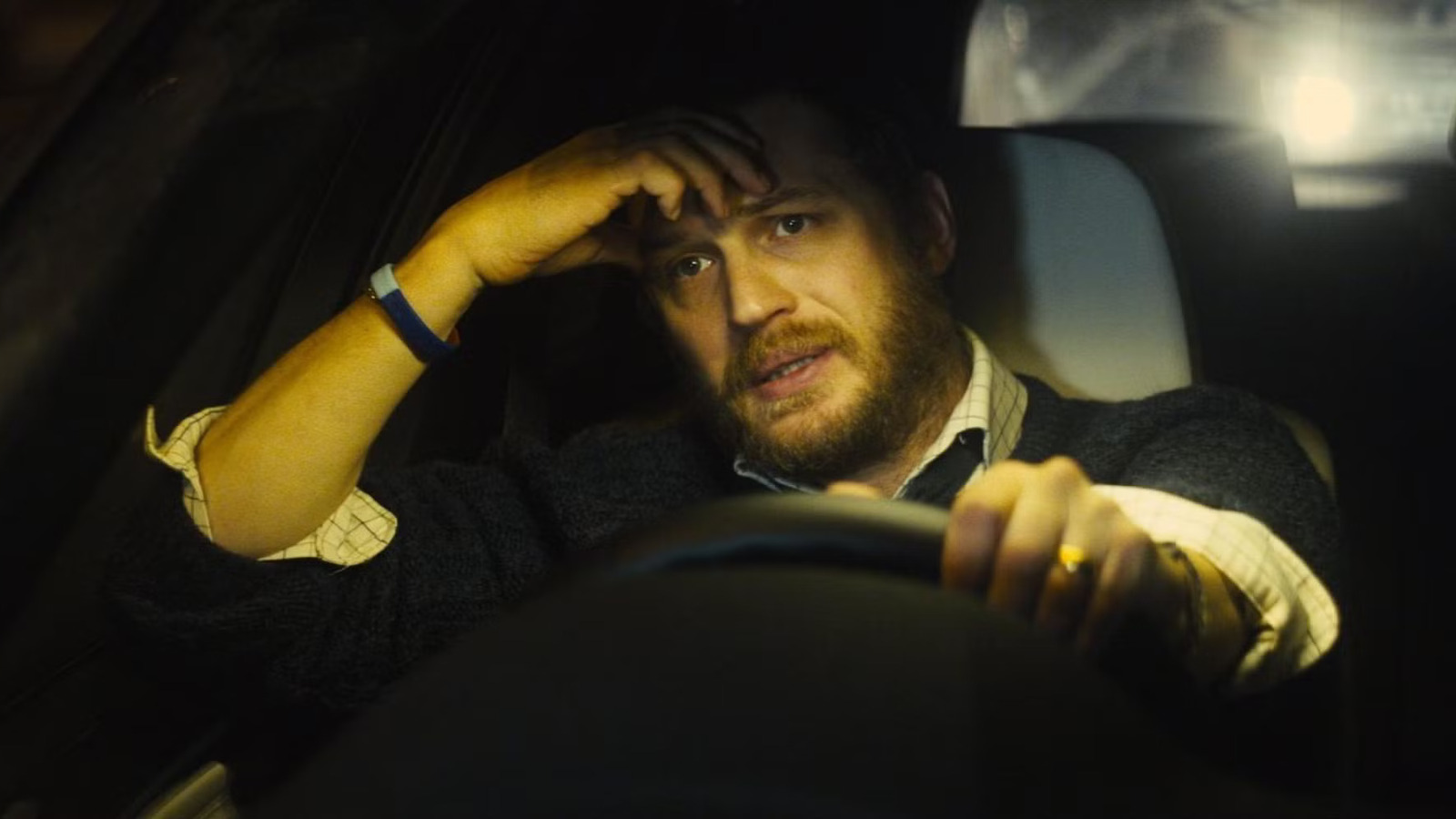
The film follows Ivan Locke, a dedicated and highly respected construction foreman portrayed with simmering intensity by Tom Hardy. As the story begins, Locke is on the eve of the most significant professional challenge of his career: overseeing a massive, record-breaking concrete pour for a skyscraper in Birmingham. To the uninitiated, a concrete pour might sound like a routine industrial task, but Knight’s screenplay elevates it to the level of a thriller. This is not merely pouring wet cement; it is a logistical operation involving thousands of cubic yards of material, strict timing, complex traffic redirection, and a fleet of heavy-duty trucks.
However, as the film progresses, it becomes clear that Locke will not be there to supervise the job. Instead, he is driving toward London, systematically dismantling his own life. Through a series of increasingly frantic hands-free phone calls, we watch as Locke attempts to delegate his massive construction responsibilities to his bewildered assistant, Donal (voiced by Andrew Scott). Simultaneously, he is forced to confess his infidelity to his wife (voiced by Ruth Wilson) and break the news to his sons that he will not be coming home.
The reason for this self-destruction is as human as it is tragic. Locke is driving to London to be present for the birth of a child fathered during a one-night stand with a former colleague, Bethan (voiced by Olivia Colman). Determined to break the cycle of abandonment established by his own absent father, Locke is willing to burn his career and family life to the ground to be the "good man" he believes his child deserves.
Chronology of a Crisis: The Narrative Arc
The film operates in real-time, creating an almost unbearable sense of urgency. The chronology of the narrative is defined by the distance between Birmingham and London.
- The Departure: The film opens with Locke getting into his car, leaving the construction site behind. This is the point of no return.
- The Professional Collapse: As he drives, Locke navigates the "nightmare" of the concrete pour. He manages the crisis via phone, fighting to keep the project on track while knowing he has effectively resigned.
- The Domestic Rupture: The emotional core of the film is the sequence of calls to his home. The realization of his family—that he is gone and not coming back—is conveyed solely through the anguish in their voices, making the impact of the loss visceral for the viewer.
- The Destination: The final act is defined by his arrival in London and his arrival at the hospital, where he waits to meet his new child, his life in Birmingham essentially existing as a memory in his rearview mirror.
A Showcase for Tom Hardy’s Acting Prowess
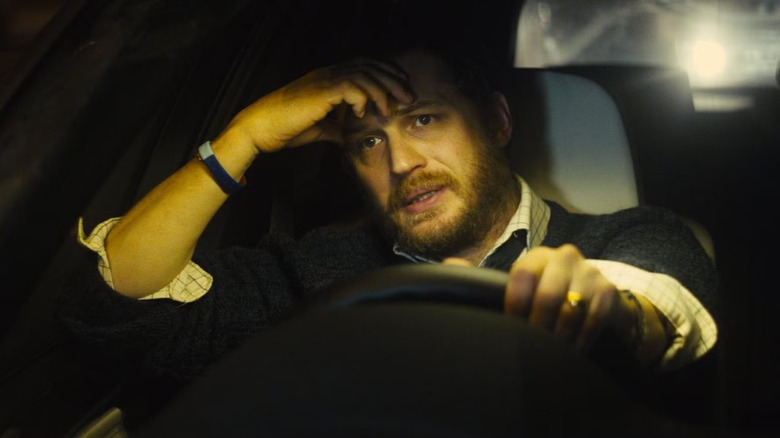
Locke serves as perhaps the most potent evidence of Tom Hardy’s range as a performer. In a medium that usually relies on movement, interaction, and set pieces, Hardy is restricted to the driver’s seat. He must convey the entirety of his internal conflict, his mounting anxiety, his professional competence, and his crushing regret through micro-expressions, shifts in posture, and the modulation of his voice.
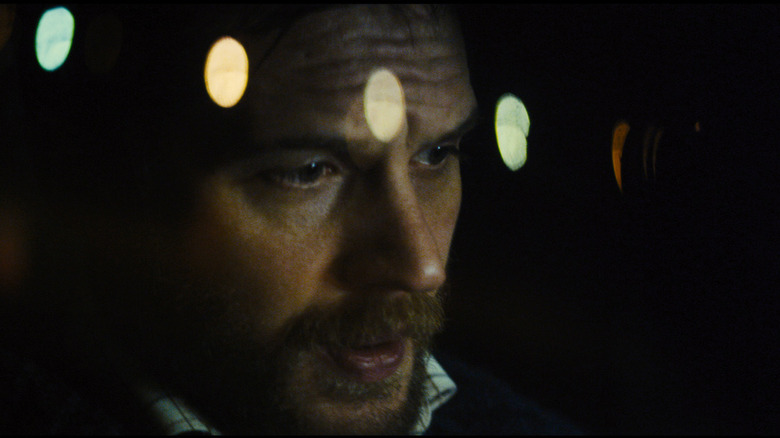
Steven Knight’s direction relies on the claustrophobia of the vehicle. By stripping away the ability to cut to other locations, the film forces the audience to live inside the car with Ivan Locke. The lighting shifts as he passes city lights and dark stretches of motorway, mirroring the darkness and clarity he encounters within himself. To add depth to the dialogue, Knight writes in "ghost" scenes where Locke talks to the spirit of his dead father, who sits in the empty backseat—a brilliant device that allows the audience to understand the trauma driving Locke’s seemingly irrational decisions.
Supporting Cast: A "Voice-Only" Powerhouse
One of the most remarkable aspects of Locke is its supporting cast. While we never see them, the performances delivered by the voice actors are nothing short of spectacular. The film features:
- Andrew Scott (Donal): Best known for his chilling turn as Moriarty in Sherlock, Scott captures the desperation of a subordinate who is suddenly thrust into a leadership role he is entirely unprepared for.
- Ruth Wilson (Katrina): Her portrayal of the betrayed wife is haunting. The sound of her shattering world through the car speakers is one of the film’s most devastating sequences.
- Olivia Colman (Bethan): Long before her Oscar win for The Favourite, Colman delivered a vulnerable, raw performance that grounds the entire film in empathy.
The Pre-Spider-Man Era: Tom Holland’s Early Work
For many Netflix viewers today, the most surprising element of the film is the inclusion of a young Tom Holland as one of Locke’s sons. At the time of filming, Holland was in the early stages of a career that would soon catapult him to global superstardom. Having cut his teeth on the London stage in Billy Elliott: The Musical, Holland was beginning to transition into film, appearing in The Impossible (2012) and later, the maritime epic In the Heart of the Sea (2015).
It is fascinating to watch Locke with the knowledge of where Holland would go next. Within three years of this role, he would be introduced as Peter Parker in Captain America: Civil War. His presence in Locke serves as a "hidden gem" for fans of the Marvel Cinematic Universe, highlighting the pedigree of the actors who were involved in this indie experiment long before they became household names.
Implications for Independent Cinema
The success of Locke—both critically and now on streaming platforms—carries significant implications for the industry. It proves that a compelling narrative does not require a blockbuster budget. By focusing on script, performance, and atmospheric tension, Locke demonstrates that the "less is more" philosophy remains a powerful tool in the hands of a skilled director.
Furthermore, the film’s resurgence on Netflix highlights the role of streaming services in preserving the legacy of smaller, high-quality dramas. By providing a platform for films that might otherwise be forgotten in the shuffle of theatrical releases, Netflix allows audiences to rediscover performances that deserve to be analyzed and appreciated.
Official Reception and Critical Legacy
Upon its 2013 release, Locke was met with widespread critical acclaim. Critics praised Knight for his audacity and Hardy for his dedication. On review aggregator sites like Rotten Tomatoes, the film maintains an impressive approval rating, often cited as a "must-watch" for students of acting and screenwriting.
"The film is a triumph of technical skill and emotional depth," noted one contemporary review. Another critic stated, "It is a testament to Tom Hardy’s ability to anchor a film with nothing but his presence." The legacy of Locke is that it challenged the boundaries of what a thriller could be, proving that a man driving a car can be just as engaging as a high-speed chase or an international espionage plot.
Conclusion: Why You Should Watch It
In an era of endless scrolling and content saturation, Locke is a rare, focused experience. It is an intense, character-driven study that asks the audience to consider the cost of integrity and the weight of our choices. Whether you are a fan of Tom Hardy’s transformation, a follower of Tom Holland’s rise to fame, or simply a lover of tight, well-crafted scripts, Locke is an essential addition to your Netflix watchlist. It is a reminder that the most profound stories are often the ones told in the quietest, most confined spaces.


 Iffa Jayyana
 Nila Kartika Wati