By Lauren Bergin
Published July 8, 2026
In the landscape of modern gaming, few titles possess the gravity of World of Warcraft. As the industry shifts toward fleeting trends and live-service models that often burn out within months, Blizzard Entertainment’s flagship MMORPG remains a titan of the genre. With 2026 marking the mid-point of the ambitious "Worldsoul Saga," the game finds itself in a period of intense transition.
To understand the current state of Azeroth, I sat down with Game Director Ion Hazzikostas. Having served as a pillar of the development team since 2008—and leading the project for the last decade—Hazzikostas is uniquely positioned to comment on the evolution of a game that is, in many ways, older than its newest generation of players.
The State of the Game: A New Era for the MMO
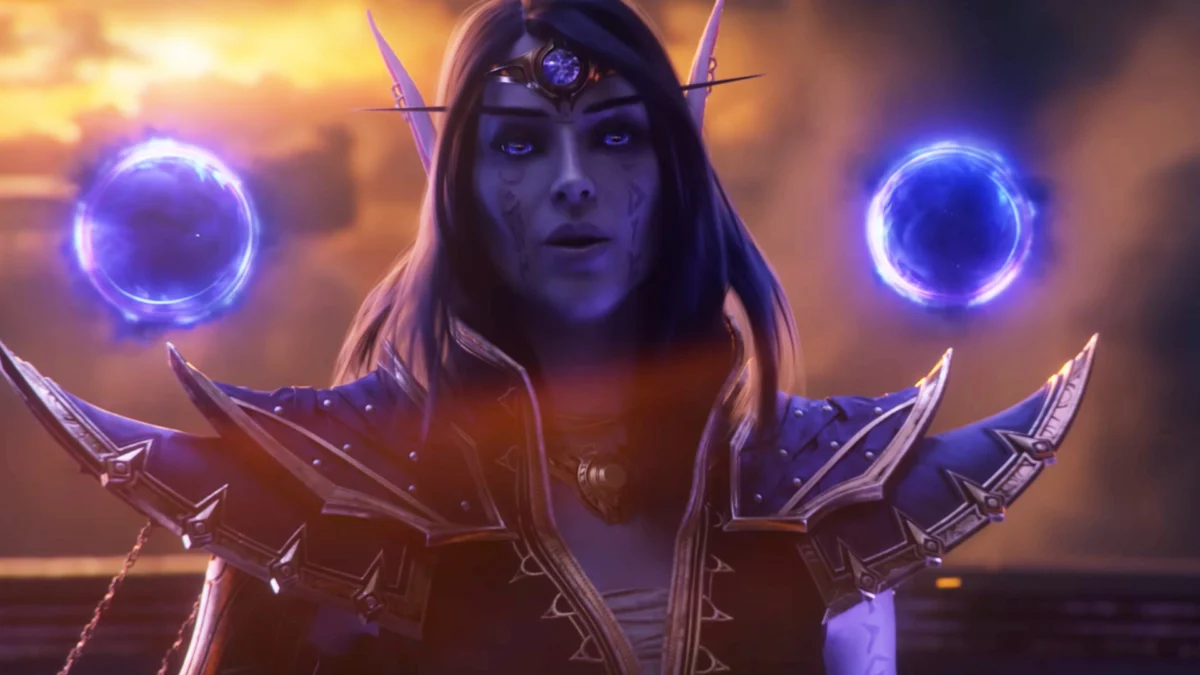
The current iteration of World of Warcraft, defined by the Midnight expansion, represents a pivot point for the franchise. If the previous era, dominated by Shadowlands, felt ethereal and detached from the roots of the series, Midnight is a homecoming. The narrative has refocused on the core conflicts of Azeroth, drawing players back to iconic, reimagined locations like Quel’Thalas and Silvermoon.

However, this nostalgia is bolstered by significant mechanical modernization. The introduction of player housing—a feature fans have clamored for over two decades—has finally arrived, offering a sense of permanence and personal expression previously missing from the WoW experience. Coupled with the expansion of "Delves," the game has successfully bridged the gap between the solitary adventurer and the traditional raid-focused hardcore player.
"I think there couldn’t be a better time to jump in than right now," Hazzikostas says, emphasizing that the game has moved past the era of being a "time-sink" that demands total life commitment.
A Chronology of Change: From Classic Roots to Modern Retail
The trajectory of World of Warcraft has been a two-decade-long masterclass in adaptation.
- 2004–2010: The formative years. WoW defined the MMO genre, establishing the social structures and mechanical loops that would dominate the 2000s.
- 2011–2020: The era of experimentation. Blizzard explored high-concept storytelling and complex systemic layers, which, while innovative, often alienated players who lacked the time for rigid, group-only progression.
- 2021–2024: The "Dragonflight" transition. Blizzard acknowledged the need for player agency and accessibility, stripping away excessive chores and focusing on player satisfaction.
- 2025–Present: The "Worldsoul Saga." A unified, multi-expansion narrative arc that aims to tell a cohesive, multi-year story while modernizing the game’s engine and UI to accommodate a broader, more modern audience.
The game is no longer a singular experience; it is a platform that supports the classic, nostalgic journey of WoW Classic while simultaneously pushing the boundaries of what a modern, high-fidelity retail MMO can offer.

The "Revelations" Crisis: Lessons in Stability
No discussion of the current WoW landscape would be complete without addressing the turbulent launch of Patch 12.0.5, titled "Revelations." The patch became infamous for severe technical instability, most notably a glitch involving player housing assets that forced Blizzard to pull the feature offline for several days.
Hazzikostas is transparent about the failure. "We know it wasn’t up to snuff," he admits. The root cause, he reveals, was an unforeseen interaction between new housing systems and legacy code from the Mists of Pandaria era—specifically, the Siege of Orgrimmar.
Improving Internal Processes
Following the outcry, the development team has overhauled its internal testing pipelines. The objective for the upcoming 12.1 update is not just new content, but a refined, robust security backend. Hazzikostas notes that the team has adopted a more cautious approach to bug fixes, prioritizing the stability of the live service over the rapid deployment of non-critical adjustments. "The risk of doing something that messes up a release isn’t really fair for us to take," he says, signaling a shift in philosophy toward a more reliable, "always-on" service model.
The Great UI Shift: Navigating the Addon Controversy
Perhaps the most contentious topic in the community is Blizzard’s recent crackdown on powerful, automated addons like WeakAuras. For years, the WoW ecosystem relied on player-made scripts to handle complex raid mechanics. Blizzard’s decision to limit these tools has been met with both applause from those seeking a level playing field and outrage from players who felt their tools were essential to their gameplay.

The Developer’s Perspective
Hazzikostas explains that this was not a punitive measure, but a design necessity. "We weren’t designing instances with the intent that addons would solve them," he explains. "Players were finding ways to solve challenges in real-time using external data, and that was leading our encounter and class design down a path that wasn’t healthy for the game."
The goal is to move the game toward a more approachable, native interface that provides necessary information to everyone, regardless of their proficiency with installing complex community mods. While he acknowledges the transition has been difficult, Hazzikostas insists that the game’s health depends on Blizzard, not the community, defining the challenge of an encounter.
Implications: Why Play in 2026?
The fundamental question remains: why should a newcomer, or a lapsed player, invest time in a 20-year-old game?
Flexibility and Accessibility
The biggest change in World of Warcraft is the democratization of time. In 2026, the game respects the player’s schedule. Whether you have 20 minutes to complete a Delve or an entire weekend to conquer a Mythic raid, the game provides meaningful progression.

A Unified Experience
The Worldsoul Saga is designed to be the most accessible point of entry in the game’s history. With an updated new-player experience that funnels fresh faces directly into the modern narrative, the barrier to entry has been lowered significantly.
"World of Warcraft used to be known as a game that would consume your life," Hazzikostas reflects. "Today, it’s a game that gives you as much as you put into it. We haven’t moved away from what we were; we’ve broadened our focus."
Looking Forward
As we look toward The Last Titan—the conclusion of the current saga—the focus remains on iteration. By refining the engine, balancing the role of addons, and leaning into the stories that matter to the player base, Blizzard seems intent on ensuring that World of Warcraft remains the industry standard for another two decades.
The "Watcher" of Azeroth is confident. Despite the bugs, the UI changes, and the inherent difficulties of managing a legacy product, the team is listening. For those who have been away, or those who have never visited, the gates of Silvermoon are open, and the world is, quite literally, waiting to be saved again.

As Hazzikostas concludes, "I’m biased, but I think there couldn’t be a better time to jump in than right now."