Azzam Bilal Chamdy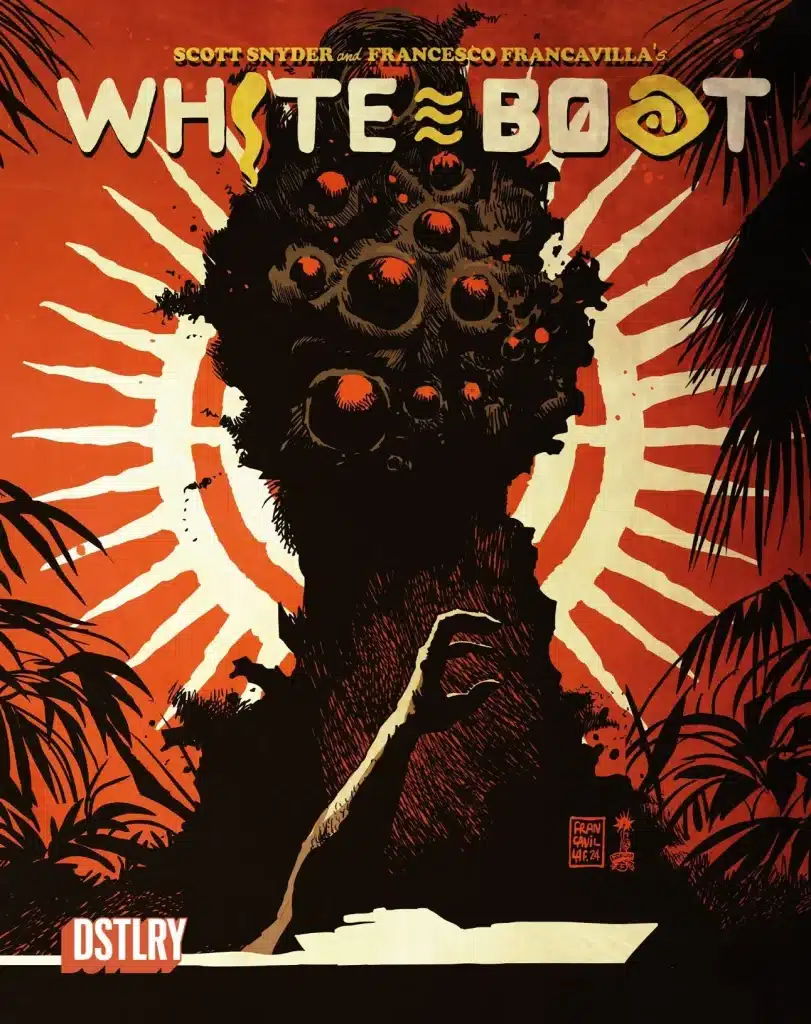
In the landscape of modern creator-owned comics, few names carry the narrative weight and industry expectations of Scott Snyder. Known for his expansive, high-concept storytelling, Snyder’s latest venture, White Boat, has served as a chilling investigation into the intersection of extreme wealth, isolation, and the moral vacuum of the ultra-elite. With the release of White Boat #3, the limited series reaches its conclusion, attempting to synthesize a complex web of conspiracy, body horror, and social commentary into a final, definitive statement.
Published by DSTLRY, the series follows the investigative journey of Lee, a reporter whose obsession with the titular "White Boats"—colossal, secretive mega-yachts utilized by the world’s most powerful individuals—leads him into a nightmare of abduction and revelation. As the series reaches its climax, readers are forced to confront the central question that has underpinned the narrative: what happens when the unchecked ambition of the super-rich meets the cold, uncaring reality of cosmic horror?
The Narrative Arc: From Investigation to Existential Dread
The chronology of White Boat is one of escalating tension. What begins as a grounded, albeit tense, investigative thriller—reminiscent of classic procedural journalism—quickly descends into a genre-bending odyssey. After successfully infiltrating the inner circle of these floating fortresses, Lee is whisked away to a remote, clandestine island. It is here that the true nature of the "White Boat" society is unveiled.
The island serves as the headquarters for an ancient, millennia-old cult dedicated to "The Human Project." Initially presented as a utopian endeavor, the project is revealed to be a parasitic experiment. By the time we reach the final issue, the stakes have shifted from a simple escape mission to a planetary-scale catastrophe. Lee discovers that his brother, whom he had long believed lost, has been transformed into a metamorphic monster—a victim of the cult’s cruel experimentation.
In White Boat #3, Lee is forced into an impossible binary choice: embrace the cult’s dark, god-like influence to potentially "save" his brother, or flee, leaving behind the only family he has left. This choice, however, is not merely personal. His decision holds the potential to either mitigate or escalate a threat that could doom the entire planet. The finale navigates this tension, though it does so with a pacing that leaves several narrative threads strained under the weight of the story’s ambition.
The Anatomy of the Elite: Social Commentary as Horror
At the thematic core of White Boat lies a scathing indictment of the billionaire class. Snyder utilizes the "White Boat" as a metaphor for the literal and figurative distance the ultra-wealthy maintain from the rest of humanity. By isolating themselves on these ships, the elite are depicted as detached from the societal consequences of their actions, hoarding not only financial capital but also the biological and existential resources of the planet.
This is where the series shines as a piece of sociopolitical horror. The cultists on the island are not motivated by traditional villainous tropes of world domination; rather, their motivations are purely self-serving. They represent an extreme, heightened version of the real-world discourse surrounding wealth hoarding and the "paradise" that the ultra-wealthy envision for themselves at the expense of the collective.
However, the execution of these themes in the final act highlights a missed opportunity for a deeper, more nuanced exploration. While the series successfully posits that the super-rich are capable of moral rot, the finale treats these motivations as established background noise rather than a central point of intellectual engagement. The reader is left to infer the sociopolitical implications, as the narrative leans more heavily into the kinetic, visceral horror of the climax than the philosophical debates that might have elevated the finale further.
Aesthetic Excellence: The Visual Language of Terror
While the narrative pacing of the final issue invites debate, the artistic contribution of Francesco Francavilla is beyond reproach. As both illustrator and colorist, Francavilla creates a visual atmosphere that is essential to the book’s identity. His work, supported by the clean, precise lettering of Andworld Design, leans into the aesthetic of classic monster horror—a stylistic choice that perfectly complements the "creature feature" elements introduced in the latter half of the series.

Francavilla’s use of light and shadow is particularly masterful. He captures the "coldness" of the island’s inhabitants—their expressions often devoid of empathy, replaced by a terrifying, detached serenity—which starkly contrasts with the abject, raw terror experienced by Lee. In moments of metamorphosis and chaos, the art transitions from the sterile, minimalist environment of the elite to a riot of color and disturbing anatomical shifts, effectively grounding the "cosmic" elements of the story in the reader’s visceral discomfort.
Implications: The Risks of the Rushed Conclusion
The primary criticism directed at White Boat #3 involves its structural density. The transition from the mystery-thriller of the first two issues to the explosive, high-stakes finale feels abrupt. There is a perceptible "choppiness" in the storytelling, as if the narrative requires more room to breathe than a three-issue structure permits.
Specifically, Lee’s psychological transition is a point of contention. His acceptance of the cult’s claims—and his subsequent shift in loyalty—occurs without sufficient internal examination. The reader is asked to accept a massive leap in character development that, had it been afforded a fourth issue or an expanded page count, could have served as the emotional anchor of the entire series. By accelerating the conclusion, the creative team opted for a definitive resolution over a more nebulous, lingering ending—a choice that arguably diminishes the haunting potential of the story.
Despite these structural hurdles, White Boat remains a compelling, high-concept entry into the horror genre. It successfully blends the sensibilities of Jurassic Park’s hubris, the cult-like fervor of Jim Jones-esque organizations, and the claustrophobic, existential dread of The Prisoner. It is a series that, while occasionally stumbling in its execution, consistently hits on fascinating, uncomfortable truths.
Official Perspectives and Industry Context
The release of White Boat #3 by DSTLRY marks an interesting moment for the publisher, which has sought to position itself as a home for high-end, creator-driven narratives. By securing talent like Snyder and Francavilla, DSTLRY has demonstrated a commitment to "event" style storytelling. While the series received a 7.5/10 rating for its overall impact, the consensus remains that it is a "must-read" for fans of the genre, even if it serves as a reminder of the perils of compressing grand-scale narratives.
The creative team’s ability to weave modern anxieties—inequality, the alienation of the elite, and the fear of unchecked scientific advancement—into a horror framework is commendable. While the ending may feel rushed to some, the series stands as a solid, entertaining exploration of what happens when the "White Boat" lifestyle is allowed to proceed without oversight or moral constraint.
Final Thoughts: A Voyage Worth Taking
White Boat #3 is a finale that wraps up a chaotic, imaginative, and deeply cynical story. It is a work that asks the reader to look at the "super-rich" not just as targets for social critique, but as potential architects of a very different, very terrifying world. While the pacing issues prevent it from reaching the heights of a perfect series, the strength of the concept and the undeniable quality of Francavilla’s art make it a significant release.
For those who enjoy their horror with a side of biting social commentary, White Boat is an essential experience. It is a cautionary tale that, even if its final pages arrive too quickly, leaves the reader with plenty to ponder regarding the nature of power, the price of survival, and the dark secrets that lie just beneath the surface of the world’s most opulent, inaccessible vessels. As a whole, the series is a testament to the power of the medium to capture the zeitgeist, even when it is sailing through the roughest of narrative waters.

 Sagoh
Sagoh
 Ammar Sabilarrohman