

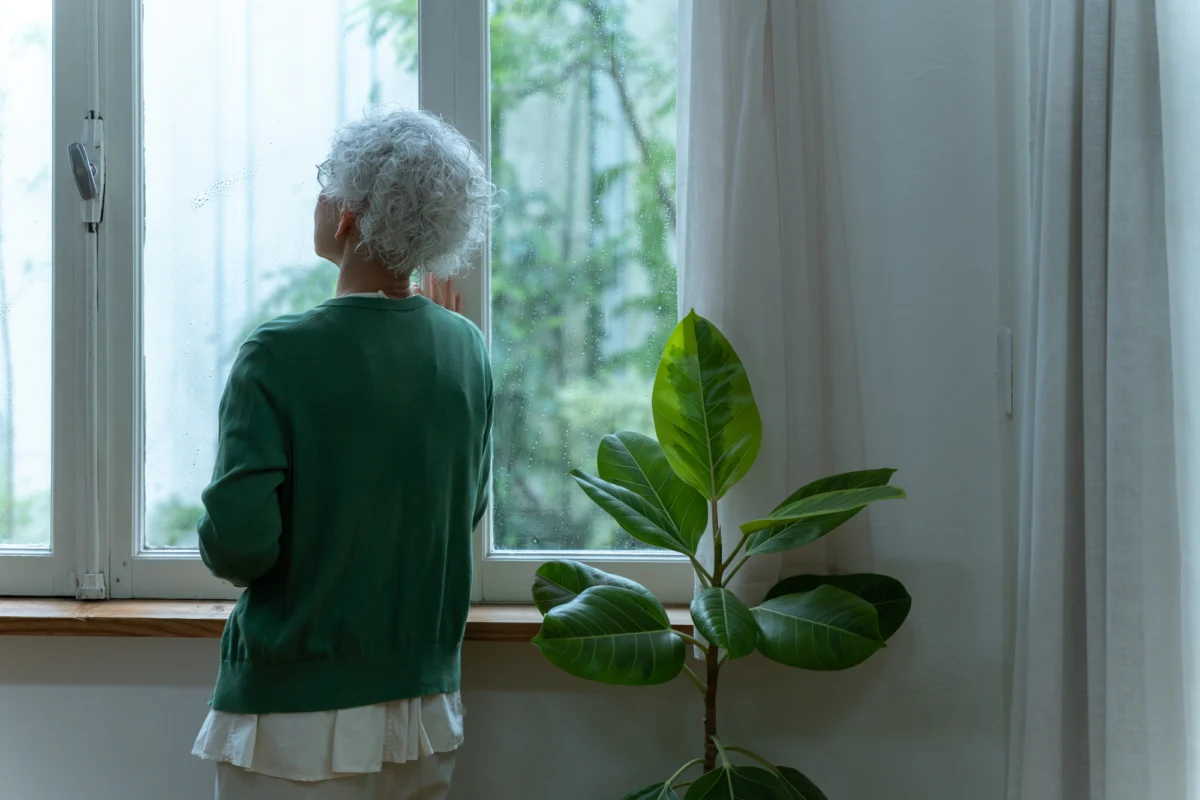
For decades, the global imagination has been haunted by a specific image of Japanese social isolation: the hikikomori (ひきこもり). This term, translating roughly to "pulling inward" or "shut-in," conjures the figure of a young man, often in his teens or early twenties, retreating into the sanctuary of his bedroom to escape the crushing pressures of Japan’s academic and social hierarchies. Throughout the early 2000s, this demographic became a staple of international reporting, depicted as a quintessential symptom of a modernizing society struggling with the weight of its own expectations.
However, the reality of 2024 is far more complex, and significantly more dire. The "lost generation" of the early 2000s has not disappeared; they have simply grown older. Today, those same individuals are in their 40s and 50s, still living in the homes of their parents, who are now in their 70s and 80s. This intersection of prolonged social withdrawal and an aging population has birthed what experts now call the "80/50 problem"—a demographic time bomb that threatens to overwhelm Japan’s social safety nets and expose a deeply hidden crisis of isolation.
The Evolution of a Social Phenomenon
The hikikomori phenomenon was originally framed as a youthful rebellion against the rigid structure of Japanese society. It was often linked to "school refusal," where the intense pressure to succeed academically led to a total withdrawal from public life. Yet, as these individuals aged, the nature of their isolation shifted from a phase of transition to a permanent state of existence.
The transition from a youth-centered issue to an middle-aged crisis marks a fundamental change in the psychological and economic profile of the hikikomori. For many, the initial period of withdrawal—often sparked by academic burnout or early social rejection—gradually solidified into a lifestyle. As the years passed, the skills necessary to re-enter the workforce atrophied, and the stigma associated with a "gap" in one’s employment history grew exponentially, creating a vicious cycle of fear and avoidance that made professional reintegration increasingly difficult.
Staggering Statistics: The Scope of the Crisis
The scale of this issue was laid bare by a landmark survey conducted by Japan’s Cabinet Office in late 2022 and released in 2023. The data provided a sobering reality check: approximately 1.46 million people between the ages of 15 and 64 were living in a "broad hikikomori" state. This equates to roughly one in every 50 working-age adults in the country. Compared to government estimates from just four years prior, this represents an increase of approximately 310,000 individuals.
Defining the "Broad" Definition
The government’s definition is purposefully expansive to capture the nuance of modern isolation. It is not limited to those who are bedridden or physically locked in a room. Instead, it encompasses individuals who, for at least six months, have left their homes only for specific, low-social-interaction tasks—such as trips to a convenience store or pursuing solitary hobbies—while avoiding work, school, or regular social engagement.
While critics have pointed to the 2022 timing of the survey, noting that the COVID-19 pandemic exacerbated feelings of isolation, the data suggests that the virus was only a catalyst, not the root cause. While 20% of respondents cited the pandemic as a reason for their withdrawal, the remaining 80% were dealing with systemic, long-term issues that predated global lockdowns.
Who Are the Modern Shut-ins?
The stereotype of the teenage boy in a dark room is a relic of the past. The 2023 data reveals a population that is as diverse as the Japanese workforce itself.
The Employment Trigger
For those in the 40–64 age bracket, the primary driver of their situation—cited by 44.5% of respondents—is the loss or termination of employment. Japan’s labor market has undergone a radical transformation in the last decade, with a shift toward unstable, part-time, and contract-based work. For individuals who already struggled with social anxiety or confidence, the harsh realities of this volatile market proved insurmountable.
Many of these individuals report having extensive work experience (90.3% of those aged 40–69). Their withdrawal was not a lack of ambition, but rather a reaction to a toxic work culture characterized by pawahara (power harassment), verbal abuse, and unsustainable demands. Once they left the workforce, the "stigma of the gap" became a prison wall, preventing them from returning.
The Gender Disparity
Perhaps the most significant revelation is the gender breakdown. Among the 40–64 demographic, women constitute a slight majority at 52.3%. Many of these women identify as full-time homemakers or caregivers. The National Federation of Families of Hikikomori (KHJ) has noted that societal expectations in Japan often mask the reality of female withdrawal; if a woman remains at home to care for a family member or manage a household, her isolation is often dismissed as a "natural" extension of her gender role, even when it masks a profound, unhealthy lack of outside contact.
The "80/50" Problem: A Ticking Clock
The "80/50 problem" is defined by the dangerous dependency between octogenarian parents and their middle-aged children. As Japan’s retirement age hovers around 60, many parents are finding that their pension funds and life savings are being drained to support children who have not held a steady job in decades.
This creates a precarious existence. The parent serves as the sole provider, the "bridge" to the outside world. When the parent dies or becomes incapacitated by illness, the hikikomori child is suddenly thrust into a state of total vulnerability. Without the financial buffer of the parent’s pension or the social link the parent provided, these individuals face an immediate threat of homelessness and starvation.
The tragic phenomenon known in Japanese media as "parent and child collapsing together" (oyako shinju) refers to cases where the death of an elderly parent leads to the silent, invisible expiration of their isolated child. These households often go undetected until a landlord reports unpaid rent or a utility company cuts off power, revealing a tragedy that had been unfolding behind closed doors for years.
Official Responses and Systemic Obstacles
The Japanese government has begun to acknowledge that the hikikomori issue is not a character flaw, but a public health crisis. Since 2018, the Ministry of Health, Labour and Welfare has established a network of regional support centers. These hubs act as clearinghouses, connecting welfare offices, public health agencies, and employment services to help families navigate the complex bureaucracy of support.
A 2021 revision to the Social Welfare Act aimed to provide a more integrated approach, but the efficacy of these measures is limited by the very isolation they seek to cure. Because these families are, by definition, disconnected from the community, they rarely seek help until a crisis reaches a breaking point. Often, the first time a case reaches government attention is not when the hikikomori requests help, but when an elderly parent applies for long-term nursing care for themselves.
Furthermore, the lack of robust, accessible mental health support in Japan—where stigma against psychiatric care remains pervasive—has left families vulnerable to predatory actors. Unscrupulous "rehabilitation" companies, often called hikidashi-ya ("pull-out specialists"), have been known to charge exorbitant fees to "force" people out of their homes, often using traumatic methods that only deepen the psychological scars of the individuals involved.
The Path Forward: Breaking the Silence
Addressing the 80/50 problem requires a paradigm shift in how Japan views social welfare and mental health. Organizations like the KHJ emphasize that support must begin with the parents, who are often as isolated as their children, burdened by shame and the fear of social judgment.
The solution is not merely "job placement," but the creation of community-based "third places"—spaces where individuals can re-engage with society without the immediate pressure of productivity. It also requires a cultural recalibration regarding the definition of success.
As Japan’s demographic crisis deepens, the hikikomori population represents a hidden workforce and a vulnerable citizenry. If the state continues to rely on the "private" support of aging parents, the inevitable result will be a surge in systemic poverty and preventable tragedies. Breaking the cycle of the 80/50 problem will require a move away from the stigma that forces these individuals into the shadows, and toward a social contract that recognizes the right to belong, even for those who have spent decades living in silence.











