


In the modern digital economy, social media has graduated from a simple brand-awareness tool to the heartbeat of organizational intelligence. However, for many companies, this potential remains trapped. While marketing teams spend hours crafting content and managing communities, the valuable data harvested from these interactions—customer sentiment, competitive threats, and emerging market trends—often sits in a silo, disconnected from the boardroom.
Effective social media management requires significant capital. Between maintaining a dedicated team, investing in software, and allocating time for campaign execution, businesses must justify these expenses. For social marketers, the challenge is clear: how do you transform "likes" and "shares" into a language that executives—whose primary concern is the bottom line—can understand? The answer lies in evolving from basic reporting to a comprehensive strategy of social intelligence.
Main Facts: The Strategic Shift
The true value of social media today is not in reach, but in intelligence. Social channels provide a real-time, unfiltered feedback loop that no other department can replicate. Whether it’s identifying a product defect via a Twitter thread or discovering a new customer segment through Instagram engagement, social data is a strategic asset.
Yet, there is a persistent friction between social teams and executive leadership. When the value of social efforts is not effectively communicated, budgets stagnate and growth opportunities vanish. To bridge this gap, social teams must position themselves as a source of market intelligence that informs product development, customer service, and sales strategy.
A Chronology of Evolution: From Vanity Metrics to Business Impact
The trajectory of social media within the corporate structure has moved through three distinct phases:
- Phase 1: The Era of Awareness (2010–2015): Success was defined by vanity metrics—follower counts, likes, and impressions. The primary goal was visibility.
- Phase 2: The Engagement Pivot (2016–2020): Brands began focusing on community building and interaction. The focus shifted to how well a brand could hold the attention of its audience.
- Phase 3: The Intelligence Revolution (2021–Present): Today, social media is treated as a business intelligence layer. It is no longer just about broadcasting a message; it is about harvesting and acting upon data.
As Sprout Social’s 2026 Social Intelligence Report highlights, 67% of professionals now consider social intelligence to be "mission-critical" for future growth. Those who fail to integrate this data into the broader organizational ecosystem risk losing their competitive edge.
Supporting Data: Why Silos Cost Money
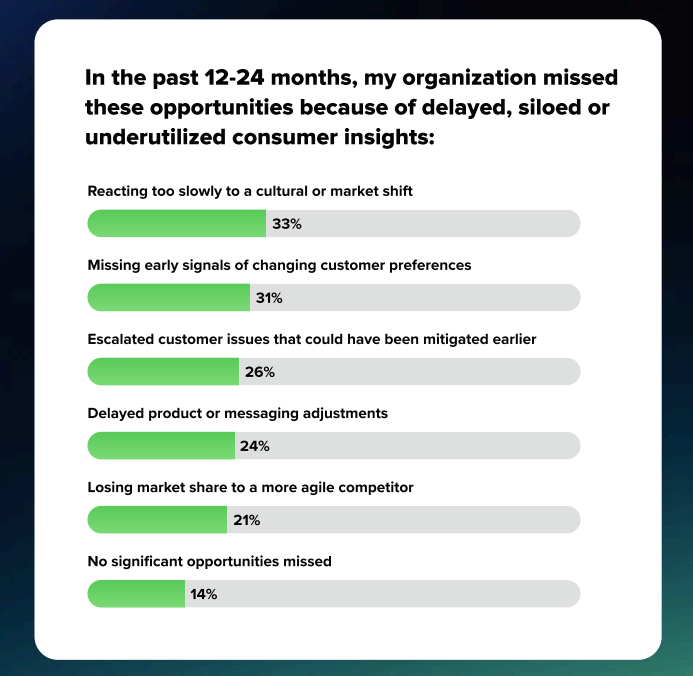
The cost of inaction is quantifiable. When social data remains trapped in marketing dashboards, the business loses the opportunity to pivot based on real-time feedback.

According to internal data from Sprout Social, integrating social intelligence with existing systems—such as CRM (Salesforce) and Business Intelligence (BI) tools like Tableau—creates a "data feedback loop." For instance, when social teams share feature requests found in comments directly with product teams, development cycles become more responsive to actual market demand.
Furthermore, the shift toward multi-touch attribution has proven to be a game-changer. By mapping social interactions throughout the entire customer funnel—rather than just looking at the "last click"—organizations can see the full impact of their social spend. Sprout’s own internal audit revealed that by adopting a multi-touch model, the company identified a 5,800% increase in additional pipeline impact, ultimately leading to a 529% ROI on their social platform investment.
Official Perspectives: Translating Data into Dollars
To gain the necessary executive buy-in, social teams must act as translators. Olivia Jepson, Social Media Intelligence Manager at Sprout Social, emphasizes that executives need more than just a list of top posts.
"Social teams are driving revenue," says Jepson. "But last-touch attribution only tells part of the story. Strategic discussions about how social impacts the entire funnel—spanning top-of-funnel engagement and reach metrics to down-funnel demand—are essential for building a more effective reporting infrastructure."
Jepson notes that the most successful teams are those that treat their executive leadership as a specific audience. By proactively packaging insights and delivering them in an "executive scorecard" format, social teams shift from being viewed as a cost center to being seen as a strategic partner.
A Five-Step Framework for Measuring Value
To effectively communicate value, marketers should adopt a structured approach to reporting that aligns social outcomes with corporate priorities:
1. Set Objectives and Align Priorities
Start by working backward from your company’s core KPIs. If your company is focused on market expansion, your social goals should center on audience discovery and sentiment analysis in new regions. If the goal is customer retention, your focus should be on support metrics and community sentiment.
2. Identify Metrics and Attribution Models
Distinguish between qualitative and quantitative metrics. While quantitative data (clicks, conversions, shares) provides the "what," qualitative data (sentiment analysis, brand perception) provides the "why." You must establish an attribution model that tracks how social activity influences the lead journey from initial awareness to final sale.
3. Implement Analytics Tracking
Unified systems are non-negotiable. Use tools that integrate social data into your CRM. When a customer’s social interactions are visible to the sales team, the sales conversation becomes significantly more personalized and effective. Utilizing UTM tracking allows for precise measurement of which specific content drives the highest-value leads.
4. Measure Against Benchmarks
Data is meaningless without context. Establish a baseline for your industry. Resources like the 2025 Content Benchmarks Report provide a baseline for what "good" looks like in your sector. Tracking performance against these benchmarks allows you to prove that your team is outperforming the competition, not just maintaining the status quo.
5. Calculate ROI
The final, and perhaps most important, step is the calculation of ROI. Using tools like a social media ROI calculator, teams can provide a hard number that finance departments can respect. When you combine efficiency gains—such as reduced customer support costs—with revenue impact, the argument for increased budget becomes unassailable.
Implications for the Future of Business
The implications for organizations that master this transition are profound. As the digital landscape becomes increasingly saturated, the "social-first" company will be the one that listens better than its competitors.
By democratizing social data, companies can ensure that the "pulse" of the market is felt by everyone, from the CEO to the product engineer. This requires moving away from the "siloed" mindset. When social data is visible to all departments, it fosters a culture of agility. Product teams can iterate faster, events teams can plan more effectively, and customer care teams can resolve issues before they become public relations crises.
Ultimately, the goal of social media management is no longer just "engagement." It is the creation of a competitive moat built on deep, actionable, and shared intelligence. By elevating the role of social data and mastering the art of data storytelling, marketers can secure the resources they need to move from the periphery of business strategy to the very center of it. The organizations that succeed in the next decade will not just be those that have the loudest voices on social media, but those that have the sharpest ears.












No comments yet. Be the first to join the conversation!