Lina Hope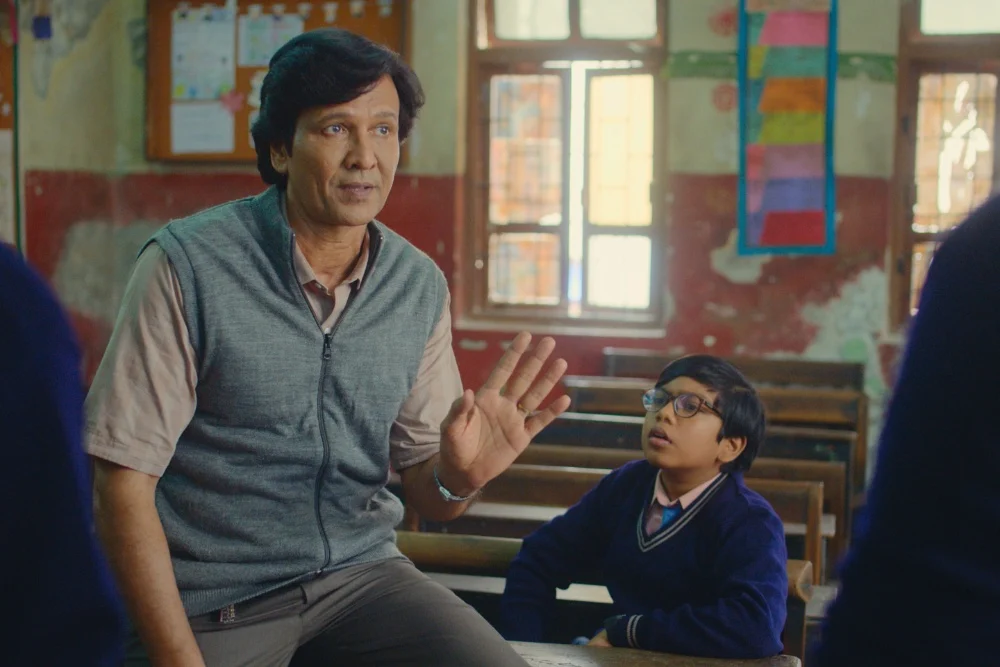
Prime Video has officially announced the global premiere of its latest Hindi-language original series, Adarsh Baal Vidyalaya. Set to debut on July 24, this seven-episode comedy-drama promises to be a poignant and hilarious exploration of the Indian education system, anchored by the formidable talent of Kay Kay Menon. As the streaming giant continues to solidify its stronghold on the Indian market, Adarsh Baal Vidyalaya arrives as a highly anticipated addition to a portfolio already boasting massive hits like Panchayat, Mirzapur, and The Family Man.
The Premise: An Unlikely Transformation
At the heart of the series lies the story of Gyaneshwar Tripathi, portrayed by the critically acclaimed Kay Kay Menon. Tripathi is not your quintessential, stern academic leader. He is a laid-back, perhaps even indifferent, headmaster whose life takes a sharp pivot when he sets his sights on a prestigious, government-sponsored training program in Cambridge.
What begins as a personal quest for professional advancement quickly evolves into a mission of redemption. Tasked with the daunting challenge of reviving one of the city’s most chronically underperforming schools, Tripathi finds himself navigating a minefield of obstacles. From classrooms that mirror the chaos of a battlefield to a total lack of resources, and from apathetic parents to a suffocatingly rigid administrative hierarchy, the school serves as a microcosm of systemic dysfunction.
Tripathi’s journey involves assembling an eclectic and somewhat "unlikely" team of educators. Together, they must attempt the impossible: turn the tide on failure while dealing with the absurdity of their daily existence. It is a narrative that promises to oscillate between laugh-out-loud comedy and soul-stirring drama.
The Creative Engine: A Proven Pedigree
The pedigree behind Adarsh Baal Vidyalaya is substantial. The series is the brainchild of creators Biswapati Sarkar and Sameer Saxena, operating under their production banner, Posham Pa Pictures. The duo, known for their sharp, observational writing, has enlisted Himank Gaur to direct the seven-episode run.
The screenplay is a collaborative effort, with Sarkar leading a writing room that includes Akshay Asthana, Nupur Pai, Tatsat Pandey, and Meghna Srivastava. This assembly of writers suggests a narrative depth that aims to go beyond surface-level tropes, looking to capture the specific cadence and contradictions of Indian middle-class life.
The ensemble cast reads like a "who’s who" of Indian acting talent. Alongside Menon, the series features the veteran Archana Puran Singh, the versatile Naveen Kasturia, and the compelling Prasanna Bisht. They are joined by Abhimanyu Singh, Deven Bhojani, Ajitesh Gupta, Annapurna Soni, and Prachee Shah. This diverse mix of seasoned stage and screen actors promises a dynamic interplay that will likely be the show’s greatest strength.
Chronology of Production and Development
While the official announcement for the July 24 release date has only recently dropped, the gestation of Adarsh Baal Vidyalaya has been a long-term strategic priority for Prime Video India.
The project was greenlit as part of a concerted effort by Amazon to expand its "heartland" content—stories that resonate not just in metropolitan hubs but in the smaller towns and districts that define the vast majority of the Indian demographic. Following the runaway success of Panchayat, which explored the intricacies of rural governance, Prime Video sought a project that could similarly dissect the institutional failures of the Indian public education sector through a comedic lens.
Development on the scripts began in early 2023, with the writers focusing on balancing the gritty reality of underfunded schools with the aspirational tone of a "triumph against the odds" story. Filming commenced later that year, taking place across several locations designed to mimic the dusty, bustling, and often cramped reality of government schools. The post-production phase has been closely guarded, with the creative team focusing on capturing the precise tone—a balance of "wit and soul," as described by the studio executives.
Official Responses and Creative Intent
The response from the leadership team at Prime Video has been one of immense optimism. Nikhil Madhok, the director and head of originals at Prime Video India, described the series as a "warm, spirited comedy about the chaos and contradictions of a system beautifully held together by the sheer perseverance of its people."
Madhok emphasized that the show’s power lies in its relatability. "The storytelling is full of wit, soul, and a deeply relatable narrative, brought to life by the creative vision of Biswapati Sarkar, Sameer Saxena, Himank Gaur, and the entire team behind the show," he noted in a recent press statement.
For Sarkar and Saxena, the show represents a labor of love. In a joint statement, they revealed that the series was born from a simple, singular question: "How do you tell a story about a school that appears to be failing on every measurable parameter, but is held together by people who continue to show up and try?"
They added, "The series explores the comedy, absurdity, and everyday challenges of life inside a dysfunctional school, while also celebrating the resilience of teachers and students who refuse to give up on each other. Gyaneshwar is an unconventional protagonist whose journey is as entertaining as it is moving, and Kay Kay Menon brings incredible charm and depth to the role."
Implications for Prime Video’s Strategy
The release of Adarsh Baal Vidyalaya comes at a pivotal time for the streaming landscape in India. With the market becoming increasingly competitive, the "original content" race has moved from quantity to quality. Prime Video has successfully carved out a niche by championing stories that are rooted in Indian sensibilities—the so-called "hyper-local" approach.
1. Strengthening the ‘Heartland’ Portfolio
By investing in Adarsh Baal Vidyalaya, Prime Video is signaling its continued commitment to stories that reflect the lived experiences of millions of Indians. Following the critical and commercial success of Jubilee and The Family Man, the platform is proving that it is not afraid to tackle institutional themes. The school setting is a universal one, and by framing it through the lens of a "failing system," the series hits a nerve that is likely to generate significant public discourse.
2. The Star Power Factor
Kay Kay Menon remains one of the most respected actors in the country, known for his ability to elevate even the most standard material into something profound. His inclusion in this project suggests that the narrative is not just a light comedy, but a character-driven study. For Prime Video, leveraging such talent ensures a baseline of high-quality performance that appeals to both mass audiences and cinephiles.
3. Cultural Impact and Social Commentary
The depiction of the Indian education system is a recurring theme in global media, but it is rarely tackled with the specific, nuance-heavy approach seen in Indian web series. By highlighting the lack of resources, the bureaucratic red tape, and the indifferent administration, Adarsh Baal Vidyalaya is poised to spark conversations about the state of public education. If the show succeeds in its tonal balance, it may well join the ranks of "impactful" television that forces viewers to look at their own societal structures with a more critical, yet empathetic, eye.
Conclusion: A Lesson Worth Learning
As July 24 approaches, the anticipation for Adarsh Baal Vidyalaya continues to mount. The series represents more than just another entry in a crowded library; it is a testament to the collaborative spirit of Indian filmmakers who are increasingly confident in their ability to tell stories that are both culturally specific and universally understood.
With a stellar cast, a proven creative team, and a premise that touches on the fundamental human need for growth and resilience, Adarsh Baal Vidyalaya is well-positioned to become the next breakout hit for Prime Video. Whether it manages to achieve the iconic status of its predecessors remains to be seen, but the intent—to find humor in the struggle and dignity in the mundane—is a lesson that is, quite literally, worth learning.


 Reynand Wu
 Pevita Pearce