Nana Muazin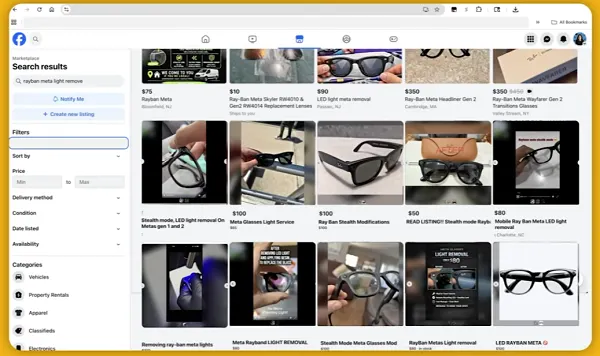
In an era where the boundary between personal privacy and technological convenience continues to blur, Meta has found itself in a precarious position. The company recently announced a critical firmware update for its second-generation AI smart glasses, designed to neutralize the growing trend of “stealth mode” modifications. By disabling the camera functionality when the device detects that the privacy-centric LED indicator has been obscured or removed, Meta is attempting to reclaim the narrative surrounding its wearable hardware. However, this technical pivot arrives at a time when the tech giant’s own internal ambitions for "always-on" recording suggest a fundamental conflict between public transparency and corporate innovation.
The Genesis of the Stealth Modding Trend
The controversy gained mainstream traction last month when veteran tech journalist Joanna Stern, reporting for her YouTube channel New Things, exposed a burgeoning black market for "stealth" modifications. The Meta smart glasses, which feature a discreet camera lens, are equipped with a front-facing LED light that activates whenever the user is capturing photos or videos. This indicator is a cornerstone of Meta’s ethical framework, designed to alert bystanders that they are being recorded.
Stern’s investigation revealed that unscrupulous third-party service providers were advertising on Facebook Marketplace, offering to permanently remove or physically obstruct these LEDs. For a fee ranging up to $100, users could have the light drilled out or covered, effectively turning the smart glasses into a clandestine recording device. These listings openly touted the benefits of “stealth mode,” allowing wearers to capture footage without the knowledge or consent of those around them.
The normalization of these modifications poses significant ethical and legal challenges. If a device designed to be an assistive tool for modern living is intentionally stripped of its primary privacy guardrail, it becomes a surveillance instrument. This subversion of safety features prompted an immediate and firm response from Meta, signaling that the company is prepared to treat the integrity of its hardware as a non-negotiable security parameter.
Chronology of the Conflict
- Initial Launch: Meta releases its second-generation smart glasses with a mandatory, software-controlled LED indicator for user privacy.
- The Rise of Modification: Throughout mid-2026, reports emerge of users seeking ways to bypass the LED indicator to record candid or private moments without notifying subjects.
- July 2026: Joanna Stern publishes her findings on the "LED removal" economy, highlighting the prevalence of these services on platforms like Facebook Marketplace.
- Late July 2026: Meta officially announces a system update that renders the camera non-functional if the LED is blocked or destroyed.
- Ongoing: Reports surface in the Financial Times regarding a new, more intrusive prototype being tested by Meta, which could capture data continuously without the standard LED notification.
Technical Safeguards and Regulatory Enforcement
Meta’s response to the tampering trend is twofold: technological and legal. According to the company’s official announcement, the second-generation glasses are now equipped with sensor logic capable of detecting when the capture LED is blocked or physically tampered with.
“Beginning with our second generation of glasses, the camera is automatically disabled if we detect that the capture LED has been blocked,” a Meta spokesperson stated. “No photos or videos can be taken until we detect that the light is unblocked.” The company has further emphasized that this is a proactive industry move, noting, “No other kind of camera has done this, and we’re proud to lead the industry forward.”
Beyond the software kill-switch, Meta has launched a broader enforcement campaign. The company is actively scrubbing its platforms—including Facebook Marketplace—of any listings offering modification services. Furthermore, Meta has signaled its intent to pursue legal action against entities that profit from the destruction of its safety hardware. By banning user accounts and potentially seeking legal remedies against third-party repair shops, Meta is signaling that it views the integrity of its privacy lights as a matter of corporate liability.
The Paradox of "Always-On" Surveillance
While Meta is currently positioning itself as a guardian of privacy by fighting against the modification of its devices, recent revelations have cast doubt on the company’s long-term commitment to these principles. The Financial Times recently reported that Meta is in the advanced testing phases of a new prototype of smart glasses that would record audio and video continuously throughout the day.
The goal of this project, according to those familiar with the matter, is to allow the user’s AI assistant to “recall the day” or provide context-aware information based on everything the user has seen or heard. Crucially, these prototypes do not utilize the standard, user-facing LED notification.

This development creates a jarring irony. Meta is currently threatening legal action against third-party users who attempt to record secretly, while simultaneously developing a product that—by its very nature—is designed to record constantly. Critics argue that this suggests a double standard: Meta is concerned with the unauthorized use of its hardware not because it opposes the concept of continuous, silent recording, but because it wants to maintain a monopoly over that capability.
Implications for the Future of Wearables
The implications of this tug-of-war extend far beyond a few modified pairs of glasses. As wearable technology moves toward total integration with daily life, the tension between the "right to be left alone" and the "utility of augmented reality" will only intensify.
1. The Death of Public Anonymity
If consumers eventually adopt "always-on" recording devices, the public square will effectively become a high-definition, data-indexed space. If a user can query an AI about what they heard or saw in a public park, the privacy of every other person in that park is compromised. Meta’s current push-back against modified glasses may be an attempt to preserve public trust, but if the company introduces its own, more advanced surveillance features, it risks a significant backlash.
2. The Failure of Hardware-Based Privacy
The ease with which individuals were able to bypass the LED lights proves that hardware-level privacy protections are inherently fragile. If a $100, "back-alley" service can render a multibillion-dollar security feature useless, then the reliance on physical lights as a "privacy social contract" may be reaching its limit. Society may need to look toward legislative frameworks—such as the prohibition of recording in sensitive zones—rather than relying on the blinking lights of tech giants.
3. The "Move Fast and Break Things" Legacy
Meta’s corporate ethos, famously summarized as "move fast and break things," continues to define its product strategy. By releasing hardware that invites modification and then developing prototypes that sidestep the very ethics it promotes, the company is walking a tightrope. It is balancing the need to satisfy investors with the need to avoid the kind of public outrage that could lead to government regulation of the AR/VR sector.
Conclusion: A Question of Trust
Meta’s aggressive stance against "stealth mode" mods is, on its surface, a responsible reaction to the misuse of its products. By disabling cameras on tampered devices, the company is attempting to uphold the privacy expectations of the public. However, the juxtaposition of this policy with the reports of "always-on" recording prototypes paints a complex picture.
If the future of smart glasses involves a world where everyone is a potential, continuous, and silent recorder, the issue is not just about a modified LED light—it is about the fundamental structure of social interaction in the 21st century. As Meta pushes deeper into the hardware space, it will need to decide whether it wants to be the industry leader in privacy-conscious technology or simply another entity that "breaks things" to ensure it holds the keys to our collective data.
For now, the battle against "stealth" mods is a necessary defensive move, but it is unlikely to resolve the deep-seated concerns about a future where every moment is captured, processed, and potentially monetized. The question remains: can we trust the company to be the sole arbiter of when we are being watched, especially when they are the ones who stand to benefit most from our loss of privacy?


 Ammar Sabilarrohman
 Raul Delapena Setiawan