Neng Nana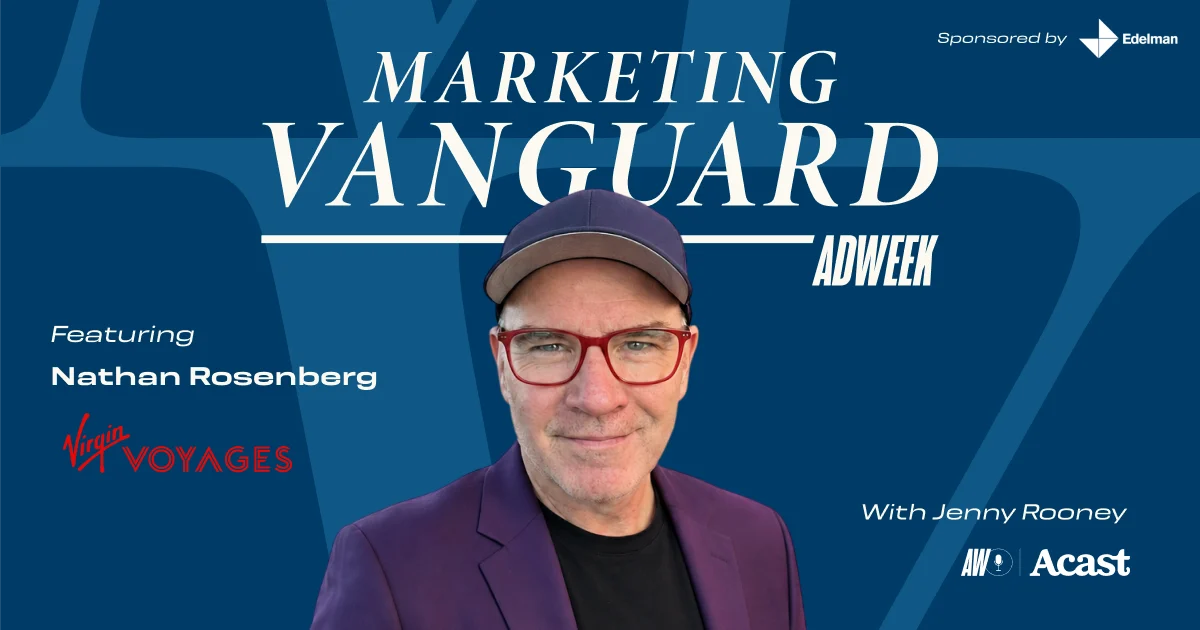
The modern marketing landscape is often cluttered with the noise of hyper-targeted digital ads, ephemeral social media trends, and the relentless pursuit of short-term conversion metrics. Yet, at the 2026 Cannes Lions International Festival of Creativity, one brand stood out for its refusal to play that game. Nathan Rosenberg, Chief Marketing and Brand Experiences Officer at Virgin Voyages, sat down with host Jenny Rooney for an episode of Marketing Vanguard to argue that the future of branding isn’t found in a polished campaign—it’s found in the dinner-table conversations of your customers.
With a 26-year tenure across the Virgin ecosystem, Rosenberg has spent the last 14 years shaping the identity of Virgin Voyages. His perspective challenges the fundamental tenets of the CMO role, advocating for a shift from "cost center" management to a philosophy of long-term experience design.
The Architecture of a Memory: Marketing as Storytelling
For many organizations, a brand is defined by its logo, its tagline, and the reach of its latest digital spend. Rosenberg, however, posits a more profound, albeit challenging, thesis: "The real marketing moment happens later, when a customer is sitting at dinner with friends and telling them what happened on board."
This philosophy shifts the focus from "impression" to "impact." According to Rosenberg, the most effective marketing is the organic, third-party advocacy that occurs when a customer cannot stop talking about a specific, memorable detail of their voyage. If an advertisement is what you say about yourself, the story a customer tells is the brand itself.
This creates a high-stakes environment for the marketer. It implies that marketing is not merely a department that manages creative assets; it is an experience-design function. If the "product"—the actual cruise experience—is lackluster, no amount of creative genius in the advertising department can salvage the brand’s reputation.
Chronology of a Brand Disruptor: The Virgin Voyages Journey
To understand the current strategy, one must look at the deliberate choices made by Virgin Voyages since its inception.
- The Conceptual Phase: The team recognized that the cruise industry was heavily dominated by legacy players focusing on mass-market, family-oriented travel.
- The Differentiation Strategy: Virgin Voyages opted for a bold "no kids allowed" policy. While critics initially viewed this as a limiting move that would restrict market share, it proved to be a masterstroke in brand positioning. By narrowing their target, they sharpened their value proposition.
- The Culture-First Rollout: Rosenberg emphasizes that the brand’s success is built on the "crew." By investing in the culture of those who work on the ships, the brand ensures that the human touchpoints—the moments that trigger the "dinner table stories"—are genuine, enthusiastic, and consistently high-quality.
- The Cannes 2026 Validation: The brand’s presence at Cannes this year serves as a victory lap of sorts, demonstrating that experience-led, human-centric strategies are not just viable but are the new gold standard for high-end travel.
Data and Value Chain Thinking: The $3,000 Rebooking vs. The $14 Cocktail
One of the most compelling arguments Rosenberg makes during the interview involves the "value chain" of the customer experience. In a traditional corporate structure, the CFO might push for higher margins on ancillary items—such as the price of a cocktail—to boost quarterly earnings.
Rosenberg challenges this, noting that a $14 cocktail is a transaction, but a $3,000 rebooking is a relationship. If the price of the cocktail is raised to the point where it degrades the overall experience, the company loses the $3,000 future booking. This is the difference between "short-term extraction" and "long-term loyalty."
The implications for CMOs are clear: you must be able to articulate the value of the experience to the finance department. You are not just justifying spend; you are protecting the long-term lifetime value (LTV) of the customer by ensuring that every touchpoint serves the brand promise.
Official Perspectives: The CMO as a Strategic Partner
Rosenberg is unapologetically direct regarding the current state of the C-suite dynamic. He notes that if a marketing department is viewed strictly as a "cost center," the CMO is fighting a losing battle.
"Marketing teams are often closest to the customer, the crew, and the signals that point to what is coming next," Rosenberg says. This proximity grants the CMO a unique vantage point—one that should position them as a source of solutions and future-ready intelligence, rather than just a department waiting to justify the last quarter’s budget.
When the marketing department is involved in the operational experience—from the ship’s service culture to the policy on children—it ceases to be an external megaphone and becomes an internal architect of business strategy. This shift in perception is essential for any CMO who wishes to survive the current economic climate, where efficiency is scrutinized as heavily as innovation.
Implications: The Death of the "Generic" Brand
The success of Virgin Voyages offers a cautionary tale for traditional brands. In an age where digital noise is at an all-time high, the most successful brands are those that have the courage to say "no."
1. The Power of "No"
By excluding families, Virgin Voyages did not just lose customers; they gained a fanatical core audience. The lesson here is that reach is overrated. If you try to be everything to everyone, you end up being nothing to anyone. Clarity, according to Rosenberg, is a much more powerful driver of growth than broad-market penetration.
2. Culture as the Product
The "human-centered" approach advocated by Rosenberg implies that the employee experience is the customer experience. If the crew is unhappy or unsupported, that sentiment will bleed into the customer experience, effectively sabotaging the "dinner table story" the brand is trying to cultivate.
3. The New Metric for Success: Repeat Rate
While most marketing departments obsess over Customer Acquisition Cost (CAC), Rosenberg advocates for focusing on the repeat rate. The repeat rate is the ultimate indicator of whether your brand promise is being fulfilled. It is the metric that proves the experience is working.
Conclusion: The Road Ahead
As we look toward the remainder of 2026 and beyond, the blueprint provided by Nathan Rosenberg and Virgin Voyages is one that prioritizes depth over width. It is a call to action for marketers to stop acting like advertisers and start acting like experience architects.
The future of brands will not be won by those who can shout the loudest, but by those who can provide an experience so compelling that their customers do the marketing for them. By treating the CMO as a strategic partner, focusing on the long-term value chain rather than short-term price gouging, and having the courage to define exactly who the brand is not for, companies can move beyond mere transactions and build a loyal, vocal, and sustainable community.
In the words of Rosenberg, if you take care of your people, they take care of your customers, and the customers will take care of the outcomes. It is a philosophy that seems simple, but in a world obsessed with complex algorithms and ephemeral digital trends, it remains one of the most difficult—and most effective—strategies to execute.
This report is part of a special series recorded live at Cannes Lions 2026, presented in partnership with Edelman. To learn more about the evolving landscape of brand strategy, industry leaders are invited to join the conversation at Brandweek 2026.

 Ammar Sabilarrohman
 Raul Delapena Setiawan