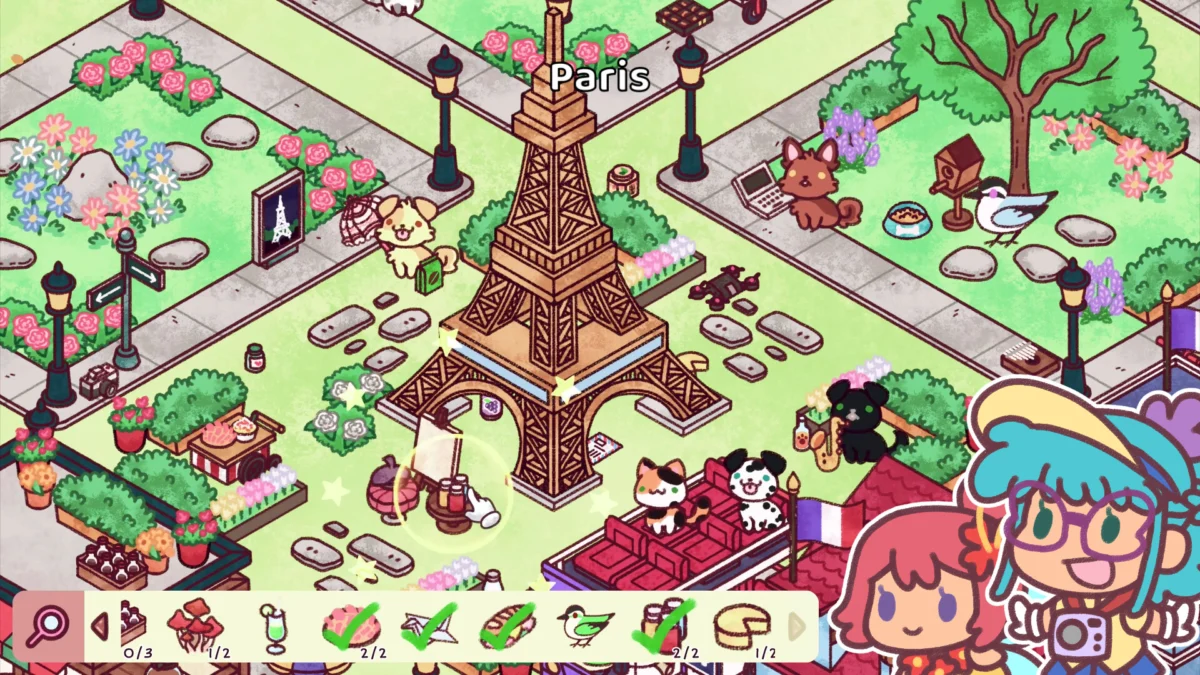
In the saturated landscape of casual gaming, the hidden object genre has long been defined by static screens, static lists, and the occasional pixel-hunt frustration. However, a new title, Hidden Around the World, is subverting these tropes, offering a refreshing blend of tactile interaction and creative expression. By transforming the traditional "seek-and-find" experience into a living, breathing digital diorama, the game invites players to explore hand-drawn recreations of global landmarks while fostering a community-driven sandbox that extends far beyond the initial campaign.
The Evolution of the Hidden Object Genre: A Chronology of Change
The hidden object genre traces its roots back to the "I Spy" books and early point-and-click adventure games of the 1990s. For decades, the formula remained largely stagnant: a static background image, a list of items on the side of the screen, and a cursor acting as a glorified pointer.
- The Early Era: Games focused on high-contrast scenes where items were often clumsily integrated into the background, leading to the "pixel hunting" phenomenon that became the genre’s most criticized hallmark.
- The Transition: As mobile gaming rose to prominence in the late 2000s, titles began to incorporate more vibrant art styles and light narrative elements, but the core mechanic remained linear and passive.
- The Interactive Shift: Recent years have seen a surge in "cozy" games—titles designed to soothe the player rather than stress them out. Hidden Around the World sits at the vanguard of this movement. By introducing environmental physics—such as moving obstacles or peeking behind building facades—it shifts the focus from simple observation to active exploration.
The development of Hidden Around the World represents a conscious effort to move away from the "checklist" mentality. The designers have clearly prioritized the "feel" of the search, turning each level into a meditative journey rather than a race against the clock.
The Anatomy of the Experience: A Deep Dive into Gameplay
At its core, Hidden Around the World is an exercise in mindfulness. The game transports players to charming, hand-drawn versions of iconic cities like Tokyo and Paris. The artistry is immediately striking, trading the gritty, cluttered realism of traditional hidden object games for a whimsical, storybook aesthetic.
The Interactive Environment
Unlike its predecessors, the game demands more than just a keen eye. Players must engage with the world: dragging away a stray newspaper to reveal a hidden key, rotating a street-side sign, or peering behind the corner of a bustling bakery. This tactile layer adds a significant dimension of personality to the game. It forces the player to slow down and consider the "logic" of the environment. Why would an item be tucked away in this specific alleyway? The game rewards curiosity over pure pattern recognition.
Technical Hurdles and Design Friction
However, this ambition comes with inherent trade-offs. The "fiddly" nature of the controls, particularly when lining up items for snapshot challenges or navigating tight corners on smaller screens, is a noted point of friction. When an object is meant to be hidden, the line between "cleverly obscured" and "unfairly microscopic" is thin. On mobile devices or smaller monitors, some items can become indistinguishable from the background, occasionally breaking the "cozy" spell and veering into the territory of frustration.

The Sandbox Revolution: Democratizing Puzzle Design
Perhaps the most compelling feature of Hidden Around the World is its robust sandbox mode. In an era where player-generated content drives the longevity of titles like Minecraft or Super Mario Maker, the inclusion of a level editor is a masterstroke.
The sandbox mode provides players with the same asset library used by the developers, allowing them to construct their own hidden-object vignettes. This feature has effectively transitioned the game from a finite experience into a "creative toybox."
The Generational Appeal
The accessibility of the creation tools is such that even younger players—as evidenced by testimonials of six-year-olds crafting puzzles for their parents—can navigate the interface with ease. This creates a multi-generational feedback loop. Parents and children can trade puzzles, creating a private, shared experience that transcends the standard "single-player" label. By giving the community the keys to the kingdom, the developers have ensured that the game’s lifespan is theoretically infinite, limited only by the imagination of the player base.
Supporting Data and Market Positioning
Market trends indicate that "cozy games"—defined by low-stakes, high-immersion gameplay—are currently seeing record-breaking engagement rates. According to industry analysts, players are increasingly moving away from high-stress, competitive multiplayer environments in favor of titles that offer a sense of control and relaxation.
Hidden Around the World hits the "sweet spot" of this demographic shift:
- Low Barrier to Entry: The learning curve is non-existent, making it accessible to non-gamers.
- High Replayability: The sandbox mode ensures that the game doesn’t hit a "content wall."
- Social Connectivity: By allowing for the sharing of user-generated levels, it creates a community around a genre that has historically been isolated.
Despite these strengths, the game currently sits at a 7.5/10 rating in many critical reviews. This rating reflects a game that is technically polished and conceptually brilliant, yet held back by minor interface inconsistencies and the occasional design oversight regarding screen size optimization. It is a "gem" that still has a few rough edges to polish.

Implications for the Future of Hidden Object Titles
What does Hidden Around the World mean for the future of the genre? Its success suggests that players are hungry for agency. They no longer want to be passive recipients of a static image; they want to be participants in a world.
The Shift Toward "Gamified Creativity"
We are likely to see a trend where "seek-and-find" games adopt more simulation-like elements. Developers will need to invest more in physics-based interaction and user-friendly creation suites to remain competitive. The "find the object" trope is no longer enough; the "interact with the environment" hook is the new baseline.
Addressing Accessibility and Scaling
A major implication for future developers is the necessity of adaptive UI. As titles become more detailed and interactive, the "small screen" problem—where objects become impossible to see—must be solved through smart zoom features, high-contrast toggles, and responsive UI scaling. The success of a game in this genre is now intrinsically linked to how well it performs on a six-inch phone screen versus a 32-inch monitor.
Conclusion: A Masterclass in Charm
Hidden Around the World is not a perfect game, but it is an exceptionally charming one. It manages to elevate a genre often relegated to the bargain bin of digital storefronts into something that feels personal, creative, and profoundly relaxing.
By prioritizing the "search" as a thoughtful, meditative act rather than a rote checklist, and by empowering players to become creators, the title establishes a new benchmark for what a cozy game can be. While it may occasionally stumble over its own ambition, the joy found in building, sharing, and discovering hidden secrets makes it a must-play for anyone looking to slow down and appreciate the details. It is a testament to the idea that sometimes, the most rewarding experiences aren’t found in grand, explosive spectacles, but in the quiet, hidden corners of a beautifully crafted world.