

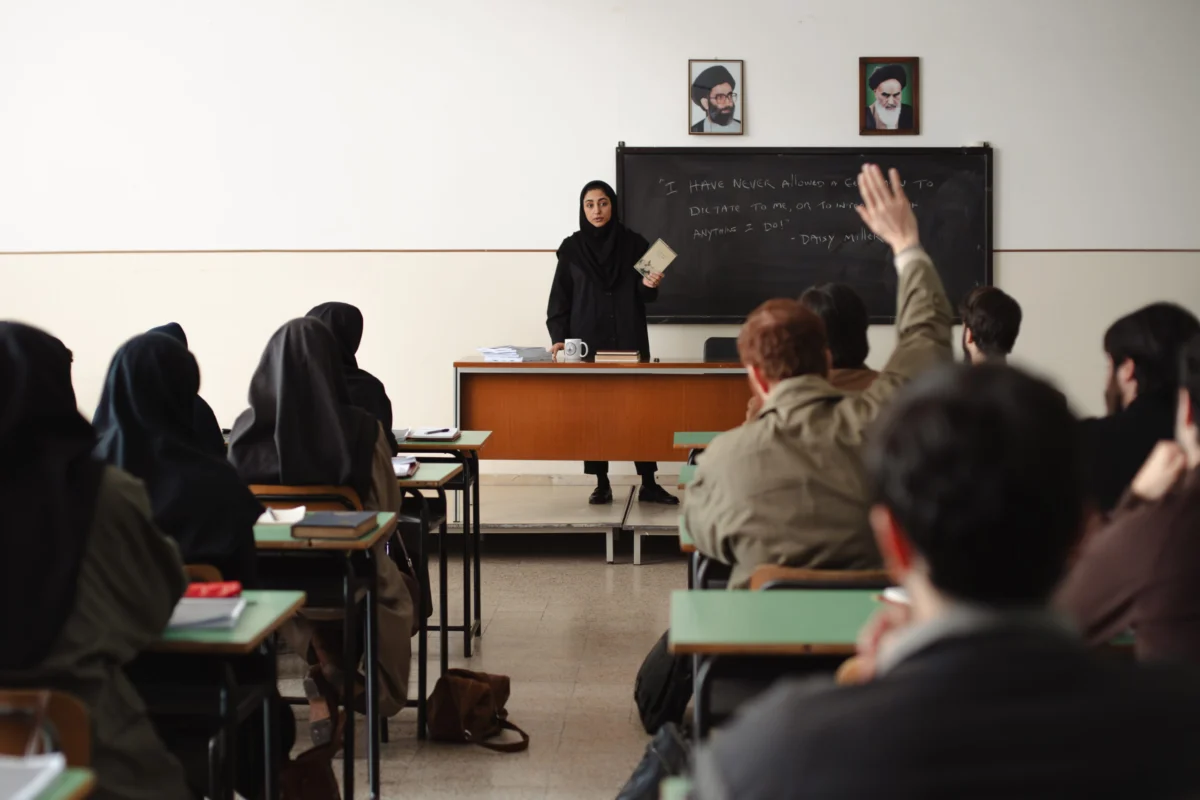
The cinematic adaptation of Azar Nafisi’s seminal memoir, Reading Lolita in Tehran, arrives at a moment when the intersection of literature, political repression, and gender autonomy feels more urgent than ever. Directed by Eran Riklis, the film attempts to capture the claustrophobic tension of 1990s Iran, where a group of courageous women sought refuge from a stifling theocratic regime within the pages of banned Western classics. While the film succeeds as a poignant tribute to the emancipatory power of the written word, it often struggles to bridge the gap between its high-minded literary aspirations and the demands of compelling, nuanced cinema.
The Genesis of an Academic Rebellion
To understand the weight of the film, one must first understand the figure of Azar Nafisi. A celebrated literary scholar and educator, Nafisi became a symbol of intellectual defiance in the wake of the 1979 Iranian Revolution. Educated in Europe and the United States, she returned to her home country to teach at the University of Tehran, only to find herself systematically marginalized. Her refusal to submit to the mandatory veiling laws and her insistence on teaching Western literature—texts that were increasingly viewed as "Westoxicated" and morally corrosive by the revolutionary government—led to her eventual ouster from the academic fold.
However, exile from the classroom did not mean silence. In the mid-1990s, Nafisi began inviting seven of her most devoted female students to her private home. In this clandestine space, stripped of the watchful eyes of the morality police, they engaged in a radical act of intellectual liberation: they read. By dissecting works by Vladimir Nabokov, F. Scott Fitzgerald, and Jane Austen, these women weren’t just discussing fiction; they were mapping the contours of their own oppression and reclaiming their identities as autonomous human beings.
Chronology of a Displaced Narrative
Riklis’ adaptation navigates this history through a bifurcated timeline, a structure intended to contrast the external pressures of the Iranian state with the internal freedom found in literary discourse.
The Late 1970s: The Academic Siege
The film’s first act anchors itself in the turbulent years of the late 70s. We see a younger Nafisi—portrayed with evocative intensity by Golshifteh Farahani—navigating the halls of the University of Tehran. Here, the cinematography is deliberately oppressive, utilizing a palette of muddy grays and muted shadows to reflect the encroaching cultural lockdown. These scenes highlight the collision between Enlightenment ideals and revolutionary dogma, specifically focusing on the vitriolic debates surrounding The Great Gatsby. To the hardline authorities, Fitzgerald’s exploration of the American Dream was not a masterpiece of prose, but a vehicle for moral corruption.

The Mid-1990s: The Apartment Sanctuary
The film then shifts to the 1990s, the era of the clandestine book club. The visual language undergoes a distinct transformation: the apartment, where these women gather, is bathed in warmth and vibrant color. This aesthetic choice serves as a blunt but effective metaphor for the "window" that literature provides. It is within these sessions that the women grapple with the psychological weight of their reality. Through Lolita, they analyze the trauma of being perceived as a "blank canvas" by the patriarchal structures governing their lives; through Austen, they decode the universal, albeit rigid, nature of social courtship and gendered expectations.
The Limitations of the Adaptation
Despite its noble mission, Reading Lolita in Tehran faces a fundamental "meta-problem." The film assumes a pre-existing commitment from its audience—a belief in the sanctity of literature—that it rarely challenges or expands upon. While the performances, particularly Farahani’s, are deeply emotive, the script frequently leans into the territory of an "after-school special."
There is an inherent difficulty in filming the act of reading. Cinematic language thrives on external action, conflict, and tangible consequences, yet the heart of this story is internal. By opting for a relatively conventional narrative structure, the film often reduces complex literary analysis to a series of platitudes about the "magic of books." For the seasoned reader, these moments of revelation can feel somewhat hollow. The film tells us that these novels are transformative, but it rarely shows us the messy, difficult, or contradictory ways in which literature actually interacts with the human psyche.
Supporting Data: The Power of the Canon
The film’s reliance on the Western canon is both its greatest strength and its most significant narrative hurdle. Nafisi’s memoir succeeded precisely because it treated these books not as dusty relics, but as living, breathing companions.
- Nabokov’s Lolita: In the film, the group moves past the initial controversy of the novel to recognize Humbert Humbert’s mastery of rationalization—a tool frequently used by the men in their own lives to justify control.
- Fitzgerald’s The Great Gatsby: Used to illustrate the dangers of illusion and the decay of the American Dream, the book serves as a mirror for the Iranian experience of broken promises and shifting social tides.
- Austen’s Pride and Prejudice: Acts as a foundational text for understanding the subtle, often domestic, battles women fight for agency within a patriarchal framework.
However, by focusing on the "universality" of these themes, the film risks flattening the very specific, harrowing context of the Iranian women who read them. The literary criticism, which was the heartbeat of the memoir, is occasionally relegated to the background in favor of a broader, more palatable message about freedom.

Official and Critical Perspectives
The reception of the film has been marked by a appreciation for its intentions, even as critics lament its execution. The ensemble cast of actresses delivers performances that resonate with sincerity, clearly believing in the gravity of the story they are telling. Yet, there is a recurring critique that the film lacks the "cinematic grit" required to truly match the weight of the material.
Critics have noted that the film feels "too safe." In its attempt to be an accessible tribute to the act of reading, it neglects the sharper, more transgressive qualities of the literature it celebrates. The film is a gentle reminder of the importance of intellectual freedom, but it lacks the edge that would have made it a truly revolutionary piece of cinema.
Implications for Future Literary Adaptations
The case of Reading Lolita in Tehran serves as a cautionary tale for future adaptations of non-fiction works that rely on abstract concepts like "intellectual growth." To move beyond the "after-school special" trope, filmmakers must be willing to embrace the contradictions of their subjects.
If a film about reading is to feel truly cinematic, it must do more than simply present the books as talismans of goodness. It must explore the friction between the text and the reader, the danger of interpretation, and the way in which great art can be weaponized or reclaimed. Reading Lolita in Tehran is a film that will likely please those who already hold the memoir in high regard, acting as a visual companion to a beloved text. However, for those looking for a challenging exploration of how literature survives in the shadow of tyranny, the film remains, unfortunately, a surface-level engagement.
Conclusion
Ultimately, Reading Lolita in Tehran receives a Grade of C+. It is a project of immense sincerity and aesthetic competence, yet it is hampered by its own desire to be a "feel-good" movie about a subject that is inherently difficult and painful. It is a film that champions the power of literature, even as it serves as a reminder of how difficult it is to capture that power on screen. For the casual viewer, it offers a glimpse into a world of intellectual resistance; for the bibliophile, it serves as a polite nod to the classics. Yet, one cannot help but feel that a deeper, more daring film was hiding within the pages of the original memoir, waiting for a director to take a risk as bold as the women in Nafisi’s living room.










