

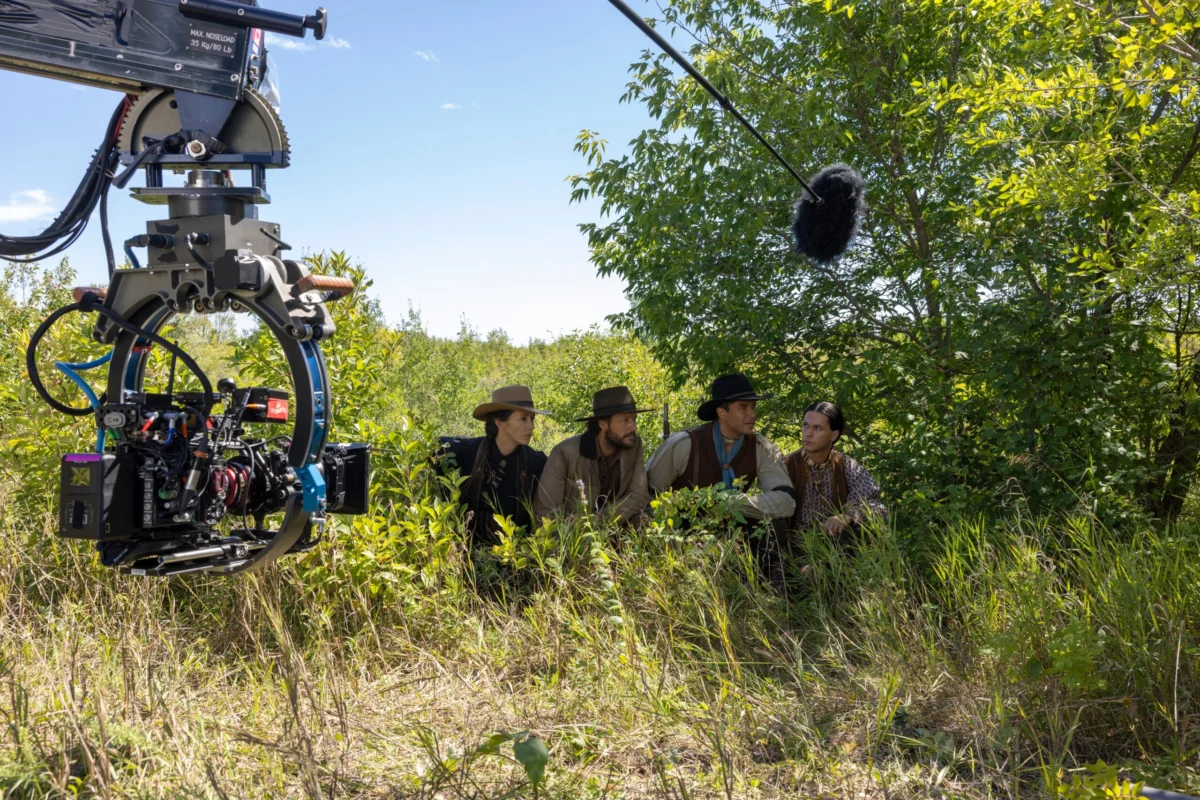
In the landscape of American literature, few works occupy as complex a space as Laura Ingalls Wilder’s Little House on the Prairie series. For decades, the novels have been cherished as quintessential tales of American grit and westward expansion, yet they have simultaneously been condemned for their dehumanizing portrayals of Indigenous people. Now, Netflix is attempting to bridge this divide with a bold, revisionist adaptation that seeks to rectify the historical erasures of the past.
Under the guidance of showrunner Rebecca Sonnenshine, this 2026 reboot does not merely update the aesthetic of the 19th-century frontier; it fundamentally shifts the narrative focus. By centering the perspectives of the Osage Nation—the people whose land the Ingalls family illegally occupied—the series transforms a classic pioneer myth into a nuanced, bittersweet meditation on displacement, empathy, and the true cost of the American Dream.
A New Perspective: Expanding the Narrative Scope
From the outset of development, Sonnenshine was clear: her version of Little House could not function within the vacuum of the original text. The show follows the familiar Ingalls clan—patriarch Charles (Luke Bracey), matriarch Caroline (Crosby Fitzgerald), and daughters Laura (Alice Halsey) and Mary (Skywalker Hughes)—but introduces a vital counter-narrative through the neighboring Mitchell family.

The Mitchells, an Osage family, become more than just peripheral characters. The friendship between young Laura Ingalls and Good Eagle (Wren Zhawenim Gotts) serves as the emotional anchor of the series. Across eight episodes, the tension between white settlers and the Osage is brought to the surface, transforming the Ingalls’ "pioneer struggle" into a complex moral crisis regarding land rights and sovereignty.
"The reason to tell this story in 2026 is that we get the opportunity to tell the Osage point of view," Sonnenshine told IndieWire. "They’re in the book, but we see them from afar. We never get to know them; we don’t get to characterize them. This show gives us the opportunity to portray them as parents and children and brothers and sisters."
Historical Reckoning: Addressing a Legacy of Bias
The necessity for this reimagining stems from a long-standing critique of Wilder’s work. Scholars and Indigenous activists have long pointed to the books’ racist underpinnings. In 2018, these critiques reached a tipping point when the American Library Association removed Wilder’s name from its prestigious children’s literature award, citing "dated cultural attitudes toward Indigenous people and people of color that contradict modern acceptance, celebration, and understanding of diverse communities."

Sonnenshine’s production team recognized that to tell this story today, they had to move beyond the narrow, Eurocentric lens of the 1970s television adaptation. To ensure historical accuracy and cultural sensitivity, the production brought in Indigenous voices at every level of the creative process. P. Carter Kristensen wrote the series’ pivotal fourth episode, while Robert Warrior, a professor at the University of Kansas, provided the historical framework for the Osage Diminished Reserve.
The Role of Cultural Consultation and Authenticity
Perhaps the most significant hire was Julie O’Keefe, the series’ on-set cultural consultant. With experience on high-profile projects like Martin Scorsese’s Killers of the Flower Moon, O’Keefe was instrumental in ensuring the production respected the specific customs and history of the Osage.
Relying on the collections at the Osage Museum, O’Keefe and her team sourced or crafted over 3,000 cultural items, ensuring that the visual language of the show was authentic to the 1870s. "I’m always wanting to achieve a feeling of a community project from any nation that I work with," O’Keefe said. "That way, they get to see their work, and they get to understand the story and how it’s being told."

This commitment to authenticity resonated deeply with the cast, particularly Meegwun Fairbrother, who portrays the Osage patriarch, William Mitchell. A mixed-blood Ojibwe citizen from the Treaty 3 territory, Fairbrother initially approached the role with trepidation. However, he found that the production’s focus on the Osage language—guided by consultant Talee Redcorn—allowed for a profound connection to the material.
"The best way to honor a Nation is to know their language," Fairbrother noted. "We realized we achieved our goal when Osage chiefs came to the set, heard me speaking, and asked if I was a native speaker. That was the biggest compliment."
Chronology of Conflict: The Path to the Drum Creek Treaty
The series meticulously builds toward the signing of the Drum Creek Treaty of 1870, a real-life event that forced the Osage to relocate from Kansas to present-day Oklahoma. This arc is handled with a gravity that contrasts sharply with the often-romanticized version of pioneer life.

The show explores the fundamental ideological clash between the settlers and the Osage. While the missionaries and settlers believed in the concept of "dominion over the land," the Osage maintained a philosophy of stewardship. As Fairbrother explains, "The Osage were like, ‘No, that’s wrong. We look after the land. We protect the land. We live with the land. We share the land.’"
The seventh episode, "A Softer Note in the Sound of the Wind," captures the agony of the tribal council meeting. By weaving the fictional Ingalls family into this historical event, the show highlights the culpability of settlers who, often blinded by promises of "free land," participated in the displacement of Indigenous communities without fully understanding the geopolitical consequences.
Official Responses and Creative Implications
The show’s creative team has been transparent about the "bittersweet" nature of this adaptation. They argue that one cannot tell a story about the American frontier in the 21st century without acknowledging the violence of its formation.

Sonnenshine notes that the portrayal of Caroline Ingalls, who in the books harbored deep-seated distrust of Native Americans, was softened in this version to reflect a journey of empathy. Through the shared maternal connection between Caroline and White Sun (Alyssa Wapanatâhk), the show illustrates how personal relationships can challenge ingrained prejudices.
However, this empathy does not override the historical reality of the forced removal. The finale concludes with the Ingalls departing for Minnesota, while the Mitchells relocate to the designated "Indian Territory." It is a separation that feels earned, honoring the reality that the two families, while connected by circumstance, were living in two different worlds—one built on expansion, the other on survival.
The Future of the Frontier: Looking Ahead
Netflix has already greenlit a second season, signaling confidence in this new direction. The showrunners have confirmed that the series will continue to explore the experiences of the Indigenous peoples wherever the Ingalls family travels.

"Every inch of this land that we are all living on right now was inhabited by Indigenous peoples," Sonnenshine said. "So, of course, anywhere they go, there is a story to be told about the Indigenous peoples who lived there."
For Fairbrother, the series is a platform for ongoing advocacy. Having moved into writing and directing, he plans to stay connected to the Little House project, ensuring that the focus remains on the "universal truths" that bridge the divide between different nations.
The 2026 Little House on the Prairie does not seek to replace the past; it seeks to confront it. By providing a seat at the table for the Osage Nation, the series transforms a relic of the American literary canon into a modern, necessary, and hauntingly beautiful television experience. It is a reminder that history is never truly in the past—it is something we are still actively shaping and, in this case, finally beginning to acknowledge.










