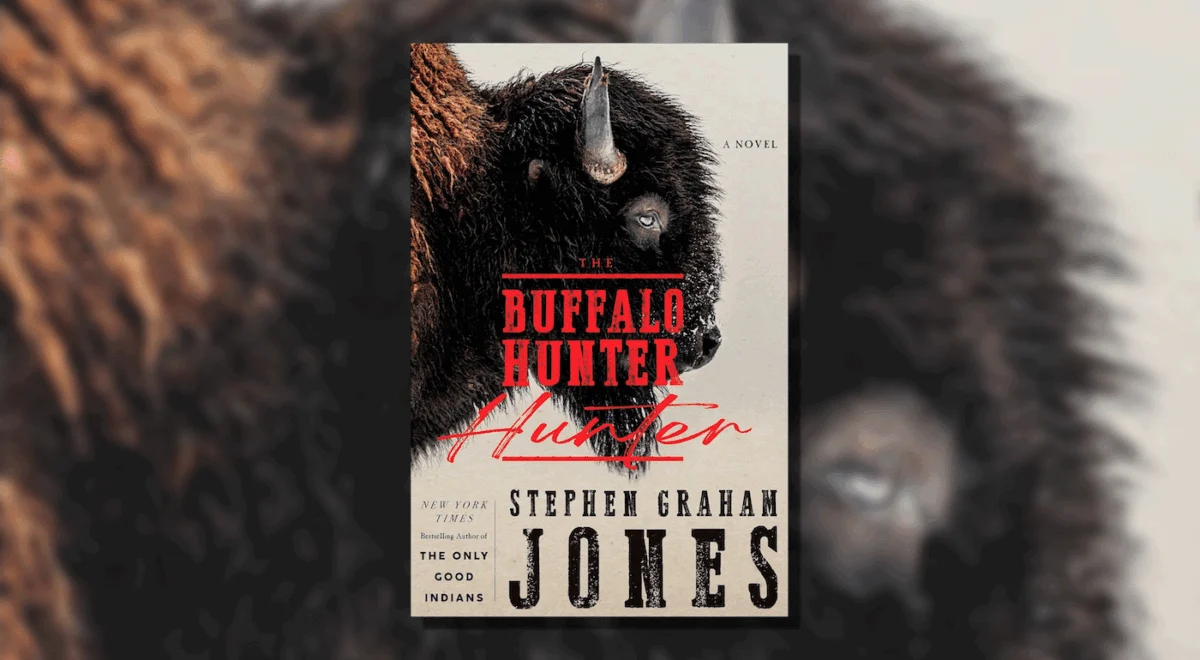
The literary landscape of 2025 was irrevocably altered by the release of Stephen Graham Jones’s The Buffalo Hunter, a Nebula- and Stoker-winning masterwork that plunges readers into the brutal, hallucinatory intersection of history and cosmic horror. In this week’s installment of Reading the Weird, we dissect the harrowing climax of the narrative, specifically Chapters 21 and 22. These chapters serve as a crucible for the protagonist, Good Stab, whose journey—marked by visceral body horror and existential dread—transcends the traditional boundaries of the genre, offering a grim, unflinching look at the erasure of the Pikuni (Blackfeet) people.
A Chronology of Despair: The Descent of Good Stab
The narrative trajectory of these chapters is as swift as it is devastating. Following the violent, unexplained murders of Yellow Kidney and his sister at the Fat Melters Camp, Good Stab finds himself a pariah. His flight leads him to a fateful encounter with the "Cat Man," a 450-year-old entity of terrifying, ancient provenance.
The Cat Man is not merely a monster; he is a predator who views the indigenous populations of the American West as mere sustenance. After witnessing the slaughter of his buffalo herd and the grotesque mutilation of his companion, Weasel Plume, Good Stab is thrust into a cycle of agony that spans years. The chronology of his suffering is marked by:
- The Glacial Imprisonment: After a failed attempt to challenge the Cat Man, Good Stab is left for dead in a glacial cave. His escape—an act of desperate, self-mutilating fortitude—involves breaking his own arm to free himself from the ice, a sequence that mirrors the brutal reality of survival in the high country.
- The Captivity at Small Robes: Good Stab eventually locates the camp of the Small Robes, only to find it under the shadow of the Cat Man, who has assumed the identity of the chief, "Walks Twice."
- The Sun Dance of Horror: In a perversion of cultural ritual, the Cat Man orchestrates an "untimely Sun Dance," forcing Good Stab to endure the agony of the initiation rites, marking a peak of both physical and spiritual desecration.
- The Final Bargain: The culmination of the confession involves Good Stab’s attempt to shield the remaining Pikuni by sacrificing Kills-in-the-Water to the Cat Man’s hunger—a choice that haunts the text as his "worst sin." Through a final, desperate act of biological warfare—poisoning the entity with his own blood—Good Stab effectively traps the Cat Man in a watery tomb, though the cost is the total dissolution of his people.
Supporting Data: The Body Horror of the Nachzehrer
At the core of Jones’s work is the concept of the nachzehrer, a figure rooted in folklore but reimagined here with brutal, anatomical precision. The body horror depicted in these chapters is not merely for shock; it is a thematic reflection of the "voracity" of colonization and the erasure of identity.
The Cat Man serves as a personification of colonial indifference. He is an entity who has forgotten his own European origins—his lists of "ship" cognates in Latin, French, Spanish, and Russian reveal a creature who has consumed his own past until only a hollow, cruel hunger remains. This is the "supernatural equivalent of whiteness erasing culture," a devastating metaphor for the systematic destruction of the Pikuni people during the Starvation Winter of the late 19th and early 20th centuries.
Official Perspectives and the Church of Silence
The second half of our analysis focuses on "The Absolution of Three-Person," dated May 26, 1912. The narrative shifts to the perspective of Arthur, a clergyman struggling to maintain his own sanity within a church literally built upon the rot of the dead.
Arthur’s reaction to Good Stab’s confession is one of detached, institutionalized cruelty. He views the Blackfeet as a "cursed people" who must be forced into the mold of "tillers of the soil." His attempts to sanitize his environment—scrubbing the pews, feeding the stray dogs, and using eggs as crude detectors for the "servants of the Pit"—represent the desperate, performative denial of those who witness trauma but refuse to acknowledge the systemic rot that caused it.
Arthur’s desire for the "civilization" of the frontier—the transformation of a landscape teeming with the "beavers, crows, and the Backbone" into a tamed, agrarian grid—is the ultimate victory of the colonial mindset. He wants a world without monsters, not because he wishes to save anyone, but because he fears the chaotic reality that Good Stab’s existence represents.
Implications: The Ozymandias of the Plains
The literary implications of The Buffalo Hunter are profound. By comparing Good Stab to Shelley’s Ozymandias, Arthur inadvertently highlights the futility of their struggle. "Look upon his works and despair!" is a phrase that resonates across the mountain ranges of Montana.
The "weird" in this narrative is not limited to the supernatural; it is found in the intersection of:
- Cultural Erasure: The way the Cat Man consumes, quite literally, the future of the Small Robes.
- The Failure of Faith: Arthur’s inability to provide genuine spiritual comfort, serving only as a passive observer to the extinction of a culture.
- The Persistence of Memory: Good Stab’s confession is a record of an event that history books would prefer to ignore. It is a testament to the "lost peoples" who did not leave behind stone monuments, but who are nevertheless buried in the snow-crust of the Starvation Winter.
Conclusion: The Unresolved Hunger
As we look toward next week’s reading of Marjorie Bowen’s The Bishop of Hell, it is worth reflecting on what remains of Good Stab. He has survived the monster, but he has lost his world. He is a man haunted by the knowledge that he acted as both the savior and the betrayer of his people.
The brilliance of Jones’s writing lies in his refusal to grant us a clean ending. There is no redemption for the landscape, no restoration of the buffalo herds, and no comfort for the survivors. There is only the confession, delivered in a church that smells of the grave, to an audience—the reader—who is left to grapple with the "misery and grandeur" of a history that refuses to stay buried.
The "Cat Man" may be trapped in a lake, but the hunger he represents—that voracious, colonizing impulse that seeks to strip the world of its indigenous soul—continues to haunt the "Backbone" of the American narrative. Good Stab’s story is a reminder that in the weirdest corners of our history, the most terrifying monsters are often those that look exactly like the ones trying to "civilize" us.
Join us next week as we turn our attention to the classics, exploring the dark, confessional depths of Marjorie Bowen’s work and continuing our ongoing inquiry into the roots of cosmic horror.