Neng Nana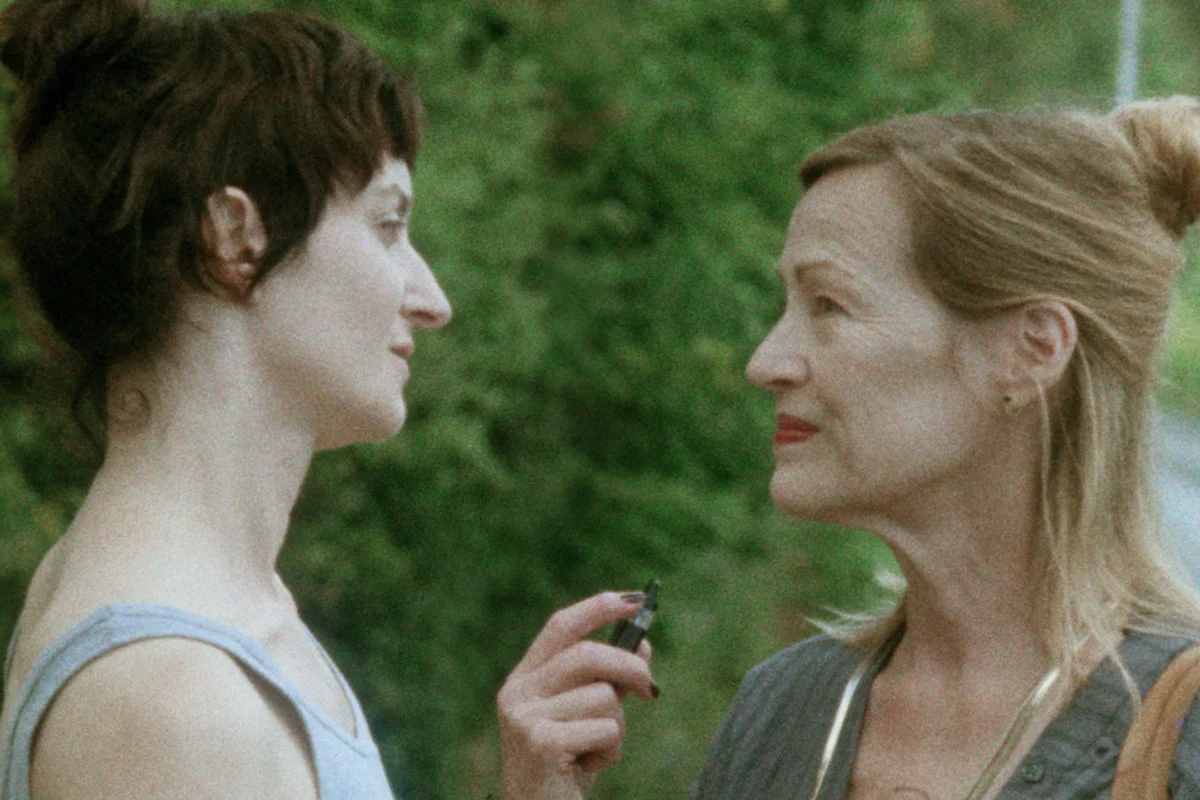
In the rarefied air of the Swiss Alps, where the Locarno Film Festival has long served as a sanctuary for the world’s most daring cinematic voices, the Canadian auteur Denis Côté is once again claiming his space. Heretic has officially secured world sales rights to Nobody’s Violence, the 17th feature film from the prolific director. As the film prepares for its world premiere in the prestigious main competition at Locarno, it arrives not merely as another entry in a storied filmography, but as a profound meditation on survival, liminality, and the stubborn persistence of the artistic spirit.
A Narrative of the In-Between
Nobody’s Violence sees Côté reuniting with his longtime muse, actress Larissa Corriveau. Having previously anchored such Côté features as Social Hygiene, That Kind of Summer, and last year’s Locarno selection Mademoiselle Kenopsia, Corriveau is a performer who has become the physical embodiment of the director’s existential inquiries.
In this latest iteration of their collaboration, Corriveau portrays Mira, a woman adrift in a landscape devoid of moral or societal anchors. She serves as an operative for a clandestine organization, facilitating assisted deaths for those desperate enough to seek an end. Mira’s existence is defined by a lack of direction—a "floating center"—until she encounters Madeleine and Ludo, two hedonistic, free-spirited wanderers living in the heart of the forest. This collision between her grim professional obligations and the raw, unbridled vitality of the forest dwellers forces Mira to reassess the dark pacts she has forged with the dying.
The film, written and directed by Côté, is produced by Guillaume Vasseur and Gabrielle Tougas-Fréchette. It arrives with the institutional backing of SODEC and Telefilm Canada, alongside significant contributions from a network of regional cultural partners, including H264 and Heretic. The cast is rounded out by an eclectic ensemble including Philippe Rebbot, Xavier Bergeron, Gabrielle Lazure, and Pierrette Robitaille.
A Chronology of Artistic Resilience
The relationship between Denis Côté and the Locarno Film Festival is one of the most enduring creative partnerships in modern international cinema. It began in 2010 with his fifth feature, Curling, which walked away from the Swiss festival with top honors. That film went on to secure a global footprint, screening at over 80 festivals and cementing Côté’s reputation as a singular voice in contemporary Canadian film.
However, the path to Nobody’s Violence has been anything but linear. For the past decade, Côté has been locked in a grueling, private battle with a debilitating kidney illness. This struggle reached a critical crescendo in 2023, the same year his previous film, Mademoiselle Kenopsia, premiered at Locarno. Shortly thereafter, Côté underwent a life-saving kidney transplant.
His return to the festival this year marks a significant milestone—the first time he has walked the red carpet in his capacity as a healthy man in over a decade. "I never expected to live such a miracle," Côté remarked in an exclusive conversation with Variety on the eve of the festival.
The Liminal Space: Behind the Creation
To understand Nobody’s Violence, one must look at the conditions under which it was conceived. Côté wrote the screenplay during the final, most harrowing year of his illness, while he was suspended in what he describes as a "gray zone" between life and death.
"I didn’t know what dialysis meant. I didn’t know what a transplant was," Côté reflects. "For 10, 15 years, I didn’t know what it was to be healthy. I was just living with all these toxins in my head and in my body, and I was just tired. The script is about these in-betweens that were stuck in my head. It’s a film about myself, but it has nothing to do with my life."
This "in-between" space is the thematic engine of the film. While contemporary cinema often leans heavily into the autobiographical—focusing on trauma, family, and coming-of-age stories—Côté remains intentionally opaque. He characterizes his protagonist, Mira, as a vessel for this uncertainty. "Mira is created in that way. She has no clue where she’s going. My condition was kind of similar to hers. It’s a liminal space. I didn’t want to make films about my personal life. I’m very bad at that."
Artistic Methodology: The Freedom of the Unknown
Côté’s approach to filmmaking is characterized by a radical lack of planning. He resists the rigid, structural demands of the film industry, preferring to treat his scripts as organic objects rather than blueprints for a clear narrative.
"I never see the end of the script. I just write, and it’s blank pages, one after the other," he explains. "You just don’t know where this character is going. I love being lost in front of my own creation. I don’t even know what this film is. I don’t even know who that character is. You feel that the object you created can have its own life without you."
This philosophy, however, puts him in direct conflict with the machinery of modern film funding. In an industry that demands detailed, tight scripts and clear, market-tested propositions before authorizing budgets, Côté finds himself constantly fighting for the space to be experimental. "You need to fight for this freedom because they ask you for very solid and tight scripts before giving you the money," he notes. "I’m an experimental filmmaker, and I never experiment enough. I’m always fighting to find more liberty."
The Hollywood Question and Future Implications
When asked if he would ever consider a transition into the more commercial, narrative-driven landscape of Hollywood—a path tread by contemporaries like Denis Villeneuve—Côté is definitive: the ship has sailed.
"Nowadays, I would tell you it’s over. I’m 52, I have made 17 films. I would be completely alien in that industry," he says. Having reached a point of professional self-actualization, he has no interest in seeking "the light" of mainstream commercial success. Instead, he is focused on pushing the boundaries of his own specific brand of cinema, which eschews traditional narrative arcs for something more visceral, abstract, and immediate.
The impact of his recovery on his creative process is surprisingly pragmatic. While one might expect a sudden shift toward grand, spiritual, or philosophical themes, Côté remains stubbornly grounded. "Cinema is a daily grind," he asserts. "You’re just getting groceries and making films."
Conclusion
Nobody’s Violence stands as a testament to an artist who has survived the void and returned with a clear, if unconventional, vision. By channeling the disorientation and physical fatigue of his illness into a character like Mira, Côté has created an object that captures the "floating center" of the human experience.
As the film makes its debut at Locarno, it serves as both a conclusion to a decade of suffering and a beginning of a new chapter of creative autonomy. In an era where cinema is increasingly standardized by the demands of content production, Denis Côté’s commitment to the "daily grind" of experimental filmmaking is more than a professional choice; it is an act of defiance. For the audience at Locarno, Nobody’s Violence offers a rare opportunity to witness a filmmaker operating at the edge of his own reality, unafraid to jump into the void to see what waits on the other side.

 Nila Kartika Wati
 Ali Ikhwan