Ammar Sabilarrohman
The literary world is currently navigating a vibrant, transformative era. As we reach the midpoint of 2026, the publishing industry has seen a remarkable surge in narratives that challenge traditional boundaries, center marginalized voices, and push the boundaries of genre. From the hallowed halls of the Schomburg Center to the personal bookshelves of readers worldwide, the conversation surrounding Black speculative tradition and intersectional storytelling has never been more robust.

The State of the Industry: A Mid-Year Overview
This year, the publishing sector has demonstrated a profound commitment to diversifying its output. The recent "Best Books of the Year So Far" lists reflect a deliberate shift toward inclusivity, highlighting works that span the gamut from gripping horror and speculative fiction to deeply personal poetry and historical sagas.

A significant indicator of this cultural momentum occurred just weeks ago at the Schomburg Center for Research in Black Culture in New York City. The venue hosted a high-profile panel discussion on the Black speculative tradition on the iconic Octavia Butler stage. The event, moderated by writer Erika Hardison, featured luminaries such as Ytasha Womack, Shyheim Williams, and Julia Mallory. This gathering underscored a growing academic and public appetite for exploring how Black authors use imagination to interpret the past, present, and future.

Chronology of Excellence: Notable Releases
The first half of 2026 has been marked by a consistent stream of high-caliber releases. The following titles represent a cross-section of the most impactful works by BIPOC authors published between January and June of this year.

Nonfiction: Reimagining Critique and Wellness
- "On Morrison" by Namwali Serpell: Serpell has achieved the near-impossible task of making literary criticism accessible. By blending scholarly rigor with a palpable affection for Toni Morrison’s complex body of work, Serpell offers a masterclass in how to analyze genius without stripping away the joy and humor inherent in the writing.
- "Body Electric" by Manoush Zomorodi: In an era defined by "The Email Factory"—a life dominated by screens and sedentary labor—Zomorodi’s work arrives as a vital health intervention. Her research into the hidden costs of our digital age provides a roadmap for reclaiming physical and mental well-being in an increasingly tethered society.
Historical Fiction: Confronting the Past
- "Burn Down Master’s House" by Clay Cane: At a time when historical revisionism is a pervasive threat, Cane’s novel serves as an unflinching mirror held up to the horrors of American slavery. By focusing on acts of rebellion, the book functions as a necessary document of resistance.
- "The Seven Daughters of Dupree" by Nikesha Elise Williams: This debut novel has solidified Williams as a significant voice in generational storytelling. Through a narrative that explores an ancestral curse originating in the era of enslavement, the book provides a poignant meditation on how trauma is passed through bloodlines and the ways women navigate the weight of their own history.
- "There’s Only One Sin in Hollywood" by Rasheed Newson: Leveraging his experience as a screenwriter for Bel-Air and The Chi, Newson offers an intimate look at queer life in Golden Age Hollywood. By weaving together real historical figures and fictional narratives, he creates a compelling, cinematic examination of the cost of living a double life in the public eye.
Graphic Novels and YA: Visualizing Identity
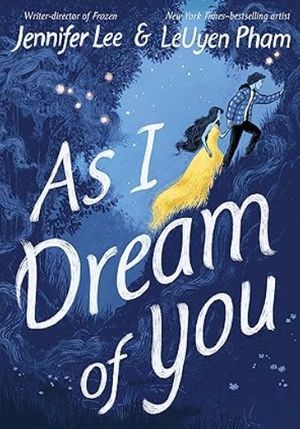
- "As I Dream of You" by Jennifer Lee and LeUyen Pham: This collaboration between the Frozen director and the acclaimed illustrator is a masterclass in emotional storytelling. Drawing on the Greek myth of Orpheus and Eurydice, the book explores the intersection of love, grief, and the cinematic beauty of the adolescent experience.
- "Opting Out" by Maia Kobabe and Swati “Lucky” Srikumar: Kobabe, known for the seminal Gender Queer, makes a bold middle-grade debut here. By addressing puberty, gender identity, and social anxiety through a nonbinary lens, this work fills a critical void in current young adult literature, providing a sanctuary for readers who feel alienated by traditional coming-of-age narratives.
Supporting Data: Why Representation Matters
The success of these titles is not merely anecdotal; it corresponds with broader market trends. According to recent industry reports, books by BIPOC authors are increasingly capturing top-tier spots on bestseller lists, signaling that the "niche" label often applied to these works is an antiquated misnomer.

The success of titles like Tayari Jones’ Kin—which has become a cultural touchstone this year—demonstrates that readers are eager for nuanced explorations of the Black American experience. Jones’ ability to depict the shifting landscape of the American South through the eyes of two young women coming of age provides a "fresh and unique perspective" that has resonated across demographics.

Furthermore, the rise of "genre-blending" in these works—such as the horror-infused societal critiques found in Monika Kim’s Molka—shows that authors are no longer content to stay within traditional silos. By blending horror with contemporary issues like digital privacy and gender-based violence, authors are creating narratives that are both commercially viable and socially essential.

Official Responses and Literary Impact
The literary community has responded with enthusiasm, noting that the depth of the 2026 releases indicates a maturation of the publishing industry’s editorial pipeline.
"We are seeing a move away from stories that are purely about trauma," notes one industry analyst. "Instead, we are seeing stories about joy, about adventure, and about the mundane complexities of life—told through a lens that has historically been excluded."

This sentiment is echoed by critics like Vanessa Diaz, who points to the release of Saara El-Arifi’s Cleopatra as a prime example of "fleshing out the stories of maligned women." By giving historical figures agency to tell their own stories—literally breaking the fourth wall—authors are reclaiming historical narratives that have been dominated by monolithic perspectives.

Implications for the Future of Literature
The implications of this mid-year surge are clear: the future of literature is intersectional, experimental, and global.

- Genre Fluidity: The success of authors like Amal El-Mohtar (Seasons of Glass and Iron) and ‘Pemi Aguda (One Leg on Earth) proves that readers are increasingly comfortable with stories that teeter on the edge of the otherworldly. This suggests that the next decade will likely be defined by "slipstream" fiction that defies easy categorization.
- The Persistence of Print: Despite the digital shifts discussed in works like Body Electric, the sustained interest in these physical books confirms that the tactile experience of reading remains a critical pillar of cultural consumption.
- Educational Integration: With works like Clay Cane’s Burn Down Master’s House being recommended as "required reading," there is a clear push for these narratives to move from the bookstore shelf to the classroom, ensuring that history is taught with the necessary complexity and nuance.
As we look toward the remainder of 2026, the landscape appears set for further disruption. The convergence of new, diverse voices with established masters ensures that the literary conversation will remain vibrant. Whether it is through the haunting poetry of Aimee Nezhukumatathil’s Night Owl or the whimsical yet grounded middle-grade charm of Chanel Miller’s The Moon Without Stars, the message is the same: the stories that define our time are being written by those who have long been waiting for their turn at the center of the stage.

For readers seeking to engage further with these themes, the industry continues to provide curated resources, such as the In Reading Color newsletter, which remains a vital tool for tracking the evolution of literature by and about people of color. The books highlighted here are more than just items for purchase—they are invitations to broaden our collective understanding of what it means to be human in a rapidly evolving world.

 Muslim
 Laily UPN